Author: Shreya Maurya

  • Scientific Management by Frederick Taylor

    Scientific Management by Frederick Taylor

    Scientific Management, developed by Frederick Winslow Taylor in the late 19th century, is a management theory that focuses on optimizing productivity and efficiency in the workplace. Taylor’s approach revolutionized industrial practices by introducing scientific principles and methods to improve worker productivity and overall organizational efficiency. This article explores the key principles and contributions of Scientific Management, its impact on modern management practices, and the ongoing debate surrounding its application.

    Principles of Scientific Management

    1. Time and Motion Studies: Taylor emphasized the importance of analyzing and measuring every task to identify the most efficient way of performing it. Through time and motion studies, he aimed to eliminate unnecessary movements, reduce fatigue, and streamline processes.
    2. Division of Labor: Taylor advocated for breaking down complex tasks into smaller, specialized components, enabling workers to become experts in their specific roles. This division of labor allowed for increased efficiency and improved overall productivity.
    3. Standardized Work Methods: Taylor stressed the need to establish standardized work methods that were scientifically determined as the most efficient way to perform tasks. By eliminating variations and using best practices, organizations could achieve consistency and improve output quality.
    4. Scientific Selection and Training: Taylor believed in carefully selecting and training workers to ensure the right fit between employees and job requirements. He emphasized the need for scientific methods in hiring, training, and developing workers to enhance their skills and maximize their potential.
    5. Incentives and Fair Compensation: Taylor recognized the importance of providing appropriate incentives and fair compensation to motivate workers. He suggested a system of differential piece-rate wages, where higher productivity would lead to higher pay, thus encouraging employees to increase their output.

    Impact on Modern Management Practices

    1. Efficiency and Productivity: Scientific Management revolutionized the way organizations approached productivity and efficiency. By focusing on scientific analysis, process optimization, and workforce development, Taylor’s principles helped organizations achieve higher levels of output with fewer resources.
    2. Standardization and Quality Control: The emphasis on standardized work methods and the elimination of variations laid the foundation for quality control practices in modern organizations. Standardization ensures consistent output and enables organizations to maintain quality levels while reducing waste and defects.
    3. Worker-Management Relationship: Taylor’s ideas initiated a shift in the worker-management relationship, highlighting the importance of fair compensation, employee development, and worker involvement in decision-making processes. These principles influenced later management theories that emphasized employee engagement and empowerment.
    4. Scientific Approach to Problem-Solving: Scientific Management introduced a systematic and analytical approach to problem-solving in the workplace. By collecting data, conducting experiments, and applying scientific principles, organizations could make informed decisions to improve processes, optimize resources, and resolve operational challenges.

    Criticisms and Limitations

    1. Oversimplification of Work: Critics argue that Scientific Management oversimplifies work by reducing it to repetitive tasks, ignoring the complexity and creativity required in many modern jobs. This approach may lead to job dissatisfaction and demotivation among employees.
    2. Lack of Worker Participation: Taylor’s emphasis on management control and decision-making resulted in limited worker participation. Critics argue that involving employees in decision-making processes can lead to better outcomes and increased job satisfaction.
    3. Neglect of Human Factors: Scientific Management often overlooked the psychological and social aspects of work. Human factors, such as individual differences, motivation, and teamwork, play a crucial role in organizational success but received less attention in Taylor’s approach.
    4. Exploitation of Labor: Some critics argue that Scientific Management created an environment that prioritized efficiency and productivity at the expense of worker well-being. Concerns about excessive workload, stress, and inadequate compensation arose due to the intense focus on output maximization without sufficient consideration for employee welfare.

    Modern Applications and Adaptations

    Despite its criticisms, elements of Scientific Management remain influential in modern management practices. Contemporary approaches, such as Lean Management and Six Sigma, draw inspiration from Taylor’s principles to improve operational efficiency, eliminate waste, and enhance quality.

    Organizations have also recognized the importance of incorporating human factors into management practices. Employee engagement, empowerment, and work-life balance are now key considerations in creating a productive and sustainable work environment.

    Moreover, advancements in technology have facilitated the implementation of Taylor’s principles on a larger scale. Automation, robotics, and data analytics enable organizations to gather real-time data, analyze work processes, and make data-driven decisions to optimize productivity and efficiency.

    Conclusion

    Frederick Taylor’s Scientific Management theory played a significant role in transforming workplace practices and shaping modern management approaches. By introducing scientific principles, time and motion studies, and standardized work methods, Taylor sought to maximize productivity and efficiency. While his ideas faced criticism for oversimplifying work and neglecting human factors, they sparked important discussions on worker participation, employee well-being, and the balance between efficiency and employee satisfaction.

    Today, organizations continue to draw inspiration from Scientific Management while adapting its principles to fit the evolving workplace landscape. By incorporating human-centric approaches, leveraging technology, and valuing employee well-being, organizations strive to achieve optimal performance while ensuring a positive work environment.

    While Scientific Management may not provide all the answers to the complexities of modern management, it remains a foundational theory that has shaped management practices and paved the way for further advancements in workplace efficiency and productivity.
  • Elon Musk: Biography, Success, Inspiration

    Elon Musk: Biography, Success, Inspiration

    Elon Musk, the billionaire entrepreneur, and innovator, is widely regarded as one of the most influential and inspirational figures of our time. He has been involved in a diverse range of industries, including technology, renewable energy, space exploration, and transportation. With his vision, creativity, and determination, Musk has redefined the meaning of success and inspired countless individuals worldwide.

    Early Life and Education of Elon Musk

    Elon Musk was born on June 28, 1971, in Pretoria, South Africa. His father was an engineer, and his mother was a model and dietitian. As a child, Musk was always fascinated by science and technology, often spending hours reading books and building computers. At the age of 12, he created a video game called Blastar, which he sold to a computer magazine for $500.

    After completing his secondary education in South Africa, Musk moved to the United States to attend the University of Pennsylvania. He graduated with degrees in Physics and Economics and later earned a graduate degree in Applied Physics and Materials Science from Stanford University.

    Entrepreneurial Career of Elon Musk

    Musk’s entrepreneurial career began in 1995 when he co-founded Zip2, a web software company that provided online business directories and city guides. In 1999, he sold the company to Compaq for $307 million and went on to co-found X.com, an online payment company that eventually became PayPal. In 2002, eBay acquired PayPal for $1.5 billion, and Musk became a multimillionaire overnight.

    In 2004, Musk founded SpaceX, a private aerospace company with a mission to reduce the cost of space travel and eventually enable humans to colonize Mars. Musk invested over $100 million of his own money into the company and faced numerous setbacks and failures in the early years. However, his perseverance paid off, and SpaceX became the first privately funded company to send a spacecraft to the International Space Station in 2012.

    In addition to SpaceX, Musk has also founded The Boring Company in 2016. This is a tunnel construction company that is designed to alleviate traffic congestion in major cities by creating an underground network of tunnels for cars to travel through. The company has already completed its first tunnel, a test tunnel under Los Angeles, and is working on expanding the network to other cities.

    Musk is also known for his interest in renewable energy and his efforts to combat climate change. In 2015, he founded Tesla Energy, a subsidiary of Tesla that produces energy storage products for homes, businesses, and utilities. The company’s goal is to create a world powered by sustainable energy, and it has made significant strides in this direction with its electric cars, solar panels, and energy storage solutions.

    In addition to his business ventures, Musk has also made significant contributions to various charitable causes. He has donated millions of dollars to education initiatives, including the creation of the Musk Foundation, which supports renewable energy research and provides grants to schools and universities. He has also donated to organizations focused on space exploration and colonizing Mars, such as the Mars Society.

    Despite his successes, Musk has faced criticism and controversy throughout his career. He has been criticized for his management style and treatment of employees at some of his companies. He has also faced backlash for his comments on social media, which have been seen as insensitive or controversial by some.

    Net Worth of Elon Musk

    As of 2022, Elon Musk has an estimated net worth of over $200 billion, making him one of the richest people in the world. His wealth comes from his various successful ventures, including Tesla, SpaceX, The Boring Company, and Neuralink. Musk’s net worth has increased significantly over the years, thanks to the success of his companies and his ability to innovate and disrupt industries. Despite his enormous wealth, Musk has also been known for his philanthropic efforts, including his pledge to donate the majority of his fortune to charitable causes.

    However, Musk’s drive and determination have inspired countless people around the world. He has been praised for his innovative thinking and willingness to take risks, and his vision for a future powered by sustainable energy and space exploration has captured the imagination of millions.

  • What Is the Stock Market and How Does It Work?

    What Is the Stock Market and How Does It Work?

    You must have heard the word Stock Market on the internet or people near by you talk about it. (Stock Market and Share Market are same, just to different name.)

    If you’re interested in learning exactly what is the stock market, then you’ve come across the perfect article. In article you’ll learn about learn what is stock market, In simple words.

    Even if you are a beginner, you will understand how the stock market works, and how can we make money work from the stock market? We are going to try to answer every single question related to the share market through this article.

    If you know the meaning of the market, then you have known half the stock market in the beginning.

    What is Stock Market?

    Market means where things are bought and sold. Similarly, the stock market is a place where a lot of companies around the world are listed and those companies have issued some of their company’s stake in the stock market, that is, to buy and sell. The share price of each company is different.

    People buy those shares at a lower price and sell them when their price goes up. This gives them some profit and they earn money in the stock market. But sometimes due to some reasons, if the company loses, then the price of its share also decreases.

    Which sometimes hurts us, because the share price of any company varies every minute according to its business and today their share price is something , then tomorrow there is something else.

    The purpose of most of the people behind investing money in the stock market is that the money they are going to invest in the stock market can get them good returns in the future.

    How does the stock market work?

    Many people want to invest their money in the stock market, but due to their lack of proper knowledge of the stock market, they are afraid to invest money in the stock market. Many people even invest their money in the stock market without any information, but due to this mistake, they also lose all their money.
    As we are talking about the stock market or the stock market, the stock market is known by many names. The share of the share market is also called “part” in its simple language. In the stock market, everything is a share job.

    Now the most important, Is how the stock market works? 

    Simply, the stock market is a digital market. It can also be called the electronic market. Where all the investors can easily buy and sell their shares. The place of buying and selling the share of the company which is listed in the stock market is called the share market or stock market.

    Buying and selling shares in the stock market takes place through exchange. Now you must have the question in your mind that what is exchange in the share market? Don’t worry, you will find the answers to all your questions.

    There are two largest stock exchanges in India

    1. BSE ( Bombay Stock Exchange )
    2. NSE ( National Stock Exchange )

    All the business in the stock market is done through these exchanges. BSE (Bombay Stock Exchange), which is the largest stock exchange in India, was established in 1875 as a large stock exchange in India. India’s second stock exchange NSE (National Stock Exchange) was established in 1992 as the first electronic stock exchange.

    The share price of all the companies that are listed in the stock market is recorded in the BSE (Bombay Stock Exchange). The share price of each company varies according to its profit and loss.
    In this way, by making these exchanges our medium, we have to work in the stock market.

    Difference Between NSE and BSE

    NSEBSE
    It is one of the biggest stock exchanges India along with being a harbinger of technological advances by the introduction of fully automated trading systems.The BSE is one of Asia’s oldest stock exchange markets which offers a legacy of high-speed trading.

    Conclusion

    I hope that after reading this article, you must have realized what this stock market is? And how exactly does the stock market work and how can we invest in the stock market?

    If you understand what a stock market is? Don’t forget to share this information with your friends. So that they can also know how to make money in the stock market.

  • What is Banding ? Characteristics , Advantages and its Importance

    What is Banding ? Characteristics , Advantages and its Importance

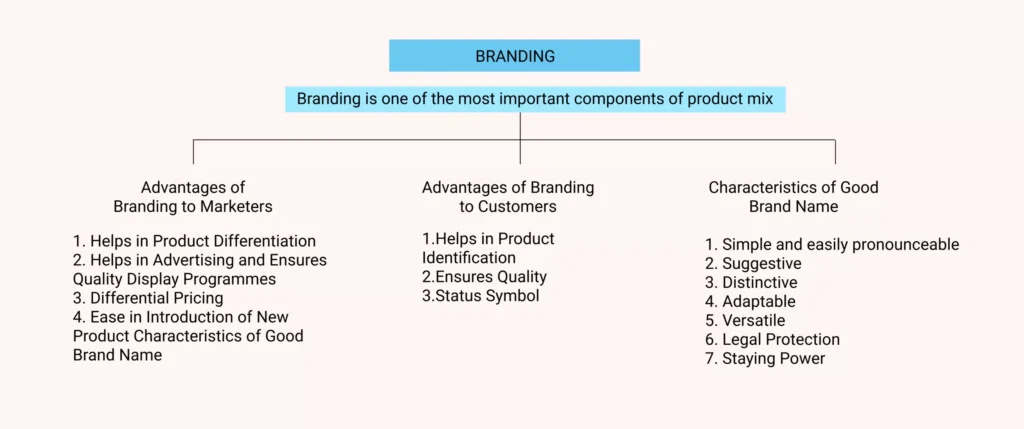
    Branding is one of the most important components of product mix.

    • Firms have to decide whether to sell the product in its Generic Name (name of the category of the product, say Fan, Pen, etc.) or to sell them in a Brand Name (such as Polar Fan or Rotomac Pen).
    • If products were sold by generic names, it would be very difficult for marketers to distinguish their products from that of their competitors.
    • Therefore, most marketers give a brand name to their products, which helps in identifying and distinguishing their products from the competitor’s products.

    What is Branding ?

    The process of giving a name, sign or symbol to a product is called branding. Through branding, firm tries to build a distinct and unique image for his product in the minds of public. An established brand name increases the reputation and goodwill of the firm and generates repeat sales.

    Important Terms related to Branding

    Brand: Brand is a name, sign, design, or some combination of them, which is used to identify a product. It differentiates the product from competing products For example, some of the common brands are Bata, Lifebuoy, Parker, etc. Brand is a comprehensive term, which has the following components:

    • Brand Name: Brand name refers to that part of a brand, which can be spoken. It is the verbal component of a brand. For example, brand names like Mercedes, Nike, Maggie, etc.
    • Brand Mark: Brand mark refers to that part of a brand, which cannot be spoken, but can be recognized in the form of sign, symbol or design. For example, Star of Mercedes , swoosh sign of Nike, etc.
    • Trade Mark: A brand or part of a brand that is given legal protection is called a trademark. The firm which gets its brand registered has the exclusive right for its use and no other firm can use such name or mark in the country.

    Advantages of Branding to Marketers

    1. Helps in Product Differentiation: Branding helps a firm in distinguishing its product from other competing products. It enables the firm to secure and control the market for its products.

    2. Helps in Advertising and Display Programmes: With a brand, name advertisement not only creates awareness about the product but popularises the brand. Without a brand name, the advertiser can only awareness of the generic product and can never be sure of the sale product. For example, people will not simply purchase toothpaste, but they will ask for a brand, like Close Up, Colgate, etc.

    3.Differential Pricing: An established brand name enables the firm to charge prices higher than the competing products. It is possible because customers are ready to pay more for preferable brands.

    4.Ease in Introduction of New Product: If a new product is introduced under a known brand, then the new product can enjoy all the advantages of a known brand. For example, Maggie (Noodles) extended this brand name to introduce many of its new products such as Tomato Ketchup, Soups, etc.

    Advantages of Branding to Customers

    1. Helps in Product Identification: Once a customer is satisfied with a particular brand, he does not make a close inspection every time. So, branding makes the identification of products easier and saves considerable time and energy in shopping.
    2. Ensures Quality: Branding ensures a particular level of quality of the product. In case of any deviation in the quality, customers can make a complaint to the manufacturer or the marketer. This builds up the confidence of the customers and helps in increasing his level of satisfaction.
    3. Status Symbol: Certain brands provide status and prestige to consumers because of their quality. Consumers feel proud in using such brands as it gives them psychological satisfaction. It adds to the level of satisfaction of the customers.

    Characteristics of Good Brand Name

    Choosing the right brand name is a very important decision because once a brand name is chosen and the product is launched in the market, it becomes very difficult to change it. The following factors should be kept in mind while choosing a brand name:

    • Simple and easily pronounceable: The brand name should be simple, short and easy to pronounce and remember. For example, Surf, Lux, VIP etc. Companies should avoid difficult words like Heinz.
    • Suggestive: The brand name should suggest the benefits, quality or purpose of the product. For example, Lijjat Papad suggests taste of papad.
    • Distinctive: The brand name should be unique and distinctive so that the product is easily differentiated. For example, Liril, Sprite, etc.
    • Adaptable: The brand name should be adaptable to packing or labelling requirements, to different advertising media and to different languages.
    • Versatile: The brand name should be versatile so that it can accommodate any new product added to the line. For example, names like Maggie or Colgate possess this characteristic.
    • Legal Protection: The brand name should be capable of being registered and protected legally to prevent any kind of imitation by the rivals. For example, Haldiram is a registered brand name.
    • Staying Power: The brand name should have staying power, i.e. it should have stable life. For example, Bata or Philips. It should not depend upon fashions and styles as they have a short life.
    What is Banding
    What is Banding
  • Sundar Pichai: A Biography of Success and Inspiration

    Sundar Pichai: A Biography of Success and Inspiration

    From a modest upbringing in India to leading one of the world’s most influential technology companies, Sundar Pichai’s journey is a testament to his intelligence, hard work, and unwavering determination. His rise from a metallurgical engineer to the CEO of Alphabet Inc., the parent company of Google, is a story of innovation, leadership, and the pursuit of excellence.

    NameSundar Pichai
    BornJune 10, 1972 – Madurai, Tamil Nadu
    Age49
    CitizenshipThe United States of America
    EducationIndian Institute of Technology, Kharagpur (B.Tech.), Stanford University (MS), University of Pennsylvania (MBA)
    TitleCEO of Alphabet and Google
    Board member ofAlphabet Inc., Magic Leap
    Net worth$1.31 Billion(as of 2022)
    Monthly Income$18 Million(as of Jan 2022)
    WifeAnjali Pichai

    Early Life and Education

    Sundar Pichai, born Sundar Pichai Sundararajan on June 10, 1972 in Madurai, Tamil Nadu, India, is known through his work in technology and great leadership. He was an ordinary child in a modest family in India but could become the CEO of Alphabet Inc., which was before known as Google. This itself shows his smartness along with hard work and stronger will.

    The childhood of Pichai has been anchored in the true value of education.

    Sundar Pichai - Early Life and Education
    Sundar Pichai – Early Life and Education

    His father was an electrical engineer who worked really hard and made Sundar also love learning and solving problems. He did well at school, especially at mathematics and science. Then went to Jawahar Vidyalaya Senior Secondary School, Chennai, before moving over to the famous Indian Institute of Technology (IIT), Kharagpur where he earned a metallurgical engineering degree.

    A Tour to the United States

    After his undergraduate degree, Pichai felt that he needed to learn more. He went to the United States. There, he won a scholarship to study for a master’s degree in materials science and engineering at Stanford University. While at Stanford, he became very interested in technology and software, which later guided his career.

    Sundar Pichai – Journey at Google

    Sundar Pichai embarked on his professional journey as an engineering and product manager at Applied Materials before joining McKinsey & Company as a management consultant. In 2004, he joined Google as a manager and focused on enhancing their client software products, which included Google Chrome and Chrome OS. Additionally, Pichai is recognized as the visionary behind Google Drive.

    In 2009, Pichai presented a demonstration of the Chrome OS, leading to the trial and testing release of Chromebook in 2011. The public release of Chromebook followed in 2012. Furthermore, on March 13, 2013, Pichai expanded his responsibilities to include the oversight of Android, a role previously held by Andy Rubin.

    Although Pichai did not invent the Google Chrome browser, he played a pivotal role in its active development and transformation into the most widely utilized web browser. Consequently, Pichai’s exceptional decision-making abilities and the successful launch of various products under his supervision contributed to his appointment as the CEO of Google on August 10, 2015. Under his leadership, Google witnessed unprecedented growth and diversification, expanding into various domains such as artificial intelligence, cloud computing, and hardware.

    Reach for the Top

    Pichai rose very fast at Google. He really cared how the users feel, and it was very easy for him to lead teams that can create new ideas. Most of the key Google products, like Gmail, Google Maps, and Google Drive, owe a lot of their creation to him as he led in making ideas clear to many of them.

    Pichai became the next CEO of Google in 2015 by taking over Larry Page’s place, who was its founder. This actually proved to be a big moment, making him one among the most powerful people in tech. During his period, Google kept on making new innovations and expanding its wings to find new areas in which to make further growth such as artificial intelligence, machine learning, or self-driving cars.

    CEO of Alphabet Alphabet Inc. was founded in 2019 after Google’s change in the company structure. Sundar Pichai is the CEO of Alphabet and is in control of all of the businesses under the umbrella of Alphabet Inc., including Google, Waymo, Verily, and X.

    A Visionary Leader

    Pichai, the CEO of Alphabet, is leading the future of technology. He has a clear vision for the company and wants to use technology to help with big problems in the world. Under his guidance, Google has made important progress in fields like artificial intelligence, healthcare, and sustainability.

    Sundar Pichai – The Family Man

    Sundar Pichai is married to Anjali Pichai. Anjali was Sundar’s classmate at IIT Kharagpur. They have two kids, a boy named Kiran Pichai and a girl named Kavya Pichai. The couple stays in Los Altos hills.

    Sundar Pichai - The Family Man
    Sundar Pichai – The Family Man

    Sundar and his family are known for maintaining a low profile and rarely discuss their lives on public platforms.

    He is humble, smart, and dedicated to his job. He has also worked towards aiding other fellow humans. The Pichai Family Foundation, backed by him and his wife, is dedicated to the propagation of education and healthcare among needy masses.

    Sundar Pichai – Inspiration and Leadership

    Sundar Pichai’s journey from a small town in India to the pinnacle of the tech industry serves as an inspiration to millions worldwide. His story embodies the power of determination, hard work, and continuous learning. Pichai’s leadership style is characterized by humility, empathy, and a deep understanding of the evolving needs of users and customers. He encourages a culture of innovation and inclusivity within the company, fostering an environment where employees can thrive and push boundaries. Pichai’s commitment to empowering the next generation of technologists and bridging the digital divide has been evident through initiatives like Google’s “Grow with Google” program, which aims to provide digital skills training to individuals across the globe.

  • Henry Fayol’s 14 Principles of Management

    Henry Fayol’s 14 Principles of Management

    Any organization that wishes to be efficient and achieve its goals needs good management. Management has four basic functions – planning, organizing, leading, and controlling, also called the POLC framework in management. Without these in place, there would be little to no structure and focus in an organization.

    Henri Fayol (1841-1925), a French Industrialist offered 14 principles of management for the first time in 1916. His fourteen principles of management serve as a guide in helping managers to manage their organizations. The principles propounded by Fayol can be represented by an acronym called “DAD SEE U USSR CIO”.

    By placing the focus on managerial skills over technical skills, these principles give us a foundation for what we call “good management”.

    Henry Fayol’s 14 Principles of Management

    Henry Fayol’s 14 Principles of Management are as follows

    1. Division of Labour: This principle states that there must be job specialization so as to enhance work performance and productivity.
    2. Authority and Responsibility: According to Fayol if an authority is given to a person, he or she must be made responsible for that duty i.e. employee authority must be in-line with their responsibility.
    3. Discipline: This implies that every employee must obey orders.
    4. Scalar Chain: This principle states that there must be a clear line of formal authority and communication from the top hierarchy to the bottom level of the organization.
    5. Equity: This implies that there must be kindness, fairness, and justice in the treatment of employees if management wants their loyalty and commitments towards given job.
    6. Espirit de corps: This principle emphasizes that team spirit and cooperation should be encouraged in order to bring about harmony and unity within the organization.
    7. Unity of Command: This principle obliged all employees to receive orders and be made accountable to one superior at a time so that conflict can be avoided.
    8. Unity of Direction: This implies that all employees must be geared towards the same direction so as to achieve the common goals of the organization.
    9. Stability of Tenure: This principle states that the employee period on a given job must be stable and he or she must not be moved or transfer without clearing notification for doing so.
    10. Subordination of Individual to General Interest: This principle states that the interest of one person should not overshadow the interest of the organization as a whole.
    11. Remuneration: This means that employees are entitled to fixed wages and salaries and they must be well motivated to ensure higher productivity, thereby boosting organizational profitability.
    12. Centralization: This implies that all major decisions are concentrated in the hand of one single superior, while decentralization means allowing the subordinates to partake in the decision relating to their respective departments. The degree in which centralization should be adopted depends upon the nature of the organization that the manager is working.
    13. Initiative: Management should encourage workers to use their initiative and creativity on the given job even though it may lead to wastage or loss on the part of the organization.
    14. Order: There should be an orderly arrangement of people and materials in the right place, at the right time, doing the right job, in which they are best suited.

    Henry Fayol’s 14 principles of management are universally accepted and continually used as a guideline for managers across the world. Though these principles of management are more than 100 years old, without them, it would push us back hundreds of years back when technical skills reigned supreme and people lacked managerial responsibility.

  • Inspirational Story of Narayana Murthy, Biography, Success, Inspiration

    Inspirational Story of Narayana Murthy, Biography, Success, Inspiration

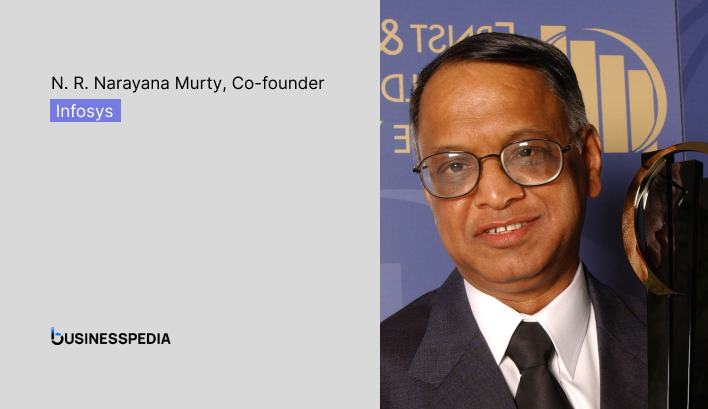
    Narayana Murthy is a visionary entrepreneur who is widely recognized for being the founder of one of India’s largest software companies, Infosys. He was born on August 20, 1946, in Mysore, India and went on to become a global icon in the technology industry. In this blog, we will take a closer look at Narayana Murthy’s life, his achievements, and his impact on the tech industry.

    Early Life and Education

    Narayana Murthy’s journey is a true testament to the power of determination and passion. Born into a modest family in the vibrant city of Mysore, he defied all odds to carve a path of excellence. With an unwavering thirst for knowledge, he pursued higher education, earning a degree in Electrical Engineering from the prestigious National Institute of Engineering.

    Driven by an insatiable curiosity, Murthy ventured to the United States to further expand his horizons. There, he immersed himself in the world of computer science, earning a master’s degree from the esteemed University of Mysore. But his thirst for knowledge didn’t stop there; Murthy went on to achieve a Master of Business Administration from Indiana University, adding an extra dimension to his already impressive skill set.

    Narayana Murthy’s passion for learning and his relentless pursuit of excellence have made him an inspiration to countless individuals around the globe. His remarkable journey serves as a vivid reminder that with determination and unwavering passion, one can achieve greatness, regardless of the challenges that lie ahead.

    Foundation of Infosys

    In the year 1981, a vision was born. Narayana Murthy, a true visionary and trailblazer, fearlessly embarked on a quest to redefine the world of software services. With unwavering determination and an unrivaled passion for excellence, he founded Infosys, a company that would revolutionize the industry.

    Amidst countless challenges and formidable obstacles, Narayana Murthy and his dedicated team of software professionals never wavered. Their relentless pursuit of perfection fueled their drive to overcome financial constraints, limited clients, and fierce competition. Each setback was merely a stepping stone to greater heights.

    Through sheer grit and visionary leadership, Infosys emerged as a towering presence, an indomitable force in the realm of software services. They unleashed a tidal wave of innovation, setting new standards and raising the bar for excellence. Clients from around the world flocked to embrace their cutting-edge solutions and unmatched quality.

    Today, as we reflect on the journey that began over three decades ago, we witness the lasting impact of Narayana Murthy’s passion and the enduring legacy of Infosys. A testament to the power of belief, resilience, and unyielding dedication, this is the story of a company that dared to dream, dared to defy the odds, and ultimately, triumphed against all adversaries.

    Visit Infosys and experience the awe-inspiring journey that continues to shape the world of software services.

    Growth and Expansion of Infosys

    Under Narayana Murthy’s leadership, Infosys grew rapidly and became a publicly traded company in 1993. The company quickly expanded its operations globally, establishing offices in several countries including the United States, Europe, and Asia. Infosys was also one of the pioneers of the offshore outsourcing model, which allowed it to provide high-quality software services at a fraction of the cost compared to its competitors. Today, Infosys is a leading global provider of consulting, technology, and outsourcing services and is widely regarded as one of India’s most successful technology companies.

    Philanthropic Work

    Narayana Murthy is also well known for his philanthropic work and commitment to social causes. He has established several charitable foundations and organizations aimed at improving the lives of the less fortunate. Through these organizations, he has provided education and healthcare services to thousands of people and has also played a major role in promoting literacy and financial inclusion in India.

    Conclusion

    In conclusion, Narayana Murthy is a true visionary who has had a profound impact on the technology industry. Through his hard work, determination, and leadership skills, he has transformed Infosys from a small startup into one of the world’s leading software companies. His philanthropic work and commitment to social causes have also earned him widespread recognition and respect. Narayana Murthy is an inspiration to aspiring entrepreneurs and a shining example of what can be achieved through hard work and determination.

  • Levels of Management

    Levels of Management

    In this article, you’ll learn about Levels of Management and the different role occupied by the levels of management in the organization.

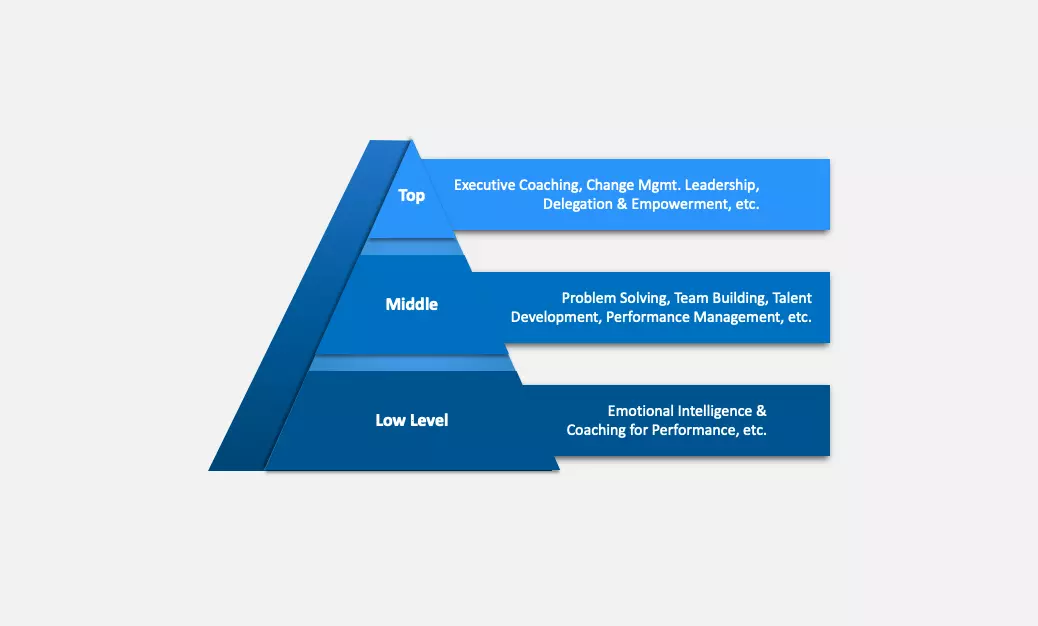
    “Levels of Management’ refers to a line of demarcation between various managerial positions in an organization. The number of levels in management increases when the size of the business and workforce increases and vice versa.

    The levels of Management are as follows:

    1.Top Level Management

    Board of Directors, MD, Owners, Chief Executives

    • To analyse, evaluate and deal with th environmental forces
    • To establish overall long term goals and broad policies of the company including the master budget
    • To appoint departmental and other key executives
    • To represent the company to the outside world
    • To coordinate the activities and efforts of different department

    2. Middle Level Management

    Sales Executives, Production Executives, Production executives, etc.

    • To interpret and explain the policies framed by top management
    • To compile and issue detailed instruction regarding operations
    • To Cooperate among themselves so as to integrate various parts of the division or a department
    • To motivate supervisory personnel to work for Orgn goals
    • To develop and train supervisory and operative personnel.

    3. Supervisor / Operating / Lower Level Management

    Superintendents, Branch managers, General Foremen

    • To plan day to day production within the goals lay down by higher authority
    • To assign jobs to workers and to make arrangement for their training and development
    • To supervise and control workers and to maintain personal contact with them.
  • 7 C’s of Effective Business Communication

    7 C’s of Effective Business Communication

    Effective business communication is crucial for success in any organization. Whether you are a seasoned professional or just starting out in your career, mastering the 7 C’s of Effective Business Communication is essential. In this blog post, we will explore these 7 C’s in detail and provide valuable insights on how to enhance your communication skills in the workplace. So, let’s dive in and discover the key principles that will help you become a more effective communicator.

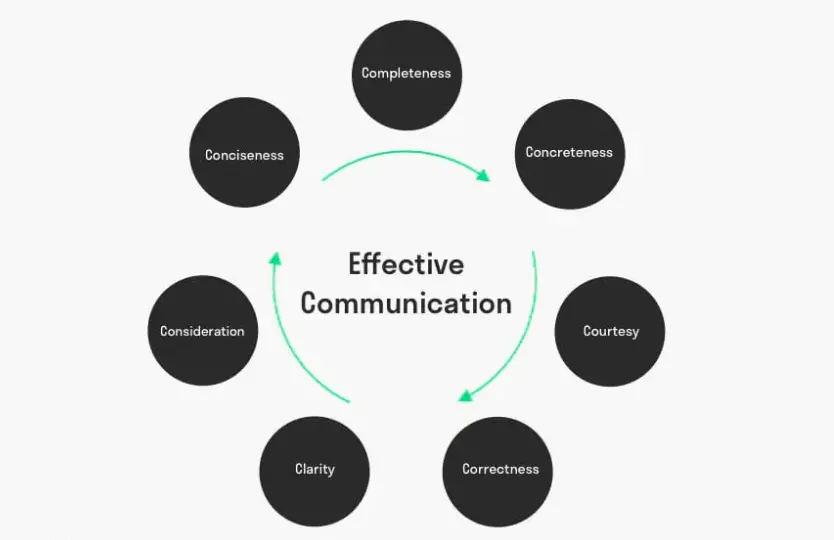
    The message is said to be effective when the receiver understands the same meaning that the sender was intended to convey. For any communication in business, in order to be effective, it must have seven qualities. These seven attributes are called seven C’s of effective business communication. (All these attribute starts with the alphabet “C” so are called 7 C’s).

    7 C’s of Effective Business Communication
    7 C’s of Effective Business Communication

    7 C’s of Effective Business Communication

    1. Correctness 
    2. Clarity 
    3. Conciseness 
    4. Completeness 
    5. Consideration 
    6. Concreteness 
    7. Courtesy 

    1. Correctness

    Correctness in communication implies that there are no grammatical errors incommunication. Correct communication has following features:  

    • The message is exact, correct and well-timed.  
    • If the communication is correct, it boosts up the confidence level.     
    • Correct message has greater impact on the audience/ readers.          
    • It checks for the precision and accurateness of facts and figures used in the message.                 
    • It makes use of appropriate and correct language in the message.
    • Correctness in message helps in building confidence.

    Guidelines

    • Right level of language, and 
    • Accuracy of facts, figures and words.

    2. Clarity

    Clarity makes comprehension easier.

    Clarity demands the use of simple language and easy sentence structure in composing the message. When there is clarity in presenting ideas, it’s easy for the receiver/decoder to grasp the meaning being conveyed by the sender/encoder.  

    • Clarity means getting your message across so the receiver will understand what you are trying to convey. 
    • You want that person to interpret your words with the same meaning you have in mind. 
    • Accomplishing that goal is difficult because, as you know, individual experiences are never identical, and words have different meanings to different persons. 

    Here are some specific ways to help make your messages clear: 

    • Choose short, familiar, conversational words.
    • Construct effective sentences and paragraphs.
    • Achieve appropriate readability (and listenability).
    • Include examples, illustrations, and other visual aids, when desirable.

    Guidelines

    • Chose precise,  concrete and familiar simple words 
    • Construct effective sentences and paragraphs

    Example:     

    Familiar               Next familiar words
    after      subsequent
    home    domicile
    for example e.g.
    payremuneration
    invoice  statement for payments

    3. Conciseness

    “Brief and minimum words”

    “Conciseness is the prerequisite to effective business communication.” As you know that all businessmen have very short time .

    Concise message save the time and expenses for both the parties.

    A concise message saves time of both the sender and the receiver. Conciseness, in a business message, can be achieved by avoiding wordy expressions and repetition. Using brief and to the point sentences, including relevant material makes the message concise. Achieving conciseness does not mean to loose completeness of message.  

    In business communication, you should be brief and be able to say whatever you have to say in fewest possible words without sacrificing the other C qualities. Conciseness is desired because of the following benefits: 

    • A concise message saves time and expense for both sender and receiver. 
    • Conciseness contributes to emphasis; by eliminating unnecessary words, you let important ideas stand out.
    • When combined with a “you-view”, concise messages are inherently more interesting to recipients as they avoid unnecessary information.

    Conciseness saves time.

    Example:

    Instead of “at this time” you can just use only  a concise word “NOW” ,Always try to use “ To the point Approach” in business scenario perspective.

    Guidelines

    • Avoid wordy expression. E.g. in the city of Kanpur (in Kanpur)
    • Include only relevant material
      • Avoid unnecessary repetition 
      • Organize your  message well

    4. Completeness

    By completeness means the message must bear all the necessary information to bring the response you desire. The sender should answer all the questions and with facts and figures and when desirable, go for extra details.  

    • Every communication must be complete and adequate. Incomplete messages keep the receiver guessing, create misunderstanding and delay actions. Every person should, therefore, be provided with all the required facts and figures.

    Example

    When factory supervisor instructs workers to produce, he must specify the exact size, shape, quality and cost of the product. Any assumptions behind the messages should also beclarified. While answering a letter, all the questions raised in the letter must be replied.

    • Completeness brings the desired response.

    Example

    Suppose you are working with multinational company who is engaging with engineering goods , like A.C.  Now let say  one of your major customer wants some technical information regarding “thermostat” (because he wants to convey the same to the end users ). In this case you have to provide him complete information in a short span of time.  If possible, provide him some extra information which he does not know,.

    In this way you can maintain a good business relation with him, otherwise he may switch to an other company.

    • More likely to bring desired results without the expense of additional message.
    • Can do a better job in building goodwill.
    • Can help avert costly lawsuits that may result in important message is missing. 
    • Communication seems unimportant can be important if information is complete and  effective

     Guidelines

    • Provide all necessary information
    • Answer all questions asked
    • Give some thing extra when desirable.

    5. Consideration

    “Keep receiver in mind”

    Consideration demands to put oneself in the place of receiver while composing a message. It refers to the use of “You” attitude, emphases positive pleasant facts, visualizing readers problems, desires, emotions and his response.  

    Guidelines

    • Focus on ‘you’ instead of ‘I’ & ‘We’.
    • Show audience benefit or interest in receiver.
    • Emphasize positive, pleasant facts.
    • Show empathy, ask how would you feel if you were to receive this message. Avoid gender bias – sir/madam, chairperson (chairman)
    • Consideration means understanding of human nature.

    Always write a message in such a way how audience should be benefited from it. 

    Example:

    I am delighted to announce that we will extend to make shopping more.

    6.Concreteness

    “ Specific, not vague”

    Being definite, vivid and specific rather than vague, obscure and general leads toconcreteness of the message. Facts and figures being presented in the message should be specific.

    • Communicating concretely means being specific, definite, and vivid rather than vague and general. 

    Guidelines

    • Use concrete expression
    • Use specific facts & figures
    • Put action in your words (do not use passive voice) 
    • Choose vivid, image-building words.

    Concreteness reinforces confidence.

    Example:

    • He is very intelligent student of class and stood first in the class.
    • Ali’s GPA in B.Sc Electrical Engineering  2021-22 session was 3.95/4.0, he stood first in his class.
    • Always write on a very solid ground. It should definitely create good image as well.

    7. Courtesy

    “Courtesy or politeness stems from a sincere you-attitude”

    • Courteous messages help to strengthen present business friendships, as well as make new friends. 
    • Courtesy stems from sincere you-attitude.
    • It is not merely politeness with mechanical insertions of “please’s” and “thank-you’d.” 

    To be courteous, considerate communicators should follow these suggestions regarding tone of the communications.

    • Be sincerely tactful, thoughtful, and appreciative. 
    • Omit expressions that irritate, hurt, or belittle. 
    • Grant and apologize good-naturedly.

    In business, almost everything starts and ends in courtesy. Courtesy means not only thinking about receiver but also valuing his feelings. Much can be achieved by using polite words and gestures, being appreciative, thoughtful, tactful, and showing respect to the receiver.

    Courtesy builds goodwill. 

    TACTLESS, BLUNT  MORE TACTFUL  
    Stupid letter; I cant understand  I should understand it, as there is no confusing word in this letter, could you please explain it once again ..?  
    Its your fault, you did not properly read my latest FAX   Sometimes my wording is not precise; let me try again  

    Thoughtfulness and Appreciation

    Writers who send cordial, courteous messages of deserved congratulations and appreciation (to a person inside & outside) help to build goodwill. The value of goodwill or public esteem for the firm may be worth thousands of dollars.

  • What is Management ? Definition, Characteristics,Skills and Need

    What is Management ? Definition, Characteristics,Skills and Need

    Management as how the mind controls the human body and its function similar management (mind) controls the various activities human body) in the Organisation

    Collection of physical equipments. 4 Nil’s in Organisation — Men, Machine,Materials, Money, and leads to nothing. For efficient and profitable functioning it is necessary that all these factors are put to work in a co­ordinated manner.

    Management Definition

    Management is the art of getting things done through others.

    Management is the process of designing and maintaining an environment in which individuals, working together in groups efficiently to accomplish selected aims

    Harold Koontz
    • Managers carry out their managerial function
    • Applies to any kind of Organisation
    • Applies to managers at all Organisational levels
    • Aim is to create a surplus
    • Concerned with productivity, implies effectiveness and efficiency.
    • Mgt of 4 M’s in the Orgn — Men, Machine, Materials & money.

    Characteristics of Management

    • Management is Universal
    • Management is dynamic
    • Management is a group of managers
    • Management is Purposeful
    • Management is goal oriented
    • Management is integrative Function
    • Management is a Social process
    • Management is a Multi-faceted discipline
    • Management is a continuous process
    • Management is a system of authority
    • Management is a resource
    • Management is intangible

    Managerial Skills

    • Conceptual skills
    • Human Skills
    • Technical Skills
    • Design Skills — Decision making

    Need for Management

    1. To increase efficiency
    2. To crystallize the nature of Management job
    3. To improve research in Management
    4. To attain social goals