Author: Shreya Maurya

  • What is Planning, Definition, Characteristics, and Objective

    What is Planning, Definition, Characteristics, and Objective

    In this article, we learn about What is Planning, Definition, Characteristics, and Objective.

    Planning may be defined as deciding in advance what to be done in the future. It is the process of thinking before doing. It involves the determination of goals as well as the activities required to be undertaken to achieve the goals.

    In the planning, process managers anticipate the future and accordingly decide what activities must be undertaken. Planning deciding in advance – What to do, How to do, When, and by whom.

    What is Planning, Definition, Characteristics, and Objective

    Definition of Planning

    “Planning means the determination of what is to be done, how it is to be done, who is to do it, and how results are evaluated.”

    James Lundy

    “Planning is deciding the best alternatives among others to perform different managerial operation in order to achieve the predetermined goals.”

    Henry Feyol

    Characteristics of Planning
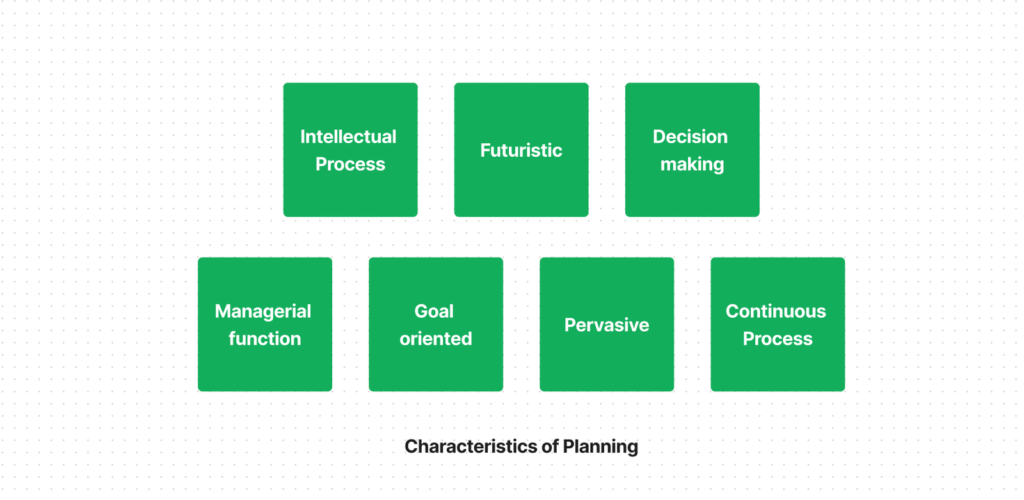
    Characteristics of Planning
    1. Managerial function: Planning is a first and foremost managerial function provides the base for other functions of the management, i.e. organising, staffing, directing and controlling, as they are performed within the periphery of the plans made.
    2. Goal oriented: It focuses on defining the goals of the organisation, identifying alternative courses of action and deciding the appropriate action plan, which is to be undertaken for reaching the goals.
    3. Pervasive: It is pervasive in the sense that it is present in all the segments and is required at all the levels of the organisation. Although the scope of planning varies at different levels and departments.
    4. Continuous Process: Plans are made for a specific term, say for a month, quarter, year and so on. Once that period is over, new plans are drawn, considering the organisation’s present and future requirements and conditions. Therefore, it is an ongoing process, as the plans are framed, executed and followed by another plan.
    5. Intellectual Process: It is a mental exercise at it involves the application of mind, to think, forecast, imagine intelligently and innovate etc.
    6. Futuristic: In the process of planning we take a sneak peek of the future. It encompasses looking into the future, to analyse and predict it so that the organisation can face future challenges effectively.
    7. Decision making: Decisions are made regarding the choice of alternative courses of action that can be undertaken to reach the goal. The alternative chosen should be best among all, with the least number of the negative and highest number of positive outcomes.

    Planning is concerned with setting objectives, targets, and formulating plans to accomplish them. The activity helps managers analyze the present condition to identify the ways of attaining the desired position in the future. It is both, the need of the organization and the responsibility of managers.

    Objective of planning

    1. Reduce uncertainty: Future is uncertain. Planning may convert the uncertainty into certainty. This is possible to some extent by, planning which is reducing uncertainty.
    2. Bring cooperation and co-ordination: Planning can bring co-operation and co-ordination among various sectors of the organization. The rivalries and conflicts among departments could be avoided through planning.
    3. Economy in operation: As already pointed out, planning selected best alternative among various alternatives this will lead to the best utilization of recourses. The objectives of the organization are achieved easily.
    4. Anticipate the unpredictable contingencies: Some events could not be predictable. These events are termed as contingencies. These events may affect the smooth functioning of an enterprise.
    5. Achieving the pre-determined goals: Planning activities are aimed at achieving the objectives of the enterprise. The timely achievements of objectives are possible only effective planning.
    6. Reduce competition: The existence of competition enables the enterprise to get a chance for growth. At the same time, stiff competition should be avoided. It is possible, to reduce competition through planning.

    Planning is present in all types of organizations, households, sectors, economies, etc. We need to plan because the future is highly uncertain and no one can predict the future with 100% accuracy, as the conditions can change at any time. Hence, planning is the basic requirement of any organization for survival, growth, and success.


  • Oral Communication : Definition, Types, Advantages and Disadvantages

    Oral Communication : Definition, Types, Advantages and Disadvantages

    Oral communication implies communication through mouth. It includes individuals conversing with each other, be it direct conversation or telephonic conversation. Speeches, presentations, discussions are all forms of oral communication. Oral communication is generally recommended when the communication matter is of temporary kind or where a direct interaction is required. Face to face communication (meetings, lectures, conferences, interviews, etc.) is significant so as to build a rapport and trust.

    Great communication skills are your ticket to success in the academic and business world. But have you ever been overcome by fear or anxiety prior to going on a job interview or speaking in front of an audience?

    Knowing when to choose oral communication and polishing your speaking skills can help you at every stage of your career.

    What is Oral communication ?

    Oral communication is the process of verbally transmitting information and ideas from one individual or group to another. Oral communication can be either Formal or Informal.

    Examples of informal oral communication include:

    • Face-to-face conversations
    • Telephone conversations
    • Discussions that take place at business meetings

    More formal types of oral communication include:

    • Presentations at business meetings
    • Classroom lectures
    • Commencement speech given at a graduation ceremony

    With advances in technology, new forms of oral communication continue to develop. Video Phones and Video Conferences combine audio and video so that workers in distant locations can both see and speak with each other.

    Other modern forms of oral communication include Podcasts (audio clips that you can access on the Internet) and Voiceover Internet Protocol (VoIP), which allows callers to communicate over the Internet and avoid telephone charges. Skype is an example of VoIP.

    Advantages of Oral Communication

    • There is high level of understanding and transparency in oral communication as it is interpersonal. There is no element of rigidity in oral communication.
    • There is flexibility for allowing changes in the decisions previously taken.
    • The feedback is spontaneous in case of oral communication. Thus, decisions can be made quickly without any delay.
    • Oral communication is not only time saving, but it also saves upon money and efforts.
    • Oral communication is best in case of problem resolution. The conflicts, disputes and many issues/differences can be put to an end by talking them over. Oral communication is an essential for teamwork and group energy.
    • Oral communication promotes a receptive and encouraging morale among organizational employees.
    • Oral communication can be best used to transfer private and confidential information/matter.

    Disadvantages of Oral Communication

    • Relying only on oral communication may not be sufficient as business communication is formal and very organized.
    • Oral communication is less authentic than written communication as they are informal and not as organized as written communication.
    • Oral communication is time-saving as far as daily interactions are concerned, but in case of meetings, long speeches consume lot of time and are unproductive at times.
    • Oral communications are not easy to maintain and thus they are unsteady.
    • There may be misunderstandings as the information is not complete and may lack essentials. It requires attentiveness and great receptivity on part of the receivers/audience.
    • Oral communication (such as speeches) is not frequently used as legal records except in investigation work.

    Types of oral communication

    • Intrapersonal communication is self-talk or a conversation you hold with yourself under certain circumstances – for example, when you need to make an important decision or learn something about yourself. You may wonder whether intrapersonal communication is just another way of describing the thinking process. In a way, that would be correct.
    • Interpersonal communication is communication between several people. This form of communication may range from the impersonal to the very personal. Impersonal communication is when you talk with a person you do not really care about – there is often coldness or indifference in your attitude when you engage in this kind of communication.
    • Small group communication takes place in a group, usually comprising five to 10 people. This form of communication serves relationship needs (like companionship, family bonding and affection or support) as well as task-based needs, for example, deciding on disciplinary action or resolving conflict in the workplace.
    • Public communication, also known as public speaking, involves communication between a speaker and an audience. This audience may range from just a few people to thousands or even millions of people. The aim of the speaker is usually to inform or to persuade the audience to act, buy, or think in a certain way. A teacher may address an assembly of students on codes of behavior or school rules.
    • Mass communication is communication that is sent out from a source to many receivers all over the world. It takes place through media like films, radio, videos and television. Modern avenues of mass communication like the Internet and blogs can be very powerful indeed as information is disseminated instantly.
    • Corporate communication is communication that takes place among members of an organization, within that organization. Interacting in teams, conferencing with co-workers, talking with a supervisor or manager, giving employees explanations and directions, interviewing and making presentations are some examples of corporate communication
  • What is Group Discussion? Tips and Limitation

    What is Group Discussion? Tips and Limitation

    Group discussion, commonly known as GD, is an effective method of exchanging ideas and opinions among a group of individuals on a specific topic or subject. It is often used as an evaluation tool by various organizations, educational institutions, and competitive exams to assess a candidate’s ability to communicate, express their views, and engage in a group setting. In this article, we will discuss the guidelines, do’s, don’ts, and limitations of group discussions.

    Group discussion is primarily used to know the social framework, personality, behavior, interests, and leadership qualities of a number of candidates simultaneously.

    The interaction in a group occurs in two ways

    • Interaction occurring due to objective relationship
    • Interaction occurring due to personal relationship

    Guidelines for Group Discussion

    1. Be prepared: It is essential to research and gather information on the given topic before participating in the discussion. The more you know, the better you can present your opinions and ideas.
    2. Stay on topic: Focus on the subject at hand and avoid going off-topic. This ensures that the discussion is productive and efficient.
    3. Respect others: It is important to listen to others and respect their opinions, even if you disagree with them. Avoid interrupting or talking over others.
    4. Use appropriate language: Use polite and professional language while speaking. Avoid using slang, profanity, or offensive language.
    5. Maintain eye contact: Make eye contact with the other participants while speaking or listening. It shows that you are attentive and engaged in the discussion.
    6. Be concise: Keep your points brief and to the point. This allows others to understand your ideas and prevents the discussion from going off-topic.

    Tips on Group Discussion

    Let’s read about the points that you should keep in mind:

    1) Adequate matter/ Subject matter is essential : You should have subject knowledge and be well aware of the latest happenings around you, not just in India but around the world as well. To be in a better position, make sure that you have in-depth knowledge on the subject. Subject knowledge is a pre-requisite while you are preparing for a group discussion because you will then have the power to steer the conversation to whichever direction you want to. If you can memorize some relevant data, it will be an added advantage.

    2) Make Sure you Read Widely: Being an avid reader will help you in group discussions. Last minute preparations you are strictly a no, while you are preparing for group discussions. You should read over a period of time. Reading not only adds to your knowledge database, but enhances your vocabulary skills as well. Plus reading over a period of time, helps in your understanding of a particular subject/ topic better.

    3) Choose Magazines that are Rich in Content: Always opt for magazines that are content rich and not just full of advertisements. Often magazines have columns which are promoting a particular institute etc. Avoid such magazines, do some research and buy the best that will be beneficial for you in the long run.

    4) Work on your Communication Skills: You should be well versed in your communication skills. You should have a good vocabulary and a decent command over English. Much before your actual group discussion, rehearse well. You can sit with a group of friends and choose a topic and indulge in a friendly banter. Not only will this increase your knowledge, you will be a better speaker by the time it is time for your GD.

    5) Listen to the Topic Given during GD Carefully: Listen to the topic carefully and understand it… Be alert and vigilant. Sometimes, the topic may be really simple but the manner in which it is presented to you, can be baffling. The first thing that you should do after hearing the topic is by structuring it on the sheet that is given to you to make notes. Make a rough sketch of the points that you would like to speak aloud. You will be at an advantage if you open the discussion, but then beware of what you speak. Deviating from the main topic, or passing strong statements like ‘I agree/ or disagree …’ should be avoided. Your strategy should be to test the waters and make a generic statement relevant to the topic. If you can, back it up by relevant data.

    6) Try and Maintain a Balance in your Tone: Besides what you are saying, remember that the panelists are observing your body language as well. If you do not agree with the other student’s point of view, do not raise your tone in objection. Listen to his point of view and instead of dismissing it upfront, try and draw a common ground. .

    7) Listening Skills are Essential: Carefully listen to what others have to say. Just speaking throughout the discussion doesn’t make you smart, you should also give others a chance to speak. Try and listen to him/her, respect their view point too. If the speaker is making an eye-contact with you remember to acknowledge him by saying “yes, you agree” or just by nodding your head, so that the speaker is aware that his listeners are listening to him and paying full attention. This will also show that you are vigilant and are an active participant in the discussion.

    8) Body Gestures are very Important: The panelists observe the way you sit and react in the course of the discussion. . Body gestures are very important, because your body language says a lot about you.In a GD, sit straight, avoid leaning back on to the chair or knocking the table with pen or your fingers. Also, do not get distracted easily. For example, if the door in room you are sitting in opens, do not look back to see who it is, this will show how distracted you are.

    9) Be the first and also the Last to Speak: As mentioned earlier, initiating a GD is an advantage. Closing it too also adds brownie points. If you can grab the opportunity to close the discussion, then you should summarize it. If the group has not reached a conclusion try concluding it .

    Do’s in Group Discussion

    1. Listen attentively: Pay attention to what others are saying and actively listen to their viewpoints.
    2. Participate actively: Participate in the discussion by expressing your ideas and opinions.
    3. Initiate discussion: Initiate the discussion by asking questions or presenting your point of view.
    4. Provide evidence: Support your arguments with facts and evidence.
    5. Analyze the topic: Analyze the topic and provide a balanced view of the subject.

    Don’ts in Group Discussion:

    1. Interrupting others: Avoid interrupting others while they are speaking.
    2. Dominating the discussion: Do not dominate the discussion by talking too much or not letting others speak.
    3. Personal attacks: Avoid personal attacks or criticizing others’ opinions.
    4. Disrespectful behavior: Do not display disrespectful behavior towards other participants.

    Limitation of a Group Discussion

    1. Time constraints: The time allotted for group discussion is limited, which may not be enough for all participants to express their views.
    2. Dominance of individuals: Some individuals may dominate the discussion, which can lead to a biased outcome.
    3. Lack of preparation: Participants may not be adequately prepared for the discussion, which can result in unproductive conversations.
    4. Language barriers: Participants who are not fluent in the language of the discussion may have difficulty expressing their views.

    In conclusion, group discussion is an effective method of exchanging ideas and opinions among a group of individuals. Following the guidelines, do’s, and don’ts mentioned above can ensure a productive and efficient discussion. However, it is important to be aware of the limitations of group discussion and take steps to overcome them.

    FAQ related to Group Discussion

    What is Group Discussion?

    Group discussion, commonly known as GD, is an effective method of exchanging ideas and opinions among a group of individuals on a specific topic or subject. It is often used as an evaluation tool by various organizations, educational institutions, and competitive exams to assess a candidate’s ability to communicate, express their views, and engage in a group setting. In this article, we will discuss the guidelines, do’s, don’ts, and limitations of group discussions.

    What are the 3 C’s of group discussion?

    The three “Cs” which rank you high on this parameter are clarity (the main points to be discussed), content (the vertical depth in each point) and confidence.

    Can we interrupt in group discussion?

    The best time to interrupt a conversation is when the person in front of you completes what they are saying. In practice, the speaker may be able to express himself better, and while he is still holding on, he will continue to elaborate.

    Why is group discussion important?

    Group discussions promote a deeper understanding of a topic and increase long-term retention. Group discussions can also help increase participants’ attention and help maintain their focus by involving them in the learning process. Group discussions can also provide feedback to instructors on participant comprehension.
  • Functions of Management

    Functions of Management

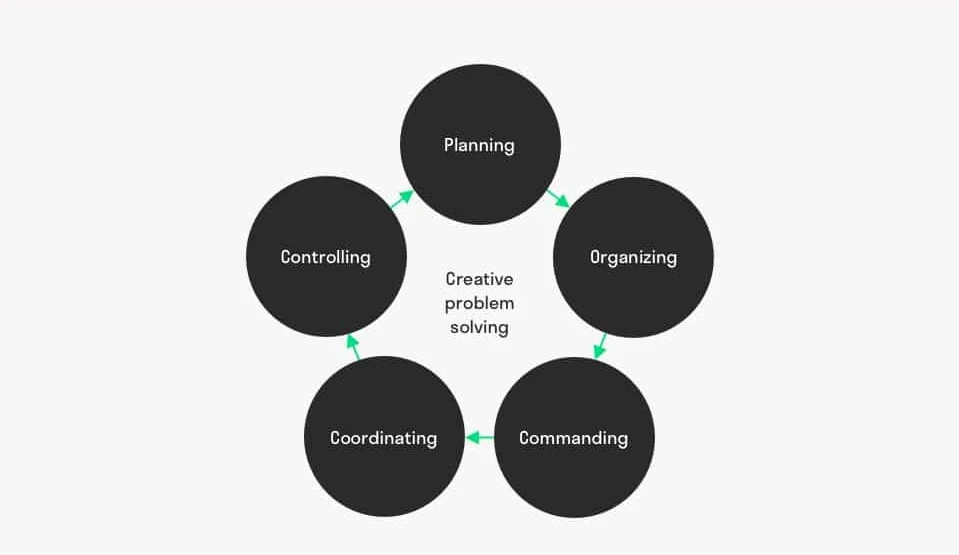
    The controlling function comprises coordination, reporting, and budgeting, and hence the controlling function can be broken into these three separate functions.

    Based upon these seven functions, Luther Gulick coined the word POSDCORB, which generally represents the initials of these seven functions i.e. P stands for Planning, O for Organizing, S for Staffing, D for Directing, Co for Co-ordination, R for reporting & B for Budgeting.

    But, Planning, Organizing, Staffing, Directing, and Controlling are widely recognized functions of management.

    1 Planning

    Planning is future-oriented and determines an organization’s direction. It is a rational and systematic way of making decisions today that will affect the future of the company. It is a kind of organized foresight as well as corrective hindsight. It involves predicting of the future as well as attempting to control the events. It involves the ability to foresee the effects of current actions in the long run in the future.

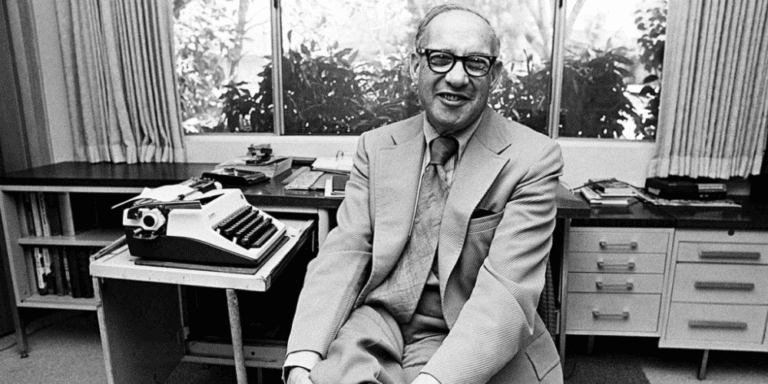
    Planning is the continuous process of making present entrepreneurial decisions systematically and with best possible knowledge of their futurity, organizing systematically the efforts needed to carry out these decisions and measuring the results of these decisions against the expectations through organized and systematic feedback

    Peter Drucker

    An effective planning program incorporates the effect of both external as well as internal factors. The external factors are shortages of resources; both capital and material, general economic trend as far as interest rates and inflation are concerned, dynamic technological advancements, increased governmental regulation regarding community interests, unstable international political environments, etc.

    The internal factors that affect planning are limited growth opportunities due to saturation requiring diversification, changing patterns of the workforce, more complex organizational structures, decentralization, etc.

    2 Organizing

    Organizing requires a formal structure of authority and the direction and flow of such authority through which work subdivisions are defined, arranged, and coordinated so that each partrelates to the other part in a united and coherent manner so as to attain the prescribed objectives.

    To organize a business is to provide it with everything useful or its functioning i.e. raw material, tools, capital and personnel’s.

    Henry Fayol

    Thus the function of organizing involves the determination of activities that need to be done in order to reach the company goals, assigning these activities to the proper personnel, and delegating the necessary authority to carry out these activities in a coordinated and cohesive manner.

    It follows, therefore, that the function of organizing is concerned with:Identifying the tasks that must be performed and grouping them whenever necessary Assigning these tasks to the personnel while defining their authority and responsibility.Delegating this authority to these employees Establishing a relationship between authority and responsibility Coordinating these activities

    3 Staffing

    Staffing is the function of hiring and retaining a suitable work-force for the enterprise both at managerial as well as non-managerial levels. It involves the process of recruiting, training, developing, compensating, and evaluating employees and maintaining this workforce with proper incentives and motivations. Since the human element is the most vital factor in the process of management, it is important to recruit the right personnel.

    Managerial function of staffing involves manning the organization structure through the proper and effective selection, appraisal & development of personnel to fill the roles designed in the structure

    Kootz & O’Donnell

    This function is even more critically important since people differ in their intelligence, knowledge, skills, experience, physical condition, age, and attitudes, and this complicates the function. Hence, management must understand, in addition to the technical and operational competence, the sociological and psychological structure of the workforce.

    4 Directing

    The directing function is concerned with leadership, communication, motivation, and supervision so that the employees perform their activities in the most efficient manner possible, in order to achieve the desired goals.

    The leadership element involves issuing instructions and guiding the subordinates about procedures and methods.The communication must be open both ways so that the information can be passed on to the subordinates and the feedback received from them.Motivation is very important since highly motivated people show excellent performance with less direction from superiors.Supervising subordinates would lead to continuous progress reports as well as assure the superiors that the directions are being properly carried out.

    5 Controlling

    The function of control consists of those activities that are undertaken to ensure that the events do not deviate from the pre-arranged plans. The activities consist of establishing standards for work performance, measuring performance and comparing it to these set standards, and taking corrective actions as and when needed, to correct any deviations.

    Controlling is the measurement & correction of performance activities of subordinates in order to make sure that the enterprise objectives and plans desired to obtain them as being accomplished

    Koontz & O’Donnell

    The controlling function involves:

    • Establishment of standard performance.
    • Measurement of actual performance.
    • Measuring actual performance with the pre-determined standard and finding out the deviations.
    • Taking corrective action.

    All these five functions of management are closely interrelated. However, these functions are highly indistinguishable and virtually unrecognizable on the job. It is necessary, though, to put each function separately into focus and deal with it.

    Let’s have look in Function of management and their Sub-Function

    FunctionsSub- Functions
    PlanningForecasting, decision making, strategy formulation, policy making, programming, scheduling, budgeting, problem-solving, innovation, investigation and research.
    OrganisingGrouping of Functions, Departmentation, delegation, decentralization, activity  analysis, task allocation.
    StaffingManpower planning, job analysis, Recruitment, Selection, Training, Placement, Compensation,Promotion, appraisal, etc.
    DirectingSupervision, Motivation, communication, Leadership, etc.
    ControllingFixation of standard, recording, measurement, reporting corrective action.
  • Management theory of Peter Drucker 

    Management theory of Peter Drucker 

    Peter Drucker developed many ideas, concepts, and principles on management theory throughout his career. One of his many insights was, “Management is doing things right; leadership is doing the right things.

    Peter Drucker’s Management By Objectives

    MBO stands for Management By Objectives, a phrase coined by Peter Drucker in his book “The Practice Of Management,” published in 1954. MBO measures the performance of employees as compared to typical standards for the job. The belief is that, if employees help determine those standards, they will be more likely to fulfil them.

    Smart method

    Drucker’s smart method is a means of checking to make sure an objective is valid. managers carried out this verification by using the smart acronym to make sure the objective is specific, measurable, achievable, realistic and time-related. 

    Knowledge worker

    “Knowledge worker” is one of the many terms coined by Drucker within his management theories. by the measure of today’s society, a knowledge worker is equivalent to the executive of a company

    Decentralization

    Drucker was a believer in decentralization of management. He saw that many leaders try to take on everything in a demonstration of power or a means of maintaining control, under the assumption that only they can accomplish a task correctly. Drucker believed that managers should delegate tasks in order to empower employees.

    Hierarchy of Goals

    Hierarchy of Goals: Management by Objective
    Hierarchy of Goals: Management by Objective

    Peter Drucker’s Five Question

    1. What is your mission? Why does your organization exist in the first place? What are you trying to accomplish for your customers?
    2. Who are your customers? Describe the person you wish to satisfy with your actions.
    3. What does your customer value? What is it that you do especially well that you are uniquely suited to provide to your customers? How can you exceed the standards set by your competition?
    4. What results are you trying to accomplish? How do you measure success?
    5. What is your plan? How do you go about satisfying your customers and getting the results that are most important?

  • 9 Ways to Impress Your Interviewer

    9 Ways to Impress Your Interviewer

    Want Impress Your interviewer and get a job, then this article is for you. Follow are the tips to crack your interview.

    Impressing your interviewer is crucial to landing the job you want. A successful interview can make the difference between getting hired or being rejected. The following Nine ways can help you make a lasting impression and increase your chances of landing the job

    Be Prepared

    Preparation is key to making a good impression. Research the company and the role you are applying for, and be ready to answer any questions the interviewer may have. Show up early to give yourself plenty of time to gather your thoughts and get settled.

    Carry Out Thorough Research

    Do some research about the nature of the business and the position they’re looking for. The information you can gather from your research will help you assess whether your skill set matches the employer’s requirements.

    Dress Professionally

    The way you dress speaks volumes about you, so make sure you look your best. Dress professionally, choose clothing that is appropriate for the role you are applying for, and ensure that you are well-groomed.

    Be Confident

    Confidence is attractive, so be sure to make eye contact, speak clearly, and show your enthusiasm for the role. If you are nervous, take a deep breath and remind yourself that you have done your research and are prepared for this opportunity.

    Tell Stories

    Tell stories whenever you answer questions. For example, if the interviewer asks how committed are you, don’t merely answer that you’re “the most committed person for the job.” Instead, tell stories that can give credence to your answers.

    Show Your Skills

    Highlight your skills and experience that make you a good fit for the role. Use specific examples to demonstrate your abilities and show the interviewer what sets you apart from the other candidates.

    Ask Strategic Questions

    Asking questions shows your interest in the company and the role, and it also gives you the opportunity to learn more about the position and the company culture. Be sure to ask thoughtful, meaningful questions that demonstrate your interest and initiative.

    Be Honest

    Honesty is always the best policy, so be open and transparent about your qualifications, skills, and experience. If you don’t know the answer to a question, don’t be afraid to admit it and ask for clarification.

    Follow Up

    After the interview, send a thank-you note to the interviewer to express your gratitude for the opportunity to meet with them. This shows your professionalism and your continued interest in the role.

    In conclusion, making a great impression on your interviewer takes preparation, confidence, and attention to detail. By following these seven tips, you can increase your chances of landing the job and make a lasting impression on your interviewer.

  • Happy Independence Day 2026: Top 50 Wishes, Messages, Quotes and Images to share with your loved ones

    Happy Independence Day 2026: Top 50 Wishes, Messages, Quotes and Images to share with your loved ones

    As the sun rises on August 15, 2026, India stands united in celebrating its 80th Independence Day. This day marks the triumph of freedom, the culmination of sacrifices, and the spirit of unity that continues to define the nation.

    Independence Day is a time of reflection, celebration, and unity as we commemorate the freedom and sovereignty of our nation. As we step into another year of independence, it’s essential to share our joy with friends and family. To make this day even more special, we’ve compiled a list of the top 50 wishes, messages, and quotes that you can share with your loved ones, spreading the joy and pride that Independence Day brings.

    Wishes for Independence Day

    1. Wishing you a joyful Independence Day filled with pride, freedom, and happiness!
    2. May the colors of our flag always remind us of the sacrifices made for our freedom. Happy Independence Day!
    3. As we celebrate this day, let’s remember and honor the brave souls who fought for our freedom.
    4. Happy Independence Day! Let’s cherish the liberty and opportunities our nation provides us.
    5. May our country always flourish and stand as a symbol of unity and progress. Happy Independence Day!
    6. May the tricolor always fly high, symbolizing the freedom we cherish. Happy Independence Day!
    7. Let’s celebrate the power of unity that led us to freedom. Happy 15th August!
    8. Today, we remember the heroes who gave their all for our tomorrow. Happy Independence Day.
    9. On this day, let’s renew our commitment to a stronger, brighter India. Happy Independence Day!
    10. Wishing you a day filled with the colors of freedom and the fragrance of unity. Happy 77th Independence Day!
    11. As we remember the past, let’s shape a better future for our nation. Happy Independence Day!
    12. May the spirit of freedom inspire us to achieve new heights. Happy 15th August!
    13. Celebrating the journey of India towards progress and prosperity. Happy Independence Day!

    Messages to Share

    1. On this Independence Day, let’s take a moment to appreciate the freedom we enjoy and strive to preserve it for generations to come.
    2. As we witness the flag unfurl, let’s renew our commitment to building a stronger and more inclusive nation.
    3. May the spirit of patriotism inspire us to contribute to the betterment of our country. Happy Independence Day!
    4. Today, we celebrate not just freedom, but the collective strength of our diverse cultures that make our nation truly unique.
    5. Happy Independence Day! Let’s celebrate the victories of the past and the possibilities of the future.

    Quotes to Inspire

    1. “Freedom is not worth having if it does not include the freedom to make mistakes.” – Mahatma Gandhi
    2. “In the truest sense, freedom cannot be bestowed; it must be achieved.” – Franklin D. Roosevelt
    3. “The greatest glory of a free-born people is to transmit that freedom to their children.” – William Havard
    4. “Those who deny freedom to others deserve it not for themselves.” – Abraham Lincoln
    5. “Let us be clear: equal rights for all, special privileges for none.” – Ronald Reagan
    6. “Long years ago, we made a tryst with destiny, and now the time comes when we shall redeem our pledge.” – Jawaharlal Nehru
    7. “The future depends on what you do today.” – Mahatma Gandhi
    8. “Let us sacrifice our today so that our children can have a better tomorrow.” – A.P.J. Abdul Kalam

    More Independence Day Wishes

    1. May the spirit of freedom fill your heart and inspire your actions. Happy Independence Day!
    2. This Independence Day, let’s come together to celebrate the diversity that makes our nation strong.
    3. Wishing you a day filled with fireworks, festivities, and the pride of being part of this great nation.
    4. On this special day, let’s remember that unity is our strength. Happy Independence Day!
    5. As the sun rises on another Independence Day, let’s renew our commitment to a united and prosperous nation.

    Meaningful Messages

    1. May the flag wave high and our hearts beat with gratitude for the liberty we cherish.
    2. Let’s celebrate the freedom to dream, to achieve, and to make our nation proud. Happy Independence Day!
    3. Our freedom is a reminder that we can overcome any challenge when we stand united.
    4. Just as our flag unfurls, let our potential as a nation also unfurl to achieve greater heights.
    5. Happy Independence Day! May the ideals of freedom and justice always guide our nation.

    Inspirational Quotes

    1. “Freedom is the open window through which pours the sunlight of the human spirit and human dignity.” – Herbert Hoover
    2. “Liberty is the breath of life to nations.” – George Bernard Shaw
    3. “Freedom is never dear at any price. It is the breath of life.” – Bal Gangadhar Tilak
    4. “Freedom is nothing but a chance to be better.” – Albert Camus
    5. “Independence is happiness.” – Susan B. Anthony

    For Social Media Captions

    1. 🇮🇳 Proud to be Indian. Happy Independence Day!
    2. 🌟 Celebrating freedom, unity, and progress. Happy 15th August!
    3. 🎉 Let’s paint the world with the colors of independence. #HappyIndependenceDay
    4. 🙌 Saluting the heroes who shaped our destiny. Happy Independence Day!
    5. 🤝 United we stand, celebrating 77 years of freedom. #IndependenceDay2026
    6. 🎆 Let’s light up the sky with the spirit of patriotism. Happy Independence Day!
    7. 📜 Rewriting history with every step towards progress. Happy 15th August!
    8. 🌈 Embracing diversity, celebrating unity. Happy Independence Day!
    9. 💪 Striving for a better tomorrow, fueled by the dreams of freedom fighters. #HappyIndependenceDay
    10. 🗽 Freedom is our legacy; progress is our journey. Happy Independence Day!

    Final Thoughts

    As Independence Day 2026 dawns upon us, let’s take a moment to reflect on the progress we’ve made as a nation and the challenges that lie ahead. It’s a day to celebrate not only our freedom but also the spirit of unity and resilience that defines us as a people. Whether you’re sending wishes, messages, or sharing quotes, remember that your words can inspire, unite, and ignite the patriotic flame in the hearts of your loved ones. Happy Independence Day!

  • 30+ Best Ways To Say Good Morning

    30+ Best Ways To Say Good Morning

    Good morning is a simple yet powerful phrase that sets the tone for the day ahead. It is a warm greeting that can make someone’s day brighter and let them know that you care. Whether you are talking to a loved one, a colleague, or a friend, the way you greet them can have a significant impact on their mood and energy levels.

    Here are some of the best ways to say good morning that will leave a lasting impression.

    1. “Rise and shine!”
    2. “Good morning, sunshine!”
    3. “Happy morning!”
    4. “It’s a brand new day!”
    5. “Good morning, beautiful/handsome!”
    6. “Hey there, early bird!”
    7. “Have a great day ahead!”
    8. “Wakey wakey, eggs and bakey!”
    9. “Morning, gorgeous!”
    10. “Top of the morning to you!”
    11. “Good morning, friend!”
    12. “Good day, my dear!”
    13. “Let’s make today count!”
    14. “Hello, day!”
    15. “Good morning, world!”
    16. “Today is a new beginning!”
    17. “Have a fantastic day!”
    18. “Wishing you a wonderful day!”
    19. “Good morning, you sleepyhead!”
    20. “Howdy, partner!”
    21. “Good day, champ!”
    22. “Morning, tiger!”
    23. “Good morning, stud!”
    24. “Good morning, boss!”
    25. “Good day, boss lady!”
    26. “Good morning, miss/mister!”
    27. “Good morning, ma’am/sir!”
    28. “Good day, my love!”
    29. “Good morning, my darling!”
    30. “Good morning, my sweetheart!”
    31. “Good morning, my soulmate!”
    32. “Good morning, my partner in crime!”
    33. “Good morning, my favorite person!”
    34. “Good morning, my better half!”
    35. “Good morning, my love of my life!”

    These are just a few of the many ways you can say good morning. The important thing is to choose a greeting that feels natural and genuine. Whether you opt for a playful, romantic, or formal tone, your words will be appreciated and remembered. So go ahead, spread some sunshine and start someone’s day on a positive note.

  • Wishes, SMS, Quotes, Blessings, Status- Happy New Year 2024

    Wishes, SMS, Quotes, Blessings, Status- Happy New Year 2024

    In this article, We are sharing with you Wishes, SMS, Quotes, Blessings, Status For Happy New Year 2024.

    There’s a certain way of celebrating the New Year, and it’s through parties and gatherings. People like to meet and meet to celebrate different occasions. Many decorate a place while others are busy baking cookies and cakes for everyone.

    Each person has their own way of celebrating this occasion and everything is unique. Gone are the days when a memorable handmade card would do the trick during the holidays. Now it’s about bringing gifts, champagne, and something precious to set the tone for the New Year’s celebrations.

    Wishing you and your family a safe, healthy, and prosperous new year!

    The New Year brings in new opportunities, but I am forever grateful that all those changes will include having you by my side.

    New Year is the time to start a new chapter of life. Happy New Year 2023! Happy New Year 2023 and good luck with new beginnings!

    Happy New Year 2024 Wishes For Loves Onces

    • May the New Year 2023 bring you more happiness, success, love and blessings!
    • Praying that you have a truly remarkable and blissful year ahead! Happy new year to you and your family!
    • I’m blessed to know that I have friends like you in my life this New Year. Here’s to many years to come!
    • Here’s hoping that the new year brings us lots of new and exciting opportunities in our lives. This new year will be our year. Happy New Year!
    • Happy New Year! Remember, no matter what the year brings, you are loved and you are strong.
    • Pop, fizz, clink—let’s toast to the future and pour another drink! Happy New Year!

    New Year Wishes for Friends

    • New year, new adventures with my best friend. I can’t wait!
    • In an extraordinary year, I’ve been grateful for your extraordinary friendship…. thank you. And cheers to new beginnings!
    • I’m so grateful for your support and love this year. Here’s to many more years of friendship!
    • Here’s to another year of making memories with you, my cherished friend. Happy New Year!
    • Friends are the family we choose for ourselves. Cheers to another year of sisterhood.
    • You deserve all the best: May all your wishes come true in 2024!
    • The future is your story to write… make next year the best one yet.
    • New Year’s Day is the first page in a blank book: Write a phenomenal story!
    • May all your wildest dreams manifest in 2024. You got this!
    • New year, new start. May all your dreams come true in 2024!
    • Cheers to a new year, new beginnings and the same friends!
    • Our friendship is like wine, and it’s a new year of us getting better with age. Thank you for being you and cheers to what is coming our way.

    New Year Wishes for Your Boss or Co-Workers

    Wishes, SMS, Quotes, Blessings, Status- Happy New Year

    • Cheers to more shared successes in the new year!
    • Cheers to health, happiness, and prosperity in 2024!
    • Wishing you and yours a safe, healthy, and prosperous new year!
    • Wishing you and yours a happy, healthy, and abundant 2024!

    Famous Quotes to Use as New Year Wishes

    • “In our perfect ways. In the ways we are beautiful. In the ways we are human. We are here. Happy New Year’s. Let’s make it ours.” —Beyonce
    • “Kindness, kindness, kindness. I want to make a new year’s prayer, not a resolution. I’m praying for courage.” —Susan Sontag
    • “The future belongs to those who believe in the beauty of their dreams.” —Eleanor Roosevelt
    • “This is a new year. A new beginning. And things will change.” ―Taylor Swift
    • “For last year’s words belong to last year’s language. And next year’s words await another voice.” —T.S. Eliot
    • “An optimist stays up until midnight to see the New Year in. A pessimist stays up to make sure the old year leaves.”—Bill Vaughn
    • “Cheers to a new year and another chance for us to get it right.”—Oprah
    • “Learn from yesterday, live for today, hope for tomorrow.”—Albert Einstein
    • “All of us every single year, we’re a different person. I don’t think we’re the same person all our lives.”—Steven Spielberg
    • “I do not make resolutions for the New Year, but visualize and plan things.”—Amala Akkineni
    • “All our dreams can come true, if we have the courage to pursue them.”—Walt Disney
    • “Life is an opportunity, benefit from it. Life is beauty, admire it. Life is a dream, realize it.”—Mother Teresa
    • “It is not in the stars to hold our destiny but in ourselves.” —William Shakespeare
    • “The beginning is the most important part of the work.” —Plato
    • “No matter how hard the past is, you can always begin again.” —Jack Kornfield

    Happy New Year Blessings 2024

    • I wish you a year full of God’s blessings Happy New Year 2023!
    • I wish you every success this year. I hope that you will find joy and success in all walks of life. Happy New Year 2023!
    • I said that 365 days ago, but a happy new year.
    • May the New Year bless you with health, prosperity, and happiness.
    • The best thing I did this year was fall in love with you. Cheers to the shared memories in 2024!
    • The New Year brings new opportunities, but I will forever be grateful to you for being by my side in all of these changes.
    • In an extraordinary year, I was grateful for your extraordinary friendship … Thanks and greetings for a new beginning!

    Happy New Year Messages 2024

    • Happy New Year! May the coming year be full of grand adventures and opportunities.
    • Life is short – dream big and make the most of 2024!
    • May the New Year bring you happiness, peace, and prosperity. Wishing you a joyous 2024!
    • Happy New Year! Let’s toast to yesterday’s achievements and tomorrow’s bright future.
    • Wishing you health, wealth, and happiness in the New Year ahead.
    • Happy New Year! Best wishes for peace and prosperity in 2024.
    • Happy New Year! May the best day of your past be the worst day of your future.
    • Happy New Year! Let’s see how many more ‘90s styles we’ll bring back from our old family albums!
    • No matter where this year takes us, we’ll always feel at home when we’re with family.
    • They say blood is thicker than water, but champagne’s stronger than both—let’s drink and celebrate the new year!
    • There’s no group I’d rather “cheers” with while celebrating this new beginning. Happy New Year!
    • Like your favorite accessory, I’ll be by your side wherever 2024 takes us.

    Happy New Year 2024 Whatsapp Status

    Before we get lost in wild parties, wine and cheers, I would like to wish each of my precious team members a Happy New Year. Have a great year ahead of you!

    • Before the New Year arrives and life takes on a million waves of happiness and joy, I want to thank you for all the work you have put into the team. Happy New Year!
    • Before we get lost in wild parties, wine and cheers, I would like to wish each of my precious team members a Happy New Year. Have a great year ahead of you!
    • Let’s toast a spectacular year of upright togetherness. Have a healthy, peaceful, and prosperous year! Happy New Year!
    • With you, the working day is fun and enjoyable. I never tire of work as long as I have colleagues like you on my team. Happy New Year!
    • I always value your work and your ideas very much. Your sense of humor and friendly personality makes you a perfect team member. Happy new year to you!
    • In the hope that every New Year’s Day will be beautiful, happy, fun, exciting, and, above all, productive. Happy New Year!
    • God blessed you with knowing what is good for your team, just use it! May next year be the year the world meets the world’s brightest team members. Happy New Year!
  • AKS Clothing – ‘The Modern Ethnic’ Fashion of India

    AKS Clothing – ‘The Modern Ethnic’ Fashion of India

    AKS stands for pristine fashion, wholehearted dedication and a mind boggling range. Founded in 2014, AKS clothing since then has been the epitome for elegant, graceful and classy women’s wear. Known for its exquisite taste in design and long lasting material quality each of the AKS is fairly priced as well. AKS clothing line is made of the finest and the most trending fashion in the market.

    Founded in 2014, Aks is a Delhi-based clothing and apparel brand that has become one of the leading brands of ethnic wear in the country.

    Hailing from the vibrant city of Indore, Nidhi Yadav, a computer engineer with a passion for fashion, found herself dissatisfied with her corporate job at Deloitte. Encouraged by her superiors to pursue her true calling, Nidhi embarked on a path that would lead her to establish the successful fashion company known as Aks.

    Story of Nidhi – Founder of AKS Clothing

    Nidhi recognized the need for affordable, contemporary ethnic clothing for women aged 18 to 35. In 2014, she launched Aks Clothings with just Rs 3.5 Lakh initial investment.

    Prior to Aks’ launch, Nidhi dedicated six months to thorough research, examining the success story of Zara, one of the world’s most renowned fashion brands.

    Drawing inspiration from her findings, she implemented a winning strategy of releasing 20 new styles every two weeks—an approach that proved effective during those early days.

    The mission behind Aks Clothings was to inject life into the ethnic fashion market by introducing captivating fusion themes while prioritizing the comfort that modern women seek in their everyday wear.

    Today, Aks offers to its customers a wide product range that includes kurtas, co-ords, kurtis, lehengas, kurta sets, sarees, and tops. All of them are exclusively designed and bring a touch of Jaipur art with them.

    Additionally, Aks Clothing has implemented several technological advancements in its production processes, incorporating CAD for pattern making and utilizing 3D for sampling. By integrating CAD into their factory operations, they have successfully reduced wastage.

    According to an interview given to Indian Retailer in 2021, Nidhi said that Aks had achieved a revenue figure of Rs 200 crore without any external funding. To YourStory, the founder revealed that her brand had grown more than 25% during the pandemic.

    In the near future, Aks Clothings plans to reach a revenue number of Rs 500 crore.

    Website – www.aksclothings.com

    The Journey of Technocrat to a successful Fashionpreneur | Ms Nidhi Yadav | TEDxMIETJammu