Author: Shreya Maurya

  • What is Grapevine Communication? Examples, Pros and Cons

    What is Grapevine Communication? Examples, Pros and Cons

    Grapevine is an informal channel of business communication. It is called so because it stretches throughout the organization in all directions irrespective of the authority levels. Man as we know is a social animal. Despite existence of formal channels in an organization, the informal channels tend to develop when he interacts with other people in organization. It exists more at lower levels of organization.

    What is Grapevine Communication?

    Grapevine generally develops due to various reasons. One of them is that when an organization is facing recession, the employees sense uncertainty. Also, at times employees do not have self-confidence due to which they form unions. Sometimes the managers show preferential treatment and favour some employees giving a segregated feeling to other employees.

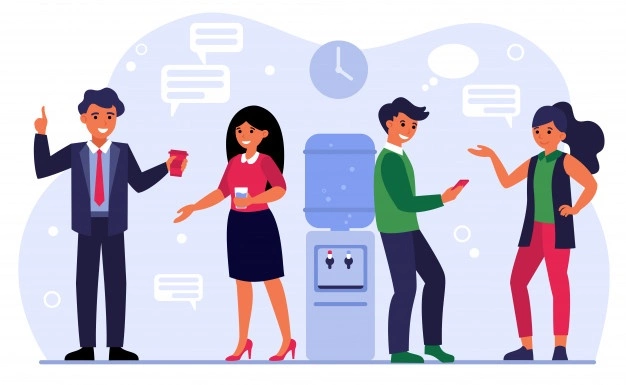
    Thus, when employees sense a need to exchange their views, they go for grapevine network as they cannot use the formal channel of communication in that case. Generally during breaks in cafeteria,the subordinates talk about their superior’s attitude and behaviour and exchange views with their peers. They discuss rumours about promotion and transfer of other employees. Thus, grapevine spreads like fire and it is not easy to trace the cause of such communication at times.

    Types of Grapevine Communication

    There are 4 types of grapevine communication are:

    1. Single Strand Chain
    2. Gossip Chain
    3. Probability Chain
    4. Cluster Chain

    Characteristics of Grapevine Communication

    Some general characteristics of grapevine communication are:

    1. Huge Impact
    2. Extensive
    3. Flexibility
    4. Speed
    5. Distortion
    6. Oral Way
    7. Large Receivers
    8. Extra Ability
    9. Unsaid Information
    10. Contradictory Information

    Examples of Grapevine Network of Communication

    1. Suppose the profit amount of a company is known. Rumour is spread that this much profit is there and on that basis bonus is declared.
    2. CEO may be in relation to the Production Manager. They may have friendly relations with each other.

    Pros of Grapevine Communication

    1. Grapevine channels carry information rapidly. As soon as an employee gets to know some confidential information, he becomes inquisitive and passes the details then to his closest friend who in turn passes it to other. Thus, it spreads hastily.
    2. The managers get to know the reactions of their subordinates on their policies. Thus, the feedback obtained is quick compared to formal channel of communication.
    3. The grapevine creates a sense of unity among the employees who share and discuss their views with each other. Thus, grapevine helps in developing group cohesiveness.
    4. The grapevine serves as an emotional supportive value.
    5. The grapevine is a supplement in those cases where formal communication does not work.

    Cons of Grapevine Communication

    1. The grapevine carries partial information at times as it is more based on rumours. Thus, it does not clearly depicts the complete state of affairs.
    2. The grapevine is not trustworthy always as it does not follows official path of communication and is spread more by gossips and unconfirmed report.
    3. The productivity of employees may be hampered as they spend more time talking rather than working.
    4. The grapevine leads to making hostility against the executives.
    5. The grapevine may hamper the goodwill of the organization as it may carry false negative information about the high level people of the organization.

    A smart manager should take care of all the disadvantages of the grapevine and try to minimize them. At the same time, he should make best possible use of advantages of grapevine.

  • Razorpay: From Startup to Global Payment Solutions Provider

    Razorpay: From Startup to Global Payment Solutions Provider

    Razorpay, founded in 2014, is an Indian financial technology company that offers online payment solutions to businesses and individuals. In a relatively short span of time, Razorpay has emerged as a leading player in the payment industry, transforming from a startup to a global provider of innovative payment solutions. Let’s delve into Razorpay’s journey and explore the key milestones that have propelled it to success.

    Inception and Early Days

    In the early days, Razorpay was founded by Harshil Mathur and Shashank Kumar, with a vision to simplify and democratize the payment ecosystem for businesses in India. However, they faced several challenges including fierce competition, regulatory hurdles, and the task of building a reliable customer base.

    Building the Foundation

    To overcome these challenges, Razorpay focused on developing robust payment solutions that catered to the unique needs of businesses. They invested in product development, ensuring easy integration, security, and scalability. Additionally, strategic partnerships with banks, payment gateways, and technology providers helped Razorpay expand its reach and offer a comprehensive suite of services.

    Disrupting the Market

    Razorpay disrupted the payment market by offering seamless integration through user-friendly APIs and a developer-friendly approach. Their solutions were designed to cater to businesses of all sizes, enabling them to quickly and efficiently integrate payment systems. Furthermore, Razorpay provided customized solutions for various industries, such as e-commerce, travel, healthcare, and more, streamlining their payment processes.

    Focus on Innovation

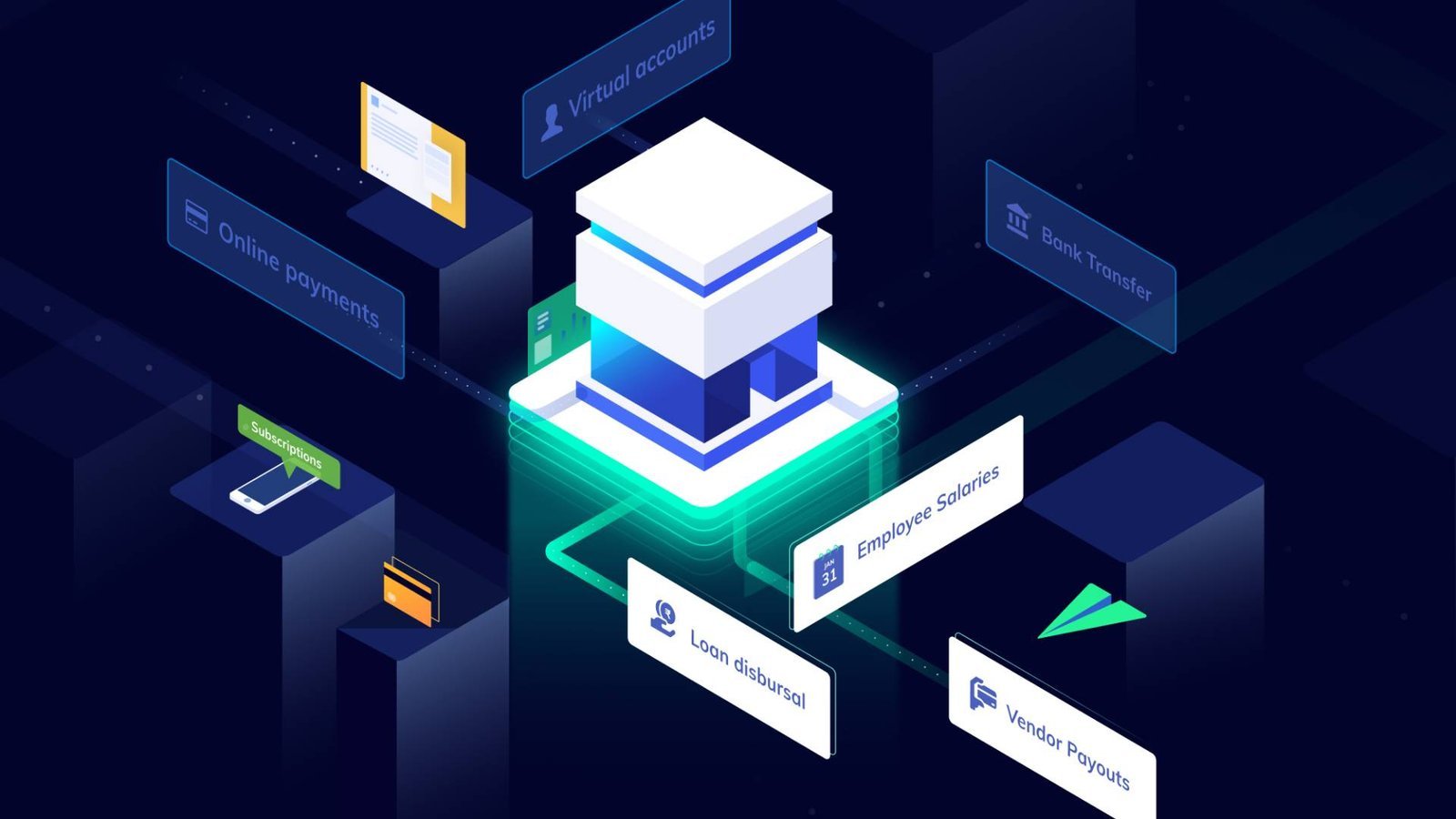
    Continuously pushing the boundaries of innovation, Razorpay introduced RazorpayX, a neobanking platform that provides business banking, corporate credit cards, and automated payout solutions. They also launched Razorpay Capital, a lending platform that offers quick and hassle-free business loans, empowering startups and small businesses with access to capital.

    Expansion and Global Reach

    Razorpay’s success led to multiple rounds of funding from prominent investors, fueling its expansion across India. Recognizing the potential of global markets, Razorpay ventured beyond India, establishing a strong foothold in Southeast Asia and the Middle East. This expansion helped Razorpay solidify its position as a global player in the payment industry.

    Customer-Centric Approach

    Razorpay’s success can be attributed to its strong focus on customer satisfaction. The company understands the diverse needs of businesses and continually works towards delivering an exceptional customer experience. From providing prompt customer support to regularly incorporating user feedback into product enhancements, Razorpay ensures that its solutions align with the evolving requirements of its customers.

    Embracing Technology

    Razorpay leverages cutting-edge technologies to provide efficient and secure payment solutions. The company adopts advanced encryption techniques and adheres to industry-standard security protocols to protect sensitive customer data. By embracing emerging technologies such as machine learning and artificial intelligence, Razorpay constantly enhances its fraud prevention systems and optimizes payment processes.

    Ecosystem Development

    In addition to offering payment solutions, Razorpay actively contributes to the growth of the broader business ecosystem. The company organizes events, workshops, and webinars to educate and empower businesses with knowledge about digital payments, financial technology, and entrepreneurship. Razorpay’s efforts go beyond its core offerings, aiming to foster a thriving and supportive environment for businesses to thrive.

    Recognition and Accolades

    Razorpay’s commitment to excellence and innovation garnered significant recognition from the industry. The company received numerous accolades, further cementing its position as a leader in the payment space. With a growing customer base and millions of satisfied users, Razorpay has gained the trust of businesses, reaffirming its reliability and quality of service.

    Future Outlook

    Looking ahead, Razorpay remains dedicated to continued innovation and introducing new features and solutions to meet the evolving needs of businesses and consumers. The company’s focus on international markets is expected to strengthen, as Razorpay strives to become a prominent global player in the payment industry.

    Conclusion

    Razorpay’s remarkable journey from a startup to a global payment solutions provider showcases the power of innovation, determination, and customer-centricity. By offering seamless integration, customized solutions, and a commitment to continuous improvement, Razorpay has disrupted the payment landscape and established itself as a force to be reckoned with. As it continues to evolve and expand, Razorpay is poised to shape the future of digital payments, driving financial inclusion and empowering businesses worldwide.

  • Press Conference: Definition, Advantages, Disadvantages and Preparation

    Press Conference: Definition, Advantages, Disadvantages and Preparation

    In this article, you’ll learn about What is Press Conference , It’s Definition, Advantages, Disadvantages and Preparation.

    What is press conferences?

    Press conferences are occasions when someone with something to say which they believe is newsworthy calls reporters together so that they can tell them all at once. The person calling the press conference usually makes an announcement or statement first then allows reporters to ask questions.

    The terms, media conferences or media calls, are also used, though usually about an event to which a company invites the media in order to promote a product, performance or a celebrity.

    All sorts of people organise press conferences for all sorts of reasons.

    Examples:

    • A politician may call one to announce a new policy or to deny an allegation. ÿ A scientist may call one to reveal a discovery.
    • A police chief may call reporters together to give details of a crime or to ask for public help in solving a case.

    Advantages of press conference

    The main advantage of a press conference to the person calling it is that they do not have to repeat themselves to several different reporters at separate interviews. It also means that their announcement will have maximum impact by being in all the media at the same time (assuming that all the reporters think it is newsworthy).

    The main advantage to the journalist is that it reduces the chance of individual newspapers or broadcast stations missing the story. It also allows them to share the workload of questioning the interviewee. If one reporter forgets or overlooks something, another reporter will probably think of it.

    Disadvantages of press conference

    There are disadvantages to the media in press conference, the major of which is that it is more difficult to get an exclusive story from press conferences. When every reporter hears the same words from the interviewee, they cannot keep secrets from each other.

    There are ways of getting round this problem which we will discuss later.

    Press conferences can also give false importance to the topic being promoted. Promoters try to convince journalists that by getting them all in the same place at the same time the topic is of great importance, when often it is nothing more than free publicity or advertising.

    It is usual for the person who called the press conference to say what they want first then allow the journalists to ask questions. The speaker controls the situation from the start. They even control where and when the press conference takes place, although if journalists do not like the place or the time of the press conference they should let the organiser know.

    Many journalists regard press conferences as gifts from the organiser, not to be questioned. Remember, if someone calls a press conference it is usually because they need the publicity you can give them. That gives you some control over the situation.

    Preparation to press conference

    • Never go out to cover any story without knowing roughly what to expect
    • Do some research, it is vital. This can range from asking your editor or chief of staff what the press conference is about to a full-scale search through your local reference library for background material.
    • Ask other people in the newsroom. If a politician calls a press conference and politics is not your round, go to the political correspondent for advice.
    • Use your contacts outside the newsroom for background information.
    • Prepare some questions in advance. These should be good enough to provide you with a story if the announcement itself is not very newsworthy. Remember, people who call press conferences will not always have your skill in recognizing a news angle.

    Your questions do not have to be on the topic the organiser of the press conference wishes to talk about.

    For example, if a public figure has been accused of corruption then calls a press conference to announce a new move in foreign policy, it is quite fair to ask them questions about the corruption allegations. They may not wish to answer them, but that should never stop a good journalist from asking questions.

    Many people are suspicious of reporters’ questions, and may ask you to provide written questions in advance. This is acceptable if their sole purpose is to give you more accurate answers. It may, however, be an attempt to stop unpleasant questions. If you suspect that this is the case, you should try to get a promise that you will be allowed to ask other questions at the press conference itself. These are called supplementary questions. If they will not agree, you must ask yourself (and your editor) whether the press conference is worth attending.

    ON ARRIVAL

    • Arrive in good time.
    • Positioning is quite important, especially at large press conferences. You should always sit near to the speaker, so that you do not miss anything said. If there are many journalists present, sitting in the center of the front row will ensure that you are not overlooked at question time. It is important that you hear questions from other reporters. If you are seated at the front and you cannot hear the question, you can be sure that the interviewee will not hear it either, so it will have to be repeated anyway.
    • If you work for radio or television, or wish to record the press conference to support your notes, arrive with enough time to set up your microphone in front of the interviewee. For recording question time, you should either sit beside the interviewee holding the microphone so that you can point it towards questioners at the right moment, or use a tape recorder which has two microphones, one positioned in front of the interviewee, the other pointed towards the questioners.

    WHEN THE CONFERENCE STARTS

    Establish straight away whether what is being said is “on the record” (in which case everything can be quoted); “background” (in which the information can be quoted but not the name of the informant); or “off the record” (in which neither the information nor the informant can be quoted). “Off the record” information is for the reporter’s personal information.

    Too much “off the record” information will undermine the credibility of your story, so try to get the interviewee to make statements “on the record” whenever possible. You should also establish at the start who the speaker represents on this occasion, if it has not already been made clear.

    A statement may not be clear or may raise an interesting question. Make a quick note of anything you will want to ask at question time.

    QUESTION TIME

    Always try to ask at least one question, if only to show your presence.

    Phrase all your questions either

    • To clarify statements you did not understand or
    • To get new information. Avoid asking friendly questions simply to cover up an silence.

    It is difficult to get an exclusive story from a press conference, because every reporter hears all the questions and answers. If you have gone to the press conference with some information which you think will give you an exclusive story, do not mention it during question time. Wait until the other reporters have left then ask your questions.

    If speakers are unwilling to give a private interview, tempt them with a statement like: “There is something important I want to ask you that I don’t want anyone else to hear” said.

    If you go there expecting a certain announcement and it is not made, don’t shrug your shoulders and leave. Ask about the topic. They may have something to hide.

    AT THE END

    • Do not be in a hurry to get away, unless you are facing a tight deadline. Hang around on the chance of getting background information, picking up a bit of gossip or simply developing contacts.
    • If you have arranged a face-to-face interview, remind your interviewee and take them somewhere quiet to conduct it.
    • If you work for a newspaper or television, you should ask for any pictures you think you might need.

    For example, if a police chief says they are hunting an escaped criminal you should automatically ask if they have a picture of the man for publication. Also, if you want to illustrate your story with a picture of the speaker, think how you can get a better picture than simply a shot of him at the press conference.

    For example, if the Health Minister is launching a campaign to test people for chest cancer, will he pose for pictures with an X-ray machine – preferably being x-rayed himself?

    WRITE THE STORY

    There are several things which you must include in your story. These are:

    • The names and identities of speakers
    • The key points of any announcements, denials or questions, necessary background details – Plenty of strong quotes.
    • Do not include details such as the time and place of the press conference.
    • Do not mention the fact that the news came from a press conference at all unless that is of significance to the story as a whole.

    Don’t include the fact that it was a press conference in the intro, unless that is significant. Such a case would be if a minister was expected to announce a major policy change and then cancelled the scheduled press conference at the last minute.

    RIGHT:

    The Foreign Minister today cancelled a Press conference at which he was expected to announce new sanctions against South Africa. It is understood that the last-minute cancellation was due to a disagreement in Cabinet over the sanctions.

    WRONG:

    A police chief today told a Press conference about the theft of a light aircraft from Jacksons Airport.

    LET’S SUMMARISE

    • Press conferences are a useful way of getting information if you use them to your advantage.
    • Always prepare yourself before attending a press conference. Find out something about the possible topics and the people holding the press conference.
    • Arrive with enough time to settle in before the conference starts.
    • Always ask at least one question.
    • If you think you have an exclusive story, do not reveal it to other journalists at the conference.
    • Radio and television journalists should try to record an individual interview after the conference.
    • In newspapers, do not include your questions in the story – only the newsworthy answers.
  • How does LinkedIn help small businesses

    How does LinkedIn help small businesses

    If you’re like many small business owners, you likely wear many hats, tackling sales, content marketing, bookkeeping, and customer service, among others. Trying to accomplish all these tasks can be challenging – but thankfully, with small, achievable goals, a step-by-step action plan, and the right tools, you can make your vision a reality.

    Step-By-Step Action Plan

    1. Build your professional and personal brand

    Establishing a professional brand is vital to relationship building on LinkedIn. Building relationships with your prospects and clients is crucial, because people are more likely to buy from those they know, like, and trust. This is more difficult to achieve in today’s digital world, where we have to rely on our digital brands to get our prospects to the “know, like, and trust” stage. As a social media platform for business professionals, LinkedIn is most effectively used by small business owners who create both a LinkedIn personal profile and a company page.

    2. Establish your authority on your topic

    When you curate content, ensure the articles you share look professional, and solve a problem or challenge your ideal clients to face. Further, provide your own opinion or perspective on the material. Your ideal clients can find this content elsewhere – what will make it unique is your perspective on it.

    If you have the skills and resources, you should also create and share your own original content. You can post it is as status updates or long-form articles via LinkedIn Publisher. The content you create should be 100% client-focused and of interest to your ideal clients.

    3. Generate new prospects and clients

    If you’re like most small businesses, getting more business and making more sales are always your top priorities. If you’ve successfully established your brand and authority on LinkedIn, you will have set yourself up for success with this third strategy – generating new prospects and customers.

    Start your LinkedIn lead generation process by searching for the job titles (keywords) of your ideal clients (i.e., Marketing Manager, VP Marketing, VP Sales, Director of Customer Experience, etc.)

    4. Build your network of partners and vendors

    One of the LinkedIn strategies most people miss is the opportunity to build relationships with other businesses with similar audiences, and/or complementary products or services.

    What better place to build a network of strategic partners than on a platform full of professionals?

    Start by reaching out to people who know and trust you within your existing network, then continue to expand your reach by asking your trusted network to make further introductions for you.

    5. Stay up-to-date on your industry

    It can be tough to keep up with the latest news and trends affecting your business and your clients, but LinkedIn is also an excellent tool to stay up-to-date on recent, and relevant, developments within your industry.

    Here are some of the ways in which you can keep current using LinkedIn

    • Read your news feed
    • Follow thought leaders and influencers
    • Follow companies and organizations
    • Follow your competitors
    • Follow hashtags
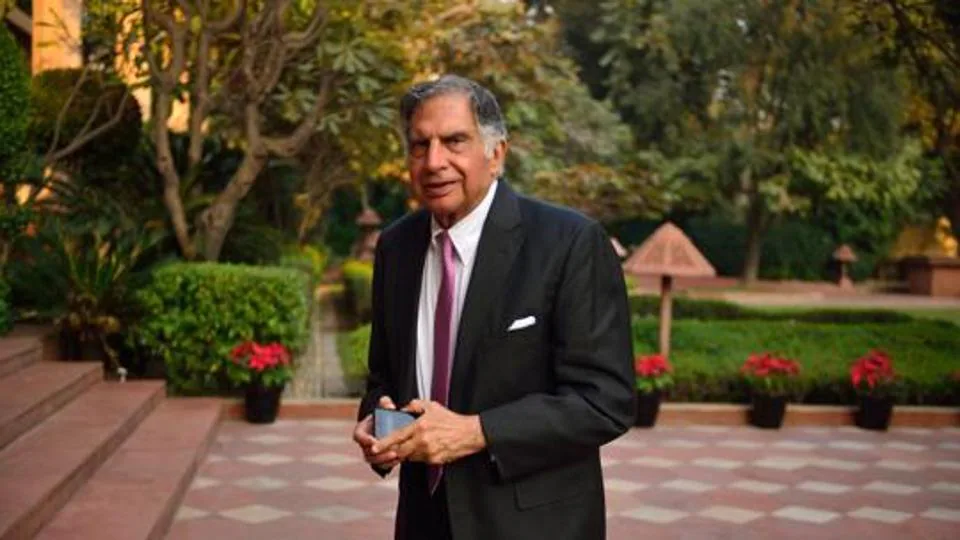
  • Ratan Tata – Indian industrialist, philanthropist, and a former chairman of Tata Sons

    Ratan Tata – Indian industrialist, philanthropist, and a former chairman of Tata Sons

    Ratan Tata, in full Ratan Naval Tata, (born December 28, 1937, Bombay [now Mumbai], India), An Indian industrialist, philanthropist, and a former chairman of Tata Sons. He was also chairman of Tata Group, from 1990 to 2012, and again, as interim chairman, from October 2016 through February 2017, and continues to head its charitable trusts.

    A member of a prominent family of Indian industrialists and philanthropists (see Tata family), he was educated at Cornell University, Ithaca, New York, where he earned a B.S. (1962) in architecture before returning to work in India. He gained experience in a number of Tata Group businesses and was named director in charge (1971) of one of them, the National Radio and Electronics Co. He became chairman of Tata Industries a decade later and in 1991 succeeded his uncle, J.R.D. Tata, as chairman of the Tata Group.

    Upon assuming leadership of the conglomerate, Tata aggressively sought to expand it, and increasingly he focused on globalizing its businesses.

    • In 2000 the group acquired London-based Tetley Tea for $431.3 million, and
    • In 2004 it purchased the truck-manufacturing operations of South Korea’s Daewoo Motors for $102 million.
    • In 2007 Tata Steel completed the biggest corporate takeover by an Indian company when it acquired the giant Anglo-Dutch steel manufacturer Corus Group for $11.3 billion.
    • In 2008 Tata oversaw Tata Motors’ purchase of the elite British car brands Jaguar and Land Rover from the Ford Motor Company. The $2.3 billion deal marked the largest-ever acquisition by an Indian automotive firm.
    Tata Nano

    The following year the company launched the Tata Nano, a tiny rear-engined, pod-shaped vehicle with a starting price of approximately 100,000 Indian rupees, or about $2,000. Although only slightly more than 10 feet (3 metres) long and about 5 feet (1.5 metres) wide, the highly touted “People’s Car” could seat up to five adults and, in Tata’s words, would provide a “safe, affordable, all-weather form of transport” to millions of middle- and lower-income consumers both in India and abroad. In December 2012 Tata retired as chairman of the Tata Group.

    He briefly served as interim chairman beginning in October 2016 following the ouster of his successor, Cyrus Mistry. Tata returned to retirement in January 2017 when Natarajan Chandrasekaran was appointed chairman of the Tata Group.

    Among many other honours accorded him during his career, Tata received the Padma Bhushan, one of India’s most distinguished civilian awards, in 2000.

    Ratan Tata Awards 

    Ratan Tata was awarded many notable awards and honors. These are mentioned below: 

    YearNameAwarding Organization
    2000Padma BhushanGovernment of India
    2008Padma VibhushanGovernment of India
    2001Honorary Doctor of Business AdministrationOhio State University
    2004Medal of the Oriental Republic of UruguayGovernment of Uruguay
    2004Honorary Doctor of TechnologyAsian Institute of Technology.
    2005International Distinguished Achievement AwardB’nai B’rith International
    2005Honorary Doctor of ScienceUniversity of Warwick.
    2006Honorary Doctor of ScienceIndian Institute of Technology Madras
    2006Responsible Capitalism AwardFor Inspiration and Recognition of Science and Technology (FIRST)
    2007Honorary FellowshipThe London School of Economics and Political Science
    2007Carnegie Medal of PhilanthropyCarnegie Endowment for International Peace
    2008Honorary Doctor of LawUniversity of Cambridge
    2008Honorary Doctor of ScienceIndian Institute of Technology Bombay
    2008Honorary Doctor of ScienceIndian Institute of Technology Kharagpur
    2008Honorary Citizen AwardGovernment of Singapore
    2008Honorary FellowshipThe Institution of Engineering and Technology
    2008Inspired Leadership AwardThe Performance Theatre
    2009Honorary Knight Commander of the Order of the British Empire (KBE)Queen Elizabeth II
    2009Life Time Contribution Award in Engineering for 2008Indian National Academy of Engineering
    2009Grand Officer of the Order of Merit of the Italian RepublicGovernment of Italy
    2010Honorary Doctor of LawUniversity of Cambridge
    2010Hadrian AwardWorld Monuments Fund
    2010Oslo Business for Peace awardBusiness for Peace Foundation
    2010Legend in Leadership AwardYale University
    2010Honorary Doctor of LawsPepperdine University
    2010Business for Peace AwardBusiness for Peace Foundation
    2010Business Leader of the YearThe Asian Awards.
    2012Honorary FellowThe Royal Academy of Engineering
    2012Doctor of Business honoris causaUniversity of New South Wales
    2012Grand Cordon of the Order of the Rising SunGovernment of Japan
    2013Foreign AssociateNational Academy of Engineering
    2013Transformational Leader of the DecadeIndian Affairs India Leadership Conclave 2013
    2013Ernst and Young Entrepreneur of the Year – Lifetime AchievementErnst & Young
    2013Honorary Doctor of Business PracticeCarnegie Mellon University
    2014Honorary Doctor of BusinessSingapore Management University
    2014Sayaji Ratna AwardBaroda Management Association
    2014Honorary Knight Grand Cross of the Order of the British Empire (GBE)Queen Elizabeth II
    2014Honorary Doctor of LawsYork University, Canada
    2015Honorary Doctor of Automotive EngineeringClemson University
    2015Sayaji Ratna AwardBaroda Management Association, Honoris Causa, HEC Paris
    2016Commander of the Legion of HonourGovernment of France
    2018Honorary DoctorateSwansea University
    2021Assam BaibhavGovernment of Assam

    Ratan Tata Family Tree

    • Jamshedji Nusserwanji Tata- Founder of Tata Group, India’s biggest conglomerate company. He was married to Hirabai Daboo. 
    • Dorabji Tata- The elder son of Jamshedji Tata and second chairperson of Tata Group. His wife was Meherbai Tata, paternal aunt of renowned nuclear scientist Homi J. Bhabha.
    • Ratanji Tata- Younger son of Jamshedji Tata. He was the pioneer of poverty studies. He was married to Navajbai Tata. His wife adopted an orphan, Naval, who was the grand-nephew of Hirabai Tata and raised him as her own son.
    • Naval Tata- Adopted son of Navajbai Tata. His biological father was Hormusji Tata. His maternal grandmother was the sister of Hirabai Tata. Director in several Tata companies, ILO member, and recipient of Padma Bhushan, Naval Tata had three sons– Ratan Tata (5th chairperson of Tata Group), Jimmy Tata, and Noel Tata (Chairperson of Trent Limited)– from two marriages.
    • Ratanji Dadabhoy Tata- He was one of the early stalwarts who served the Tata Group. His father Dadabhoy and mother of Jamshedji Tata, Jeevanbai, were siblings. He married Suzanne Brière and the couple gave birth to five children, including J.R.D. Tata and Sylla Tata.
    • J.R.D. Tata- He served as the fourth Chairperson of Tata Group. He is the founder of Tata Airlines (later Air India) , which recently again acquired by tata groups.
    • Sylla Tata- Elder sister of J.R.D. Tata was married to the founder of the first textile mill in India, Dinshaw Maneckji Petit. Her sister-in-law  Rattanbai Petit, was married to Muhammad Ali Jinnah, the founder of Pakistan. Jinnah’s only child, Dina Jinnah, was married to Neville Ness Wadia. 

    Ratan Tata Quotes

    “I don’t believe in taking the right decisions. I take decisions and then make them right.”

    “If you want to walk fast, walk alone. But if you want to walk far, walk together.”

    “I’ve often felt that the Indian Tiger has not been unleashed.”

    “People still believe what they read is necessarily the truth.”

     “If it stands the test of public scrutiny, do it… If it doesn’t stand the test of public scrutiny then don’t do it.”

    “Power and wealth are not two of my main stakes.”

    “I have been constantly telling people to encourage people, to question the unquestioned and not to be ashamed to bring up new ideas, new processes to get things done.”

    “None can destroy iron, but its own rust can! Likewise none can destroy a person, but its own mindset can!”

    “Business need to go beyond the interest of their companies to the communities they serve.”

    “Ups and downs in life are very important to keep us going, because a straight line even in an ECG means we are not alive.”

    “Apart from values and ethics which I have tried to live by, the legacy I would like to leave behind is a very simple one – that I have always stood up for what I consider to be the right thing, and I have tried to be as fair and equitable as I could be.”

    “I admire people who are very successful. But if that success has been achieved through too much ruthlessness, then I may admire that person, but I can’t respect him.”

    “There are many things that, if I have to relive, maybe I will do it another way. But I would not like to look back and think what I have not been able to.”

    “Don’t be serious, enjoy life as it comes.”

    “I have always been very confident and very upbeat about the future potential of India. I think it is a great country with great potential.”

    “One hundred years from now, I expect the Tatas to be much bigger than it is now. More importantly, I hope the Group comes to be regarded as being the best in India.. best in the manner in which we operate, best in the products we deliver, and best in our value systems and ethics. Having said that, I hope that a hundred years from now we will spread our wings far beyond India.”

    “Take the stones people throw at you, and use them to build a monument”

    “I followed someone who had very large shoes. He had very large shoes. Mr. J. R. D. Tata. He was a legend in the Indian business community. He had been at the helm of the Tata organization for 50 years. You were almost starting to think he was going to be there forever.”

    “Young entrepreneurs will make a difference in the Indian ecosystem.”

    “I would say that one of the things I wish I could do differently would be to be more outgoing.”

    “The strong live and the weak die. There is some bloodshed, and out of it emerges a much leaner industry, which tends to survive.”

    “At Tatas, we believe that if we are not among the top three in an industry, we should look seriously at what it would take to become one of the top three players.. or think about exiting the industry”

    Quick View at Ratan tata Life

    Birth28 December 1937
    Age84 years
    EducationCornell UniversityHarvard Business School
    FamilyNaval Tata (Father)Sooni Commissariat (Mother)
    OccupationFormer Chairperson of Tata Sons and Tata GroupPhilanthropistInvestor
    TitleChairman Emeritus, Tata Sons and Tata Group
    PredecessorJRD Tata
    SuccessorCyrus Mistry (2012)Natarajan Chandrasekaran (2017–present)
    AwardsPadma Vibhushan (2008)Padma Bhushan (2000)
    Net WorthRs. 6000 crores
    Quotes“I don’t believe in taking the right decisions. I take decisions and then make them right.” “Power and wealth are not two of my main stakes.”

    Thank you for reading, If you have reached it so far, please like the article, It will encourage me to write more such articles. Do share your valuable suggestions, I appreciate your honest feedback!

  • 25 Best Funded Indian Startups

    25 Best Funded Indian Startups

    Startup refers to a company in the first stages of operations. Startups are founded by one or more entrepreneurs who want to develop a product or service for which they believe there is demand. 


    With more than 1.3 billion people and a rapidly growing economy, India is a key country for startups who are engaging massive funds to grab a share of the market. India is a battleground for companies aiming at explosive growth and establishing themselves in an upcoming global tech leader in the long run.

    1. One97 (Paytm)

    Industry: Commerce and Shopping, Financial Services – Total funding: $4.4 Billion

    One97 Communications is the company operating Paytm, a digital goods and mobile commerce platform providing a number of products and services including mobile recharge, bill payments, transport tickets, hotel reservations, games, and much more. It also operates Paytm Mall which sells products ranging from men and women fashion to electronics and home products, groceries and cosmetics, kids and family as well as cars and other vehicles.

    Website: one97.com

    2. Ola Cabs

    Industry: Transportation – Total funding: $3.8 Billion

    Ola operates a ride-hailing platform. It allows the booking of a range of cabs, bikes, and other vehicles through a single mobile app ensuring convenient, transparent, safe, and quick urban transportation. Besides India, Ola has expanded its activities to other countries including Australia, New Zealand, and the UK.

    Website: olacabs.com

    3. OYO

    Industry: Travel and Tourism – Total funding: $3.2 Billion

    OYO is a hotel chain that offers a range of stay experiences across India. Relying upon standardization and the use of its technology platform, OYO revolutionizes budget hospitality with comfortable and affordable hotels. It also provides a portfolio of offers for all types of travelers in India and abroad, in China, Malaysia, Nepal, Indonesia, and UAE.

    Website: oyorooms.com

    4. ReNew Power

    Industry: Energy – Total funding: $2.8 Billion

    ReNew Power is a company dedicated to renewable energy. It develops, builds, owns and operates renewable energy production facilities with utility-scale wind, utility-scale solar, and rooftop solar projects. The largest independent renewable energy company in India, it is dedicated to growing its production while supporting sustainable business practices.

    Website: renewpower.in

    5. Snapdeal

    Industry: Commerce and Shopping – Total funding: $1.8 Billion

    Snapdeal is a diversified online shopping platform, offering products ranging from electronics and fashion to home and appliances. Backed by famous investors, including Alibaba, Foxconn, and SoftBank, Snapdeal is gearing towards competition with the very top e-commerce sites of India.

    Website: snapdeal.com

    6. Swiggy

    Industry: Food and Beverage – Total funding: $1.6 Billion

    Swiggy is a food ordering and delivery platform. It provides a curated list of restaurants to choose from and a delivery fleet to bring orders to customers. Thanks to its app, restaurants have access to a new source of customers, and people can get food from their favorite restaurants or new discoveries delivered at their doorstep.

    Website: swiggy.com

    7. BYJU’S

    Industry: Education – Total funding: $1.4 Billion

    BYJU’S is an online educational platform and education services provider. It offers an array of online video courses for children of all ages and students preparing exams including CBSE, GMAT, GRE, etc. together with study material and education counseling.

    Website: byjus.com

    8. BigBasket

    Industry: Commerce and Shopping – Total funding: $1.1 Billion

    BigBasket is an online food and grocery store. Bringing daily shopping to Indians’ home in an easy and convenient experience, BigBasket offers and delivers a wide range of products including fruits and vegetables, meat, rice and dals, packaged products, beverages, and personal care products.

    Website: bigbasket.com

    9. Razorpay

    Industry: Online payment gateway – Total funding: $0.375 Billion

    Razorpay is the converged payments solution company that allows your business to accept, process, and disburse payments via its product suite. With Razorpay, you have access to all payment modes, including credit and debit cards, UPI, and popular mobile wallets.

    Website: razorpay.com

    10. Delhivery

    Industry: Logistics – Total funding: $934.6 Million

    Delhivery is a logistics and supply chain services company. It provides a dedicated supply chain platform and logistics services including last-mile delivery, parcel transportation, warehousing, freight, reverse logistics, cross-border, and technology services.

    Website: delhivery.com

    11. Zomato

    Industry: Food and Beverage – Total funding: $914.6 Million

    Zomato is a restaurant search and reservation app. It is used by consumers to discover, rate, and review restaurants. Zomato also offers services including online ordering, table reservation, white-label platform, and point-of-sale system to connect restaurants to customers and ease their operations. Since its creation in 2008, Zomato has expanded to more than 20 countries.

    Website: zomato.com

    12. Udaan

    Industry: E-Commerce – Total funding: $899.9 Million

    Udaan is a business-to-business marketplace and trading platform. It allows small and medium businesses in India to discover products, customers, and suppliers, connect with them, buy and sell. Udaan regroups Indian traders, wholesalers, retailers, and manufacturers on a single platform.

    Website: udaan.com

    13. Grofers

    Industry: Commerce and Shopping – Total funding: $597.1 Million

    Grofers is an online supermarket. Offering a range of low-priced products including groceries, beauty and wellness products, household care, baby care, or pet care, Grofers simplifies everyday retail through a simple online shopping experience and express delivery around India.

    Website: grofers.com

    14. PolicyBazaar

    Industry: Financial Services – Total funding: $496.6 Million

    PolicyBazaar is an insurance aggregator. It allows users to compare health insurance, car insurance, two-wheeler insurance, travel insurance policies based on price, quality, and key benefits together with solutions for financial security and competitive returns.

    Website: policybazaar.com

    15. Lenskart

    Industry: Health Care – Total funding: $459.6 Million

    Lenskart is a retail company dedicated to eyeglasses and optical prescription eyewear. It operates more than 500 stores across India and has also established itself as a leader in eyewear e-commerce providing hundreds of glasses designs, including some of the world’s leading brands, as well as 48-hour free home delivery and return policy.

    Website: lenskart.com

    16. Quikr

    Industry: Commerce and Shopping – Total funding: $424.2 Million

    Quikr is a free classifieds ads and marketplace operating across India. Connecting the offer and demand through its platform, Quickr helps users sell, buy, rent, and discover a wide range of products including mobile phones, furniture, and household goods, cars, real estate properties, jobs, services, and education.

    Website: quikr.com

    17. FirstCry

    Industry: Commerce and Shopping – Total funding: $418.4 Million

    A specialized e-commerce platform for baby care products, kids’ clothes, and toys, Firscry is a pioneer of e-commerce in India offering products from thousands of brands. Having expanded into franchised stores, Firstcry now also offers its products through tens of stores across numerous Indian cities.

    Website: firstcry.com

    18. CureFit

    Industry: Fitness – Total funding: $404.6 Million

    CureFit is a health and fitness company providing healthy food and professional workout through digital and offline experiences. It delivers meals, operates gyms, and trainer-led or group workout classes for bodybuilding and mental well-being.

    Website: cure.fit

    19. PharmEasy

    Industry: Health Care – Total funding: $328.5 Million

    PharmEasy is a pharmacy aggregator, it helps Indian patients connect with local pharmacy stores and diagnostic centers. It allows individuals to buy their prescription medicine and healthcare products from local pharmacies and also permits to take online diagnostic tests.

    Website: pharmeasy.in

    20. Grow

    Industry: Internet – Total funding: $251 Million

    Groww is an online investment platform that allows investors to invest in mutual funds and stocks. Headquartered in Bangalore, Karnataka.The company is entering the mutual funds space through its acquisition of Indiabulls Asset Management Company. 

    Website: groww.in

    21. CarDekho

    Industry: Transportation – Total funding: $247.5 Million

    CarDekho is a new and used car marketplace and automotive news, comparator, and reviews platform. It helps Indians buy and sells cars through deals with car manufacturers, classifieds for used cars, and a range of tool and related services. CarDekho has also launched its expansion to Southeast Asia and the UAE.

    Website: cardekho.com

    22. Lendingkart

    Industry: Financial Services – Total funding: $242.5 Million

    Lendingkart is an online lending provider dedicated to entrepreneurs and small businesses. Through its online platform and advanced data analytics, it evaluates and scores businesses to quickly approve loans and deliver working capital and financial solutions throughout India.

    Website: lendingkart.com

    23. Billdesk

    Industry: Financial Services – Total funding: $241.4 Million

    Billdesk is an electronic payments service, operating as part of the IndiaIdeas company. Founded in 2000, Billdesk is a pioneer online payment gateway operator that enables banks, businesses, and other institutions to deliver invoices to customers so as to receive payments in India.

    Website: billdesk.com

    24. ShareChat

    Industry: Social Network, Mobile Apps – Total funding: $222.8 Million

    ShareChat is a social networking and regional content platform, allowing Indians to use the Internet in their mother tongue. ShareChat aims at bringing local, relevant content to smartphone users across India in Indian languages including Hindi, Telugu, Marathi, and Malayalam.

    Website: we.sharechat.com

    25. Meesho

    Industry: Commerce and Shopping – Total funding: $215.2 Million

    Meesho is a social commerce platform and network of online resellers. It allows individuals and businesses across India to create online stores and sell products within their network on social channels, including WhatsApp, Facebook, Instagram.

    Website: meesho.com

    26. Cars24

    Industry: Transportation – Total funding: $193.8 Million

    Cars24 is an online platform for selling used cars. It allows individuals to sell their used cars through a very simple process that can take less than one hour. Users can go through an online estimation before taking their cars to a Cars24 branch for inspection. If the inspection is passed, the car is bought by Cars24 and the payment and ownership transfer is concluded.

    Website: cars24.com

    27.CRED

    Industry: Industry – Total funding: $772.2Million

    CRED is a platform where you can pay your credit card bills and get rewarded for it. The platform has created a new model where users get “CRED coins” when they pay their bills through the CRED app. These coins can later be redeemed for buying any product, entering into a contest, or joining any workshop. The startup is Bangalore based and provides a range of services like credit and premium catalogue of products to the customers. The startup believes to incentivise people in order to improve their financial behaviour. 

    Website: cred.club

  • What is Cross-Selling? Benefits and Why big business use it

    What is Cross-Selling? Benefits and Why big business use it

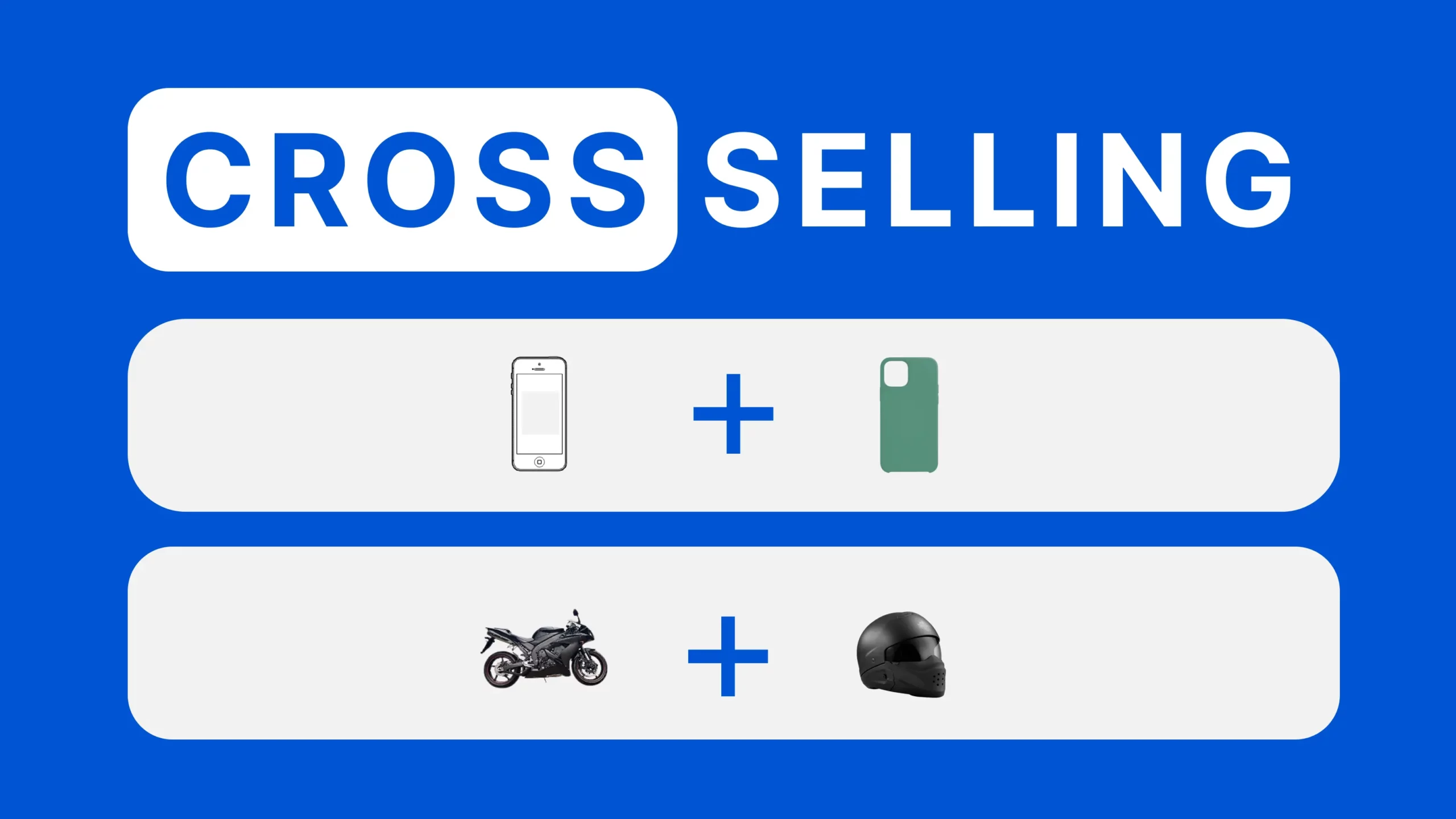
    Cross-selling is a sales strategy where the seller encourages the customer to spend more by recommending related products that are already being purchased. The idea is that the customer spend more and buy him more things than he thought he would actually do.

    What is Cross Selling?

    Cross-selling is a strategy that capitalizes on the “just in case” mindset of customers. It is an art of enhancing the shopping experience of customers, while focusing on getting the most out of them. Many retailers and ecommerce stores rely heavily on cross selling because Cross-selling is a sales technique used to make the customer spend more to buy a product that is already related to being purchased. It’s easy to confuse cross-selling with upside. Cross-selling involves offering the customer a related product or service, while generally turmoil involves trading up to a better version of what is being purchased.

    Amazon has reportedly credited 35 percent of its sales as making sales through its “customers who bought this product” and the “often purchased together” option on each product page. This approach prompts a retailer to purchase a compatible – or necessary – product.

    Examples of Cross Selling

    Cross-selling involves offering different complementary products to your customers. These are products that optimize or improve the original product by adding new functionality. For example, think of a phone case or the insurance they always try to sell to you when you buy an electronic device.

    But it’s not just about offering everything you can think of. The key to this system is to add value to the user to indicate that you really know what they need, as in any other marketing action, there should be both planning and strategy behind cross-selling.

    Cross-Selling Strategies & Techniques

    Like upselling, cross selling strategies are also used at each stage of the marketing funnel, so the strategies can be divided into three stages

    • Before Sale- Product bundling and product recommendations at customer touch points make them look related to each other. E-commerce websites have recommendations and suggestions to increase the chances of cross-sales as the most popular deal’, ‘best offer’, ‘just for you’ etc.
    • During Sale- Recommendation of salesperson and parasitic offers at the point of sale in retail stores and ecommerce websites.
    • After Sale- Personalized emails, SMS and calls to entice customers to choose a related product.

    Difference between Cross-Selling and Upselling

    They are similar, but not identical, these two concepts are generally mixed. However, it is important to clearly distinguish them. Cross-selling, as we have already seen, encourages customers to buy other related products that complement their purchase.

    However, the upselling tries to get the customer to buy a different, more expensive version of the same product. They have different strategies with the same goal to increase the average checkout price. With cross-selling we get that product by adding other products, while we are fussy, we sell more expensive, and therefore more profitable, products.

    Let’s look at this with an example: When the salesman at a car dealership tries to convince customers to buy a model with more additional features, he is using upselling strategy . If, once the customer has purchased the car, he also provides insurance or a roof rack, which is cross-selling, cross-selling: final product + added product. Upselling high-priced final products, in both cases we increase the average checkout price, but in different ways.

    Benefits of Cross-Selling

    The most obvious advantage of cross-selling is that it increases sales volume, but it’s far from just one, let’s take a look at the rest.

    • More sales – this is one of the main reasons and for this reason you are reading this article. But be careful, it’s not an increase in sales, but rather that each customer buys more products with each order.
    • Optimized costs – Managing just one order with multiple products will always be cheaper than placing separate orders with just one product.
    • Greater client loyalty – Keeping in mind the needs of the user will make him feel more satisfied, because you are adding more value. This will result in greater loyalty to your brand.
    • Selling “unknown” products – This is the right position to show all the products you have, but it may be less popular.

  • The Role of Email Tracking in Effective Sales and Marketing

    The Role of Email Tracking in Effective Sales and Marketing

    Email marketing is still a potent tool for companies to connect with their target audience in the digital age we live in.   

    However, simply sending out emails without proper tracking and analysis can limit the effectiveness of your campaigns.

    Email tracking plays a crucial role in understanding your audience’s behavior and optimizing your sales and marketing strategies.

    In this article, we will explore the importance of email tracking and provide valuable insights and tips to enhance your email marketing efforts.

    What Makes Email Marketing Powerful?

    Email marketing continues to be a cornerstone of effective sales and marketing strategies.

    Why is it so?

    Because it allows businesses to directly communicate with their audience, nurture relationships, and drive conversions.

    Whether you’re a small business owner or a marketing professional, incorporating email marketing into your overall strategy can yield significant results.

    Let’s delve into the key benefits of email marketing:

    Targeted Reach

    Email marketing enables you to reach a specific audience segment that has shown interest in your products or services.

    By building a quality email list and segmenting it based on demographics, preferences, or past interactions, you can deliver personalized content to the right people at the right time.

    The chances of interaction and conversion are improved by this specific strategy.

    Cost-Effective

    Compared to traditional marketing channels, email marketing is a cost-effective solution with a high return on investment (ROI).

    It eliminates the need for printing materials or postage costs associated with direct mail campaigns.

    Additionally, automation tools make it easier to manage and track email campaigns, saving time and resources.

    Automation and Personalization

    Automation tools empower businesses to send personalized and timely emails to their subscribers.

    You can set up automated welcome emails, abandoned cart reminders, or personalized recommendations based on subscriber behavior.

    By making your content feel more tailored to the individual, personalization helps you build trust with your readers.

    Measurable Results

    Email marketing provides detailed insights into your campaigns’ performance through tracking and analytics.

    You can monitor metrics such as the percentage of messages opened, the percentage of messages clicked on, the conversion rate, and the revenue generated. 

    This data enables you to understand what works and what needs improvement, allowing for data-driven decision-making.

    Leveraging the Power of Email Monitoring and Tracking  

    To truly leverage the potential of email marketing, tracking and analyzing your campaigns are vital.

    Email tracking provides invaluable data that can guide your sales and marketing strategies.

    Here are some key elements of email tracking and how they contribute to your success:

    Open and Click Tracking

    Email tracking allows you to monitor who opens your emails and which links they click.

    This data provides insights into the effectiveness of your subject lines, email content, and calls-to-action (CTAs).

    By analyzing open rates and click-through rates, you can optimize your campaigns to improve engagement and conversions.

    Conversion Tracking

    Tracking conversions is crucial to measure the direct impact of your email campaigns on sales or desired actions.

    By incorporating conversion tracking, you can attribute revenue or specific actions to your email marketing efforts.

    This information helps you understand the ROI and the effectiveness of different email campaigns or segments.

    Subscriber Behavior Tracking

    Understanding subscriber behavior is key to tailoring your email content and offers.

    Tracking metrics such as the time and frequency of opens, click patterns, or preferred devices can provide valuable insights into your audience’s preferences.

    You can use this information to refine your segmentation, content strategy, and overall customer experience.

    A/B Testing

    A/B testing is a powerful technique that allows you to compare different versions of your emails to determine which performs better.

    By testing variables such as subject lines, CTAs, email designs, or personalization elements, you can optimize your campaigns based on data-driven decisions.

    This iterative process ensures continuous improvement and better results over time.

    Enhancing Your Email Marketing Success

    To make the most of email tracking and improve your email marketing success, consider the following tips:

    Set Clear Goals

    Define clear objectives for your email campaigns.

    Whether it’s increasing sales, driving website traffic, or boosting engagement, having specific goals helps you measure success and optimize your efforts accordingly.

    Consistently Monitor and Analyze

    Regularly monitor and analyze your email metrics to gain insights into what’s working and what needs improvement.

    Identify trends, patterns, and areas of opportunity to refine your campaigns and achieve better results.

    Optimize Based on Data

    Use the data obtained from email tracking to optimize your campaigns.

    Experiment with different subject lines, CTAs, layouts, or personalization techniques based on your audience’s preferences.

    Data-driven optimizations lead to higher engagement and conversions.

    Maintain a Clean Email List

    Your email list should be cleaned on a regular basis by removing addresses that have bounced or are no longer active.

    A clean list ensures that your emails are reaching engaged recipients, improves deliverability, and enhances your email marketing performance.

    Best Email Tracking Software

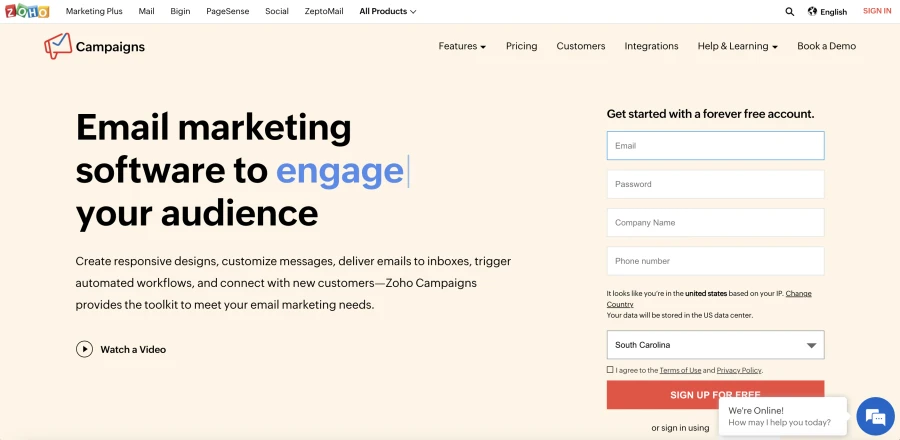
    Zoho Campaigns

    Pricing: Zoho Campaigns offers a limited Free plan. Paid plans start at €3 per month.

    Zoho offers a range of marketing tools, including Marketing Plus, email, Bigin (a pipeline CRM for small businesses), and social media management. 

    Their robust email tracking helps you pinpoint who’s opening your emails, how they’re engaging with them, and where. 

    Zoho also supports A/B testing, so you can find the most effective subject line, CTAs, and more. Other features include dynamic emails, drag-and-drop workflows, and autoresponders.

    Concluding Thoughts

    Email tracking is an essential component of effective sales and marketing strategies.

    By harnessing the power of email marketing and utilizing tracking tools, businesses can gain valuable insights, improve engagement, and drive conversions.

    Remember to set clear goals, consistently monitor and analyze your campaigns, optimize based on data, and maintain a clean email list.

    Embrace the power of email tracking to unlock the full potential of your email marketing efforts and achieve remarkable results.

  • What is CRM? How this can help small organization

    What is CRM? How this can help small organization

    In today’s fast-paced business world, customer relationship management (CRM) has become an essential tool for any business, regardless of size. CRM is a strategy that companies use to manage interactions with customers and potential customers. It involves using technology to organize, automate, and synchronize sales, marketing, customer service, and technical support processes. In this article, we will explore what CRM is and how it can help small organizations.

    What is CRM?

    CRM is a set of processes that businesses use to manage their interactions with customers, prospects, and leads. The goal of CRM is to improve customer relationships, increase customer retention, and drive sales growth. A CRM system can help businesses streamline their sales, marketing, and customer service processes, making it easier to manage and track customer interactions.

    CRM systems typically include a centralized database that stores customer information, such as contact details, purchase history, and communication preferences. This information can be used to personalize marketing messages and improve customer service.

    How can CRM help small organizations?

    CRM can be particularly beneficial for small organizations, where resources and personnel are limited. Here are some of the ways that CRM can help small organizations:

    1. Better customer data management: A CRM system can help small businesses keep track of customer data, such as contact information, purchase history, and preferences. This data can be used to personalize marketing messages, offer better customer service, and improve overall customer satisfaction.
    2. Streamlined sales process: A CRM system can help small organizations streamline their sales process by automating tasks such as lead qualification, quote generation, and order processing. This can free up sales reps to focus on high-value activities such as closing deals and building relationships with customers.
    3. Improved customer service: A CRM system can help small organizations provide better customer service by giving customer service reps access to customer information, such as purchase history and communication preferences. This can help reps resolve customer issues more quickly and effectively, improving overall customer satisfaction.
    4. Better marketing campaigns: A CRM system can help small businesses create more effective marketing campaigns by providing insights into customer behavior, preferences, and purchasing patterns. This data can be used to create targeted campaigns that resonate with customers and drive sales growth.
    5. Increased customer retention: By providing better customer service, personalized marketing messages, and targeted campaigns, a CRM system can help small organizations increase customer retention. This can lead to a more stable revenue stream and reduced acquisition costs.

    The following table lists the types of CRM and their characteristic features

    TypeCharacteristic
    Strategic CRMCustomer-centric, based on acquiring and maintaining profitable customers.
    Operational CRMBased on customer-oriented processes such as selling, marketing, and customer service.
    Analytical CRMBased on the intelligent mining of the customer data and using it tactically for future strategies.
    Collaborative CRMBased on application of technology across organization boundaries with a view to optimize the organization and customers.

    Some Popular CRM Software

    Some Popular CRM Software are as follows:

    • Hubspot CRM
    • FreshSales
    • Agile CRM
    • Suite CRM
    • Nimble
    • Zoho

    Tip: Go for the free trial first and then land to decision

    CRM is crucial is maintaining customer relationship which is so essential for SMEs!

    In summary, CRM is a powerful tool that can help small organizations improve their customer relationships, streamline their sales processes, and drive growth. By leveraging customer data, automation, and personalized marketing, small businesses can build stronger relationships with their customers and differentiate themselves from competitors.

  • The 10+ Best Company Slogans of All Time

    The 10+ Best Company Slogans of All Time

    In this article, you’ll learn about The 10+ Best Company Slogans of All Time, how these tagline created a great impact on their business.

    A tagline is your opportunity to stand out from competitors. The last thing you want is a tagline that is eerily similar to one already in use.

    1. Apple – Think Different

    Steve Jobs mentioned “Think Different” in his presentation at an expo called Macworld. His words had a huge impact on the audience, causing Apple to become one of the bestselling brands of all time.

    2. BMW – The Ultimate Driving Machine

    BMW is about luxury and performance. They have one of the top luxury car brands around and a great tagline to emphasize it. Their tagline is “The Ultimate Driving Machine.” 

    It creates the sense that a BMW is a force to be reckoned with. 

    3. Nike – Just Do It

    Colin Kaepernick, the football star behind the “take a knee” controversy, became the face of Nike’s campaign in 2018. This elevated the slogan from just a selling point for the brand to a bona fide political statement.

    4. McDonald’s – I’m Lovin’ It

    The “I’m Lovin’ It” campaign was launched way back in 2003 and still stands strong today. This is a great example of a tagline that resonates with the brand’s target audience. McDonald’s food might not be your healthiest choice, but being healthy isn’t the benefit McDonald’s is promising — it’s that you’ll love the taste and the convenience.

    5. Coca-Cola – Taste the Feeling

    The Coca-Cola “Taste the Feeling” tagline was created around a campaign to address the decline in sales due to the health concerns of the sugary drink. 

    The tagline’s purpose is to provide people with the idea that the simple pleasure of drinking a Coke makes a moment special. 

    6. L’Oreal – Because You’re Worth It

    In 2012, L’Oreal Paris USA released a mini documentary about the history of their slogan. The company’s CEO, the original spokesmodel, and even Beyoncé Knowles talk about the empowerment behind the campaign.

    7.Flipkart – “Har wish hogi poori”

    Flipkart is the second big change in its communication exercise after 2015 when the company unveiled the tagline “Har wish hogi poori” (every wish will get fulfilled) which has now been changed to a more inclusive “Naye India ke saath” (With new India) which helps flipkart to connect with peoples and increase in sales.

    8. Tata Motors -“Connecting Aspiration

    As part of the company’s transformation journey undertaken in 2016, Tata Motors commenced a comprehensive project to articulate its corporate branding. Basis a thorough analysis of the existing and the desired future state of the Company, Tata Motors has defined its new brand identity as ‘Connecting Aspirations’ across 46 markets, internationally.

    9. Ford- “Go Further”

    Ford is one of my personal favorites because it is two words and is the epitome of simplicity. It is just “Go Further.”

    They don’t know where their drivers are going or why, but they let you know that you can go further in a Ford. 

    10. Maybelline -“Maybe She’s Born With It. Maybe It’s Maybelline”

    Launched in 1991, is one of the most recognizable in the beauty industry. This slogan from Maybelline uses a clever play on words to suggest that their makeup can enhance natural beauty.

    11. Zomato – “Every Meal Matters”

    The customer support team has been very proactive about every single order that goes through Zomato, and our users are loving us even more than before.

    Zomato’s marketing strategy is the stuff of dreams – from a small food review website, specific only to foodies, they’ve become a multinational giant serving over 65 million people every month. Zomato is not only in the business of food but in the business of entertainment as well.

    Thank you for reading, If you have reached so far, please like the article, It will encourage me to write more such articles. Do share your valuable suggestions, I appreciate your honest feedback!