Category: Business Tales

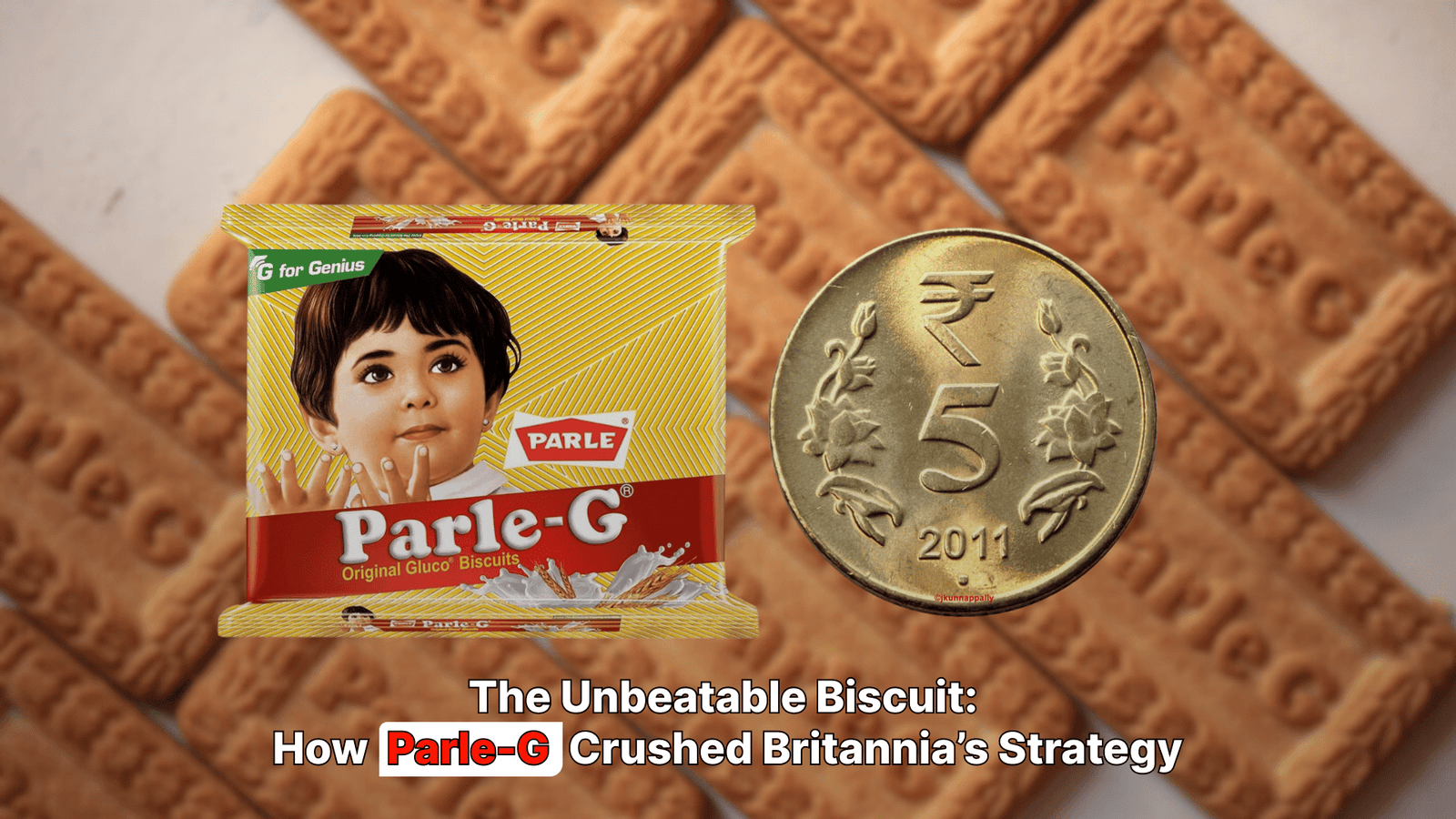
  • The Unbeatable Biscuit: How Parle-G Crushed Britannia’s Strategy

    The Unbeatable Biscuit: How Parle-G Crushed Britannia’s Strategy

    For decades, one biscuit has been a staple in almost every Indian household: the humble Parle-G. It’s the world’s best-selling biscuit, but how did it manage to achieve this phenomenal success and absolutely dominate its competition, especially Britannia?

    This is a story of strategic pricing and unparalleled distribution that taught the entire FMCG industry a powerful lesson.

    Britannia’s Big Mistake: Targeting the Middle Class

    When Britannia entered the biscuit war, they focused their efforts on a specific, high-spending group: the middle-class consumer. Their marketing was slick, and their products were positioned as premium. They focused on urban markets and higher-end stores.

    They believed the future lay in sophisticated, premium biscuits. But they completely missed the biggest market opportunity in India.

    Parle-G’s Masterstroke: The ₹5 Price Point

    Parle-G, on the other hand, had a simple, brilliant strategy: Keep the price point at ₹5.

    Why ₹5? This seemingly small detail was the key to unlocking the entire Indian market.

    • Accessibility: A ₹5 pack is affordable for everyone, from the wealthiest urbanite to the poorest villager. It’s an easy, impulse purchase.
    • Rural Dominance: Parle-G made its biscuits accessible not just in cities, but also in the deepest rural markets, where millions of Indians live.

    Parle-G’s philosophy was clear: Sacrifice the profit margin on a single pack to achieve massive sales volume. They aimed for everyone, everywhere.

    The Unstoppable Distribution Network

    Parle-G didn’t just have a great price; they built an unstoppable distribution network. They made sure their biscuits reached 90% of the small shops (kirana stores) in every corner of the country.

    Their strategy meant that whether you were in a bustling metro city or a tiny village, you could always find a pack of Parle-G.

    The Verdict: Volume Wins the War

    While Britannia focused on higher profit per packet from a smaller, urban customer base, Parle-G focused on winning the volume game. They sold billions of packets at a razor-thin margin.

    Today, Parle-G continues its reign as the king of biscuits. The story serves as a powerful reminder that in a country like India, winning the bottom of the pyramid with incredible accessibility and unbeatable value often leads to the biggest, most enduring success.
  • The Banking Masterclass: How HDFC Bank Became India’s Financial Giant

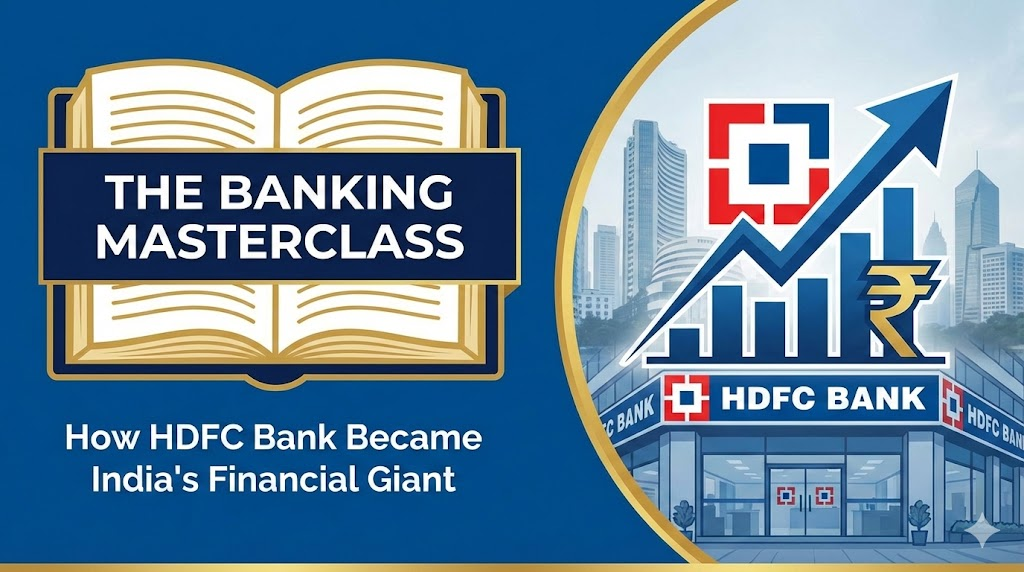
    The Banking Masterclass: How HDFC Bank Became India’s Financial Giant

    Before there was HDFC Bank, there was HDFC. The story of India’s largest private sector bank is not just about banking; it’s about a decades-long vision that started with the simple dream of helping ordinary Indians buy a home.

    From a modest housing finance company to a financial powerhouse, this is how HDFC Bank conquered the Indian financial world.

    The Original Vision: Housing for All (HDFC Ltd.)

    The true foundation was laid in 1977 by the late H.T. Parekh, who was already a veteran banker. At a time when getting a home loan in India was nearly impossible for the middle class, he founded the Housing Development Finance Corporation (HDFC Ltd.).

    His mission was clear: provide long-term finance to help average citizens realize their dream of owning a home. This foundation of trust, transparency, and social impact became the DNA of the entire group.

    The Birth of a New Bank (HDFC Bank)

    In the early 1990s, India liberalized its economy and opened the banking sector to private players. Seizing this opportunity, HDFC Ltd. received approval to establish a private bank.

    • 1994: HDFC Bank was born, with a core team led by the legendary Aditya Puri as its first CEO.
    • The Strategy: While public sector banks had vast networks and foreign banks had modern products, Puri’s team had a winning formula: combine the best products of foreign banks with the wide reach and low-cost funding of Indian institutions.

    The Three Pillars of Success

    HDFC Bank’s rapid rise from a startup to a market leader was built on three uncompromising pillars:

    1. Strict Discipline and Low Risk: Unlike many competitors, HDFC Bank focused on maintaining a clean balance sheet. They adopted a disciplined approach to lending, which resulted in very low Non-Performing Assets (NPAs). This financial strength made them the most trusted and stable name in Indian private banking.
    2. The Digital Leap: HDFC Bank was a pioneer in technology. They were among the first Indian banks to launch net banking and mobile banking services, giving customers convenience and speed. They kept innovating, launching services like missed-call banking and loan-dispensing ATMs.
    3. Customer-First Retail Focus: They successfully targeted the retail customer (middle-class and salaried individuals) with accessible products like credit cards, auto loans, and personal loans, quickly building a massive, loyal customer base across the country.

    The Ultimate Merger: Becoming a Global Giant

    The final, game-changing move came in 2023 with the transformational merger of the original HDFC Ltd. (the housing finance pioneer) with HDFC Bank.

    This single event created a colossal financial powerhouse—India’s largest financial company by market capitalization, boasting a customer base larger than the population of many countries!

    Today, HDFC Bank stands as a testament to the power of unwavering business principles, technological adoption, and a disciplined focus on sustainable, long-term growth.

  • The ₹1 Kings: A Nostalgic Tale of India’s Most Iconic Childhood Candies

    The ₹1 Kings: A Nostalgic Tale of India’s Most Iconic Childhood Candies

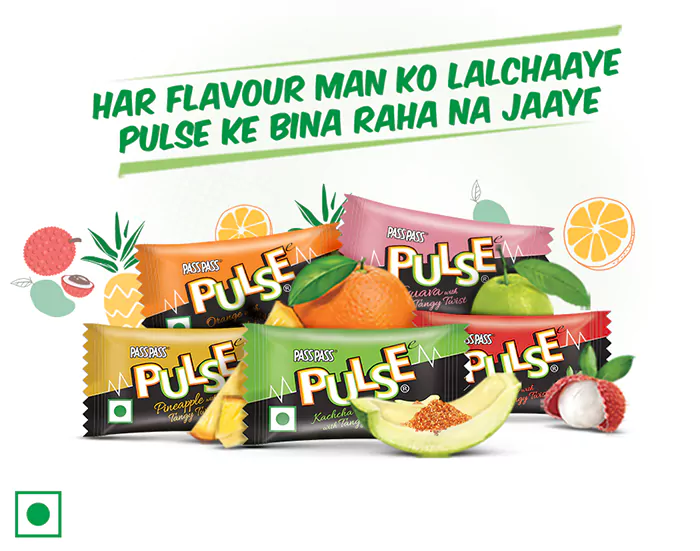
    If you were a kid in India in the 90s or 2000s, you know that the greatest joys in life often came wrapped in colorful plastic for just one rupee. Two brands, in particular, dominated every childhood memory: Pulse Candy and Boomer Bubble Gum.

    These aren’t just candies; they are monuments to smart marketing and mass appeal.

    1. The Sour-Sweet Sensation: Pulse Candy

    When Dharampal Satyapal (DS) Group launched Pulse Candy, the candy market was already crowded. How did they achieve an unbelievable ₹300 crore in sales in just two years?

    • The Unique Flavour: Pulse wasn’t just sweet; it had a signature, multi-layered flavour. It started with a unique tangy, raw mango (kachha aam) taste, which quickly became addictive.
    • The Powder Core (The Secret Weapon): The real magic was the spicy, salty powder core hidden inside. This surprise burst of flavour gave the consumer a two-in-one experience that no other candy offered.
    • Low Cost, High Value: By sticking to the ₹1 price point, Pulse was an easy purchase for every kid, ensuring massive volume sales across the country.

    Pulse Candy is a perfect example of how a truly unique product can instantly conquer a saturated market and become a runaway hit based on taste alone.

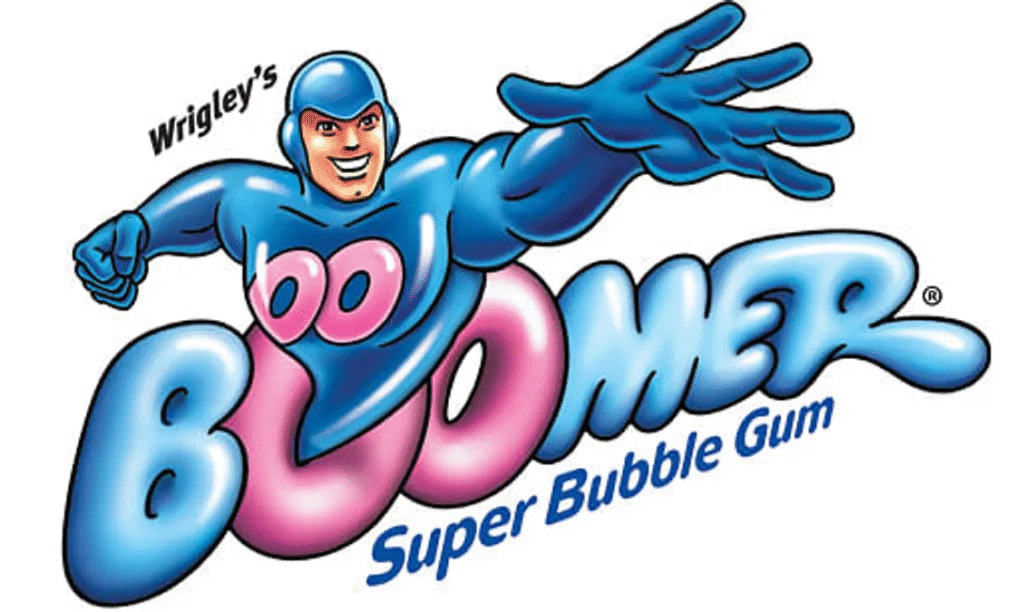
    2. The Bubble Burst King: Boomer Bubble Gum

    Before fancy, expensive gums took over, there was Boomer. It wasn’t about the taste lasting forever; it was about the size of the bubble you could blow.

    • The Big, Pink Goal: Boomer’s core appeal was simple: it was the best gum for blowing massive, satisfying bubbles. The simple act of competing with friends to blow the biggest bubble was the game.
    • The Smart Marketing: Its marketing was genius! Remember the famous Boomer Man commercials? They were funny, memorable, and directly linked the gum to speed and a fun, adventurous spirit.
    • Accessibility: Like Pulse, Boomer was cheap and widely available. It was sold literally everywhere, becoming the default choice for millions of children.

    Boomer successfully carved out a niche as the ultimate fun and accessible bubble gum, leaving an indelible mark on an entire generation.

    These two small packets, costing just one rupee each, prove that in business, sometimes the simplest, most innovative idea delivered at an affordable price can lead to the biggest success stories.

  • The Great Indian Paint Heist: How Vijay Mallya Lost Berger to Two Brothers

    The Great Indian Paint Heist: How Vijay Mallya Lost Berger to Two Brothers

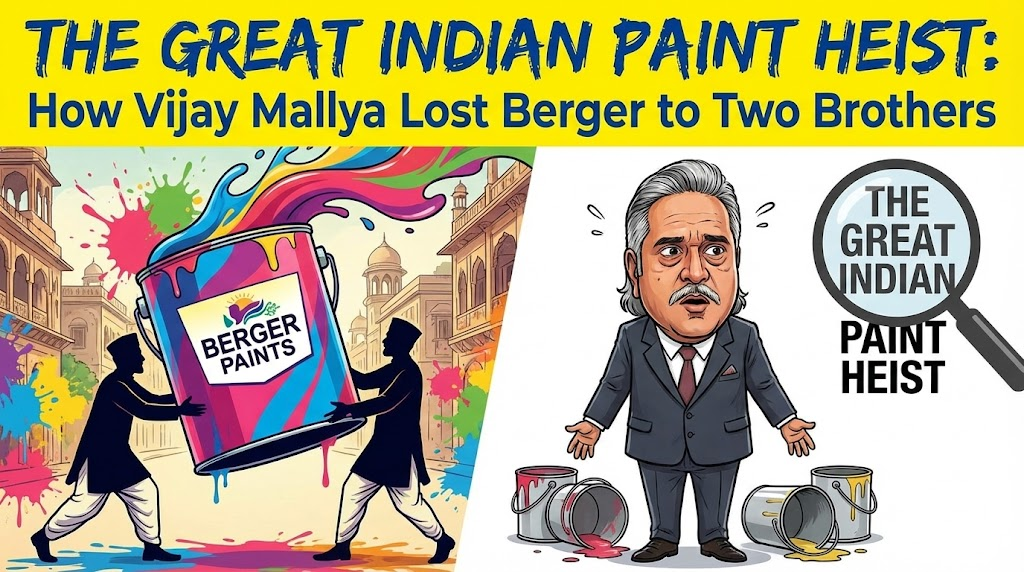
    Did you know that the famous business tycoon Vijay Mallya once owned one of India’s biggest paint companies, Berger Paints? Even more incredible is the story of how he lost it, and how two brothers turned that failing company into a ₹10,000 crore success!

    This is a true story of risk, focus, and the power of Indian entrepreneurship.

    Mallya’s Distraction and Berger’s Decline

    Back in 1991, Vijay Mallya did indeed own Berger Paints. However, Mallya’s attention was elsewhere. He was heavily focused on his other ventures: the liquor business and his ambitious Kingfisher Airlines.

    As a result, Berger Paints suffered from neglect and was severely underperforming. It was, in business terms, running on “God’s grace”—a complete mess.

    The Entry of the Dhingra Brothers

    Enter the Dhingra Brothers from Amritsar.

    The Dhingras were already successful in the paint industry. Starting with a small shop 20 years earlier, they had worked their way up to become one of the largest exporters of paint from India to Russia. They had big dreams and saw a massive opportunity.

    They decided to go all-in: they put everything at risk and acquired Berger Paints from Vijay Mallya. This was a company ten times bigger than their existing business!

    The Shocking Truth and the Turnaround Plan

    After the acquisition, the Dhingra brothers were shocked. The company was in even worse shape than they imagined. They realized a massive overhaul was needed.

    They got straight to work and implemented a brilliant two-part strategy:

    1. Employee Motivation: They transformed Berger from a slow-moving multinational into a homegrown Indian powerhouse. They motivated employees for growth by offering them stock options, making every employee feel like an owner.
    2. Smart Management: They cut out all unnecessary costs and implemented strict cash management protocols. No more wasteful spending!

    The Unbelievable Result

    The results of their focused approach were nothing short of spectacular.

    The Dhingra brothers grew Berger Paints from a struggling company with minimal sales to a massive enterprise hitting ₹10,000 crores in sales!

    Today, Berger Paints stands tall as the second-largest paint company in India, a testament to the vision and focus of the Dhingra Brothers. They prove that with the right focus, even a failing business can be turned into a spectacular success story.

  • The Billion-Dollar Loophole: Why Parachute Coconut Oil is “Edible” and Not “Hair Oil”

    The Billion-Dollar Loophole: Why Parachute Coconut Oil is “Edible” and Not “Hair Oil”

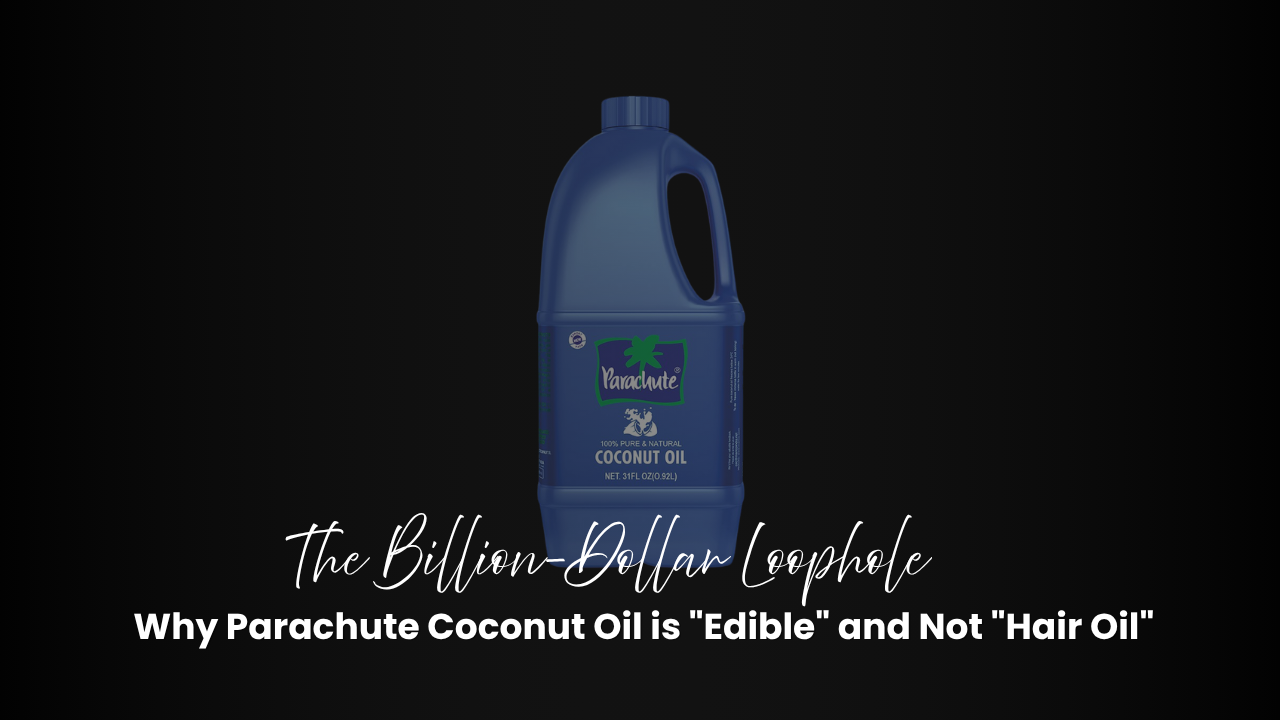
    If you grew up in India, you know Parachute’s iconic blue bottle is synonymous with hair care. But here’s a secret that the company, Marico, brilliantly uses to save crores of rupees: Parachute is legally classified as edible oil, not hair oil.

    This isn’t just a marketing trick—it’s a masterclass in tax efficiency.

    The Misleading Label (That’s Not Misleading)

    Take a look at a bottle of Parachute Coconut Oil. You’ll notice two key facts:

    1. The bottle explicitly states it is “100% Pure Coconut Oil Made from the finest coconuts.”
    2. Crucially, it carries the FSSAI (Food Safety and Standards Authority of India) license, meaning it meets the safety standards to be consumed as a food product.

    What you won’t find anywhere on the label is the word “hair oil.”

    The Power of the GST Rate

    So why does this labeling matter so much? The answer lies in the Goods and Services Tax (GST):

    • Edible Oil (Food Product): The tax rate is significantly lower, typically 5% GST.
    • Hair Oil (Cosmetic/Personal Care Product): The tax rate is much higher, typically 18% GST.

    By cleverly positioning their pure coconut oil as a food-grade product (which it technically is, being 100% pure coconut oil), Parachute saves the massive difference between 5% and 18% GST on every single bottle sold! This amounts to crores of profit every year.

    The Supreme Court’s Verdict

    As expected, tax authorities challenged this classification, arguing that because the product is primarily used as a hair oil, it should be taxed as one.

    The matter went up to the courts, and in 2005, the Supreme Court settled the issue. The ruling was simple and a huge win for Marico:

    If a product meets the safety and purity standards required for edible consumption, it must be taxed as an edible product, regardless of how the consumer chooses to use it.

    Since Parachute met all the standards to be deemed edible, the court ruled that it was eligible to pay the lower 5% tax.

    This landmark decision allowed Parachute to continue leveraging the tax loophole, ensuring their product remains highly profitable and confirming their status as a business legend.