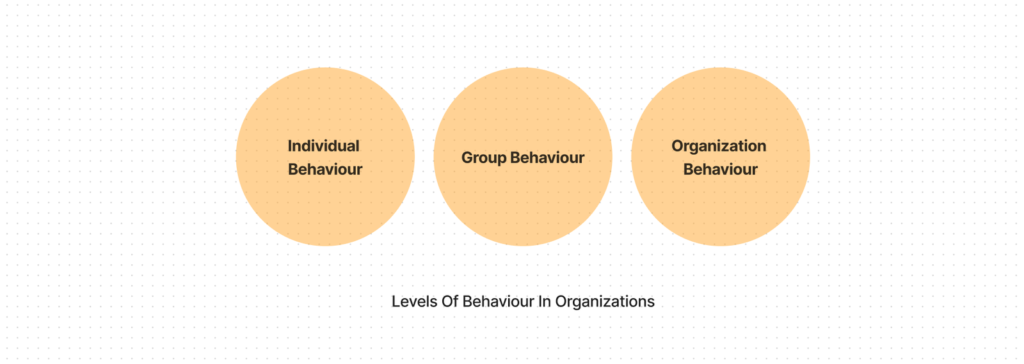
In this article, you’ll learn about fundamental concepts of Organizational Behaviour.
Organizational Behaviour starts with a set of six fundamental concepts revolving around the nature of people and organizations. They are as follows:
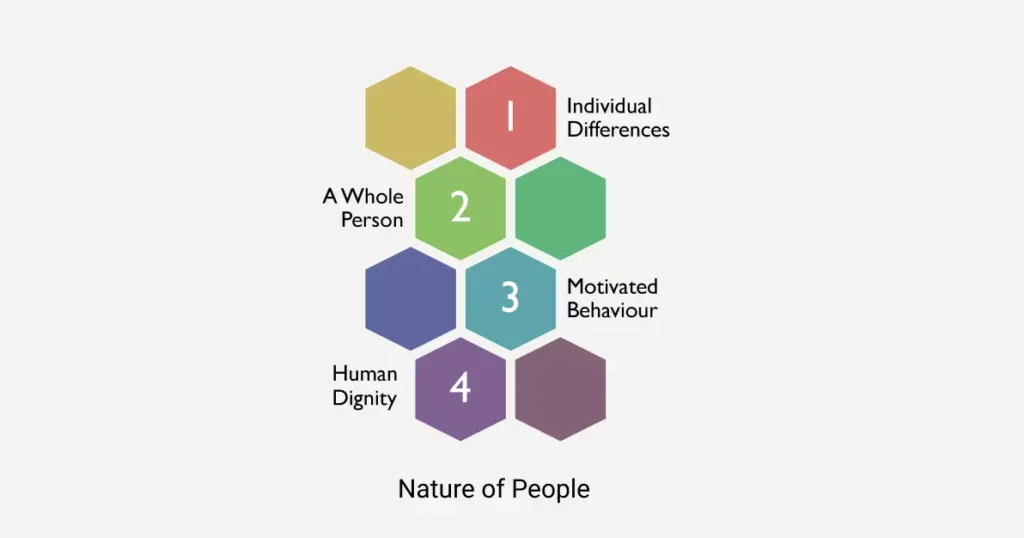
The Nature of people
- Individual differences
- A whole person
- Motivated Behaviour
- Value of the person (human dignity)
The Nature of Organizations
- Social systems
- Mutual Interest
Result
- Holistic organizational behaviour
The Nature of people
Individual differences
People have much in common (they become excited, or they are grieved by the loss of loved one), but each person in the world is also individually different. Each one is different from all others, probably in millions of ways, just as each of their fingerprints is different, as a far as we know. And these differences are usually substantial rather than meaningless. All people are different. This is a fact supported by science.
The idea of individual differences comes originally from psychology. From the day of birth, each person is unique, and individual experiences after birth tend to make people even more different. Individual differences mean that management can get the greatest motivation among employees by treating manager’s approach to employees should be individual, not statistical. This belief that each person is different from all others is typically called the Law of Individual Differences.
A whole person
Although some organisations may wish they could employ a person’s skill or brain, they actually employ a whole person, rather than certain characteristics. Different human traits may be separately studied, but in the final analysis they are all part of one system making up a whole person. Skill does not exist apart from background or knowledge. Human life is not totally separable from work life and emotional conditions are not separate from physical conditions. People function as total human beings.
Motivated behaviour
From psychology we learn that normal behaviour has certain causes. These may relate to a person’s needs and / or the consequences that result from acts. In the case of needs, people are motivated not by what we think they ought to have but by what they themselves want. To an outside observer a person’s needs may be unrealistic, but they are still controlling. This act leaves management with two basic ways to motivate people. It can show them how certain actions will increase their need fulfilment, or it can threaten decreased need fulfilment if they follow an undesirable course of action. Clearly a path towards increased need fulfilment is the better approach.
Value of the person (human dignity)
This concept is of a different order from the other three because it is more an ethical philosophy than a scientific conclusion. It asserts that people are to be treated differently from other factors of production because they are of a higher order in the universe. It recognizes that because people are of a higher order they want to be treated with respect and dignity – and should be treated this way. The concept of human dignity rejects the old idea of using employees as economic tools.
The Nature of Organizations
Social systems
From sociology we learn that organisations are social systems; consequently activities there-in are governed by social laws as well as psychological laws. Just as people have psychological needs, they also have social roles and status. Their behaviour is influenced by their group as well as by their individual drives. In fact, two types of social systems exist side by side in organisations. One is the formal (official) social system, and the other is the informal social system.
The existence of a social system implies that the organizational environment is one of dynamic change rather than a static set of relations. All parts of the system are interdependent and subject to influence by any other part. Everything is related to everything else. The idea of a social system provides a frame work for analysing organizational behaviour issues. It helps make organizational behaviour problems understandable and manageable.
Mutual interest
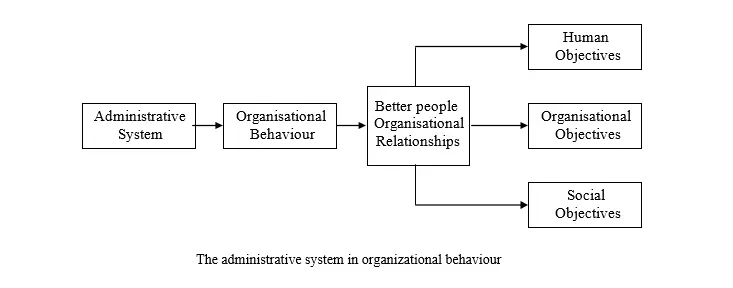
Mutual interest is represented by the statement ―organisations, need people, and people also need organisations‖. Organisations have a human purpose. They are formed and maintained on the basis of some mutuality of interest among their participants. People see organisations as a means to help them reach their goals, while organisations need people to help reach organizational objectives. As shown in the following figure, mutual interest provides a superordinate goal that integrates the efforts of individuals and groups. The result is that they are encouraged to attack organizational problems rather than each other.
Holistic organizational behaviour
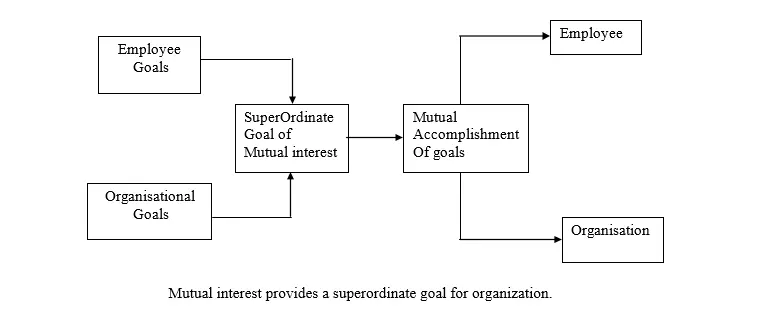
When the six fundamental concepts of organizational behaviour are considered together, they provide a holistic concept of the subject. Holistic organizational behaviour interprets people-organisation relationships in terms of the whole person, whole group, whole organisation, and whole social system. It takes an across-the board view of people in organisations in an effort to understand as many as possible of the factors that influence their behaviour. Issues are analysed in terms of the total situation affecting them rather than in terms of an isolated event or problem.