Category: Blogs

  • Kamala Harris: Trailblazing American Politician

    Kamala Harris: Trailblazing American Politician

    Kamala Harris has secured an important place within the history of American politics, not just through her successes but even through the many “firsts” that she represents. As the United States’ 49th Vice President, she was the first woman, the first Black woman, and the first person of South Asian descent to fulfill this role. Harris’s ascension to vice presidency in 2021 was a historic moment for women and minorities who have dared to make their presence felt in the US political arena, reflecting a lifelong commitment to justice, equality, and public service.

    Early Life and Education

    Kamala Devi Harris was born on October 20, 1964, in Oakland, California, into an immigrant family: Shyamala Gopalan, an Indian cancer researcher, and Donald Harris, a Jamaican economist. She grew up in an environment that was full of life and activism, deeply rooted in both her African American and Indian heritage; she attended both black Baptist churches and Hindu temples. Her mother, an activist in civil rights movements, had moulded Harris’ worldview through her commitment to struggles against inequality and injustice.

    She attended Howard University in Washington, D.C., a historically black college where she majored in political science and economics. Education at Howard was during the time that Harris would cultivate serious interests in public service and leadership within diverse settings. After graduating from the Hastings College of the Law at the University of California, Harris pursued a successful career in the legal field, which would then anchor her into politics.

    Legal and Political Career

    Harris began her practice of law working as an Alameda County deputy district attorney in California and focused much of her work upon gang-related violence, drug dealing, and sexual assault. She became the first woman in San Francisco’s history as well as the first African-American to serve as District Attorney elected in 2004. Some of the programs Harris initiated were to reduce recidivism, including job training and education of first offenders.

    In 2010, Harris was elected California’s Attorney General, once again becoming the first woman and the first Black person to hold that position. She also used her position as Attorney General to tackle huge issues, including in great part defending the Affordable Care Act, aiding the cause of marriage equality, and working for criminal justice reform. She established herself as a crime hawk, but was also building a reputation for pushing toward more human resolutions to problems such as the need to prevent mass incarceration and how to decrease recidivism. Her innovative efforts, like the Open Justice data initiative that would increase transparency in law enforcement, only added to her national profile.

    Presidential Run and U.S. Senate

    In 2016, Harris was elected to the U.S. Senate, serving California. She is a member of several key committees, including Judiciary Committee, where she was famous for her tough and very thorough questioning during confirmation hearings. She especially spoke out on civil rights, immigration, and criminal justice reform. She made her presence felt in the Senate by pleading for the rights of marginalized communities, by standing up for the DACA program, and by openly criticizing the Trump administration.

    In 2019, Harris launched a campaign for the Democratic nomination for President of the United States. The core issues driving her campaign were reforms in health care, environmental justice, and economic inequality. Although Harris had excellent debate performances, garnering a huge amount of attention for most of the initial period of her campaign, she suspended her campaign in December 2019. However, her candidacy still made her a more formidable star for the Democratic Party.

    Vice Presidency

    During the August 2020, Joe Biden, the Democratic presidential candidate chose Kamala Harris, a person who would go down in history as the first-ever Black woman and South Asian American woman to appear on a major party’s presidential ticket. In November 2020, the Biden-Harris ticket won the election against incumbent President Donald Trump and Vice President Mike Pence. On January 20, 2021, Harris was sworn in as Vice President of the United States, making history as the highest-ranking female official in U.S. history.

    Harris, as Vice President, has been instrumental in matters of critical national importance, whether in COVID-19 responses, voting rights, immigration reform, or the cause of racial justice. She also continued to represent the Biden administration overseas by being part of diplomatic missions and communicating with world leaders. Harris’s vice presidency has attracted much attention on various levels: Not just because of her historical record but possibly because she might herself be interested in running for the office someday.

    Legacy and Impact


    From her days as a California prosecutor to becoming the vice president of the United States, Kamala Harris’s journey epitomizes resilience, intellect, and commitment to public service. She has stood for justice and equality at every step in her career for women and people of color; thus, at the center of American politics, she stands like a beacon of hope to millions of people.

    Now, Kamala Harris is running for President of the United States to continue protecting our freedoms, delivering justice, and expanding opportunity so that every American can not just get by, but get ahead.

  • Zepto: A Rocket-Fast Rise in the Indian Quick Commerce Market

    Zepto: A Rocket-Fast Rise in the Indian Quick Commerce Market

    Convenience is the absolute king in today’s fast-moving world. Consumers are now seeking products and services to be delivered to their doorstep within minutes. One such company that has ridden on this wave is Zepto, a leading quick commerce startup based in India. Zepto has altered the way people shop for groceries and essentials, with ultra-fast delivery services.

    What is Zepto?

    Zepto is an e-commerce platform that specializes in instant delivery for groceries and essentials. Unlike other online grocery shops, which take days or even hours to have the ordered items delivered, Zepto makes shopping next-generation through 10-minute or less delivery. This fast delivery service has earned much popularity among busy consumers valuing convenience and speed.

    Who are the founders of Zepto?

    Aadit Palicha and Kaivalya Vohra, former employees at Flipkart, founded Zepto in 2020. Witnessing firsthand how convenience and speed in online shopping were only becoming increasingly popular, the two sensed that there was space for crafting a platform allowing consumers to get grocery and other essentials delivered to their doorstep in mere minutes. With a background in e-commerce, this duo was well-placed to launch Zepto into the very competitive grocery delivery market.

    How Zepto Began its Journey

    • Early Days and Rapid Expansion (2020-2021): Zepto started in the city of Mumbai in December 2020, focusing on ultra-fast grocery delivery. The company soon took off to spread across cities within India.
    • A Series of Funding Rounds and Aggressive Growth (2022): Zepto invited much-needed interest from investors, resulting in back-to-back funding rounds. On the back of this money, it would now be able to further accelerate its growth, expansion of its product portfolio, and continued investment in technology.
    • The Battle for Quick Commerce Dominance (2023-present): Having seen enormous potential in the success that Zepto had at its core, several other players entered the Indian quick commerce market. Even as competition was increasing, Zepto was able to hold on to its position as a leading player by customer satisfaction, product innovation, and operational efficiency.

    How Zepto delivers in under 10-mins?

    How Zepto delivers in under 10-mins
    How Zepto delivers in under 10-mins

    The infrastructure powering Zepto’s ability to deliver any orders within 10 minutes comes in the form of dark stores, which are simply small, localized warehouses. These dark stores are located near densely populated areas, and in this way, Zepto is able to quickly fill orders and get them to customers in as short a time frame as possible. Besides, Zepto deploys advanced technology and efficient logistics to optimize its delivery operations.

    Future Plans of Zepto

    The future plans of Zepto involve adding more products to its grocery category. It will also enhance the technology infrastructure to get into newer markets. Besides, Zepto has socially committed itself to sustainable environment practices and ensuring a lesser carbon footprint.

    Zepto – Mission and Vision

    It envisions redefining convenience and speed in e-commerce with a mission to be the most trusted and loved instant-delivery brand in India. Zepto seeks to offer customers optimum experiences and a change in the way people shop for essentials.

    Zepto’s Impact on the Indian E-Commerce Space

    It has disrupted the entire e-commerce space in India with its fast growth and success. Setting a benchmark in convenience and speed for online shopping, it set a new standard. On the other hand, Zepto’s success has invited further interest among investors within the quick commerce space, further leading to innovation and competition.

    Challenges and Opportunities

    Notwithstanding the significant success that Zepto has had, there are at least a good number of challenges. The infrastructure, logistics, and human resource-related costs that come with running a quick commerce business are definitely not cheap. Moreover, there will need to be a sailing through regulatory hurdles while ensuring its profitability is sustainable.

    Despite these odds, Zepto’s outlook in the future seems bright. The Indian e-commerce market is on the rise; demand for convenient and speedy delivery is unending. With a strong brand, streamlined operations, and great focus on customer experience, Zepto is well poised to capitalise on this growth.

    Competition and Market Dynamics

    The Zepto operates in a very competitive market with many other players gunning for a share of this quick commerce space. Blinkit earlier known as Grofers, Swiggy Instamart, Dunzo have all rolled out their own quick commerce services that make the competition further fierce.

    The competitive environment has forced Zepto to innovate and change at all times to remain ahead of the wave. In particular, investments have been made in product innovation, enhancement of technology capabilities, and geographic expansion. In addition, strategic partnerships and targeted acquisitions have been one lever to market leadership.

    Sustainability and Social Impact

    Zepto has, throughout these times, been making many socially responsible efforts toward its environmental impact. The company implemented sustainable solutions through its very new-age packaging and took steps to reduce carbon footprint. Besides contributing to social causes, Zepto supported local communities.

    Conclusion

    From the journey of a startup to the top player in the Indian quick commerce market, Zepto has earned a lot of respect and popularity. Its rapid expansion, innovative approach, and focus on customer satisfaction have made it successful. The more competition this space sees, the more Zepto will have to further innovate and adapt to be at the forefront of this industry.

    What is Zepto?

    Zepto is a startup based in Mumbai that offers a 10-minute grocery delivery service.

    When was Zepto founded?

    Zepto was founded in September 2020 and began operations in April 2021.

    Which companies does Zepto compete with?

    Swiggy Instamart, BigBasket, Blinkit, and Dunzo are some of the top competitors of Zepto.

  • Liberty Shoes: A Journey from Sole to Success

    Liberty Shoes: A Journey from Sole to Success

    Liberty Shoes, that spells quality and comfort for Indian feet today, started off on a very modest note way back in 1954 as a shoe manufacturing unit at Karnal in Haryana. The brainchild of Dharam Pal Gupta, Purshotam Das Gupta, and Rajkumar Bansal, this unit began its humble production with just four pairs a day, turning out their shoes with the help of skilled cobblers.

    A Decade of Growth: 1954-1964

    The initial years were slow but steady growth. Liberty Shoes was determined to lay a strong foundation, bring about constant improvements in the manufacturing process, and try to understand the changing needs of the Indian consumer. Gradually, production capacity was increased, and a wider range of footwear started coming out of the factory to cater to varied segments of the market.

    Expanding Horizons: 1965-1975

    The Indian economy expanded in the 1960s, and so did Liberty Shoes. New market territories were conquered as its distribution network spread to almost every nook and corner of the country. Technology and infrastructure saw major investments during this decade as production efficiency and product quality were enhanced manifold.

    Building a Brand 1976-1985

    By the late 1970s, Liberty Shoes was already a known name in the Indian footwear industry. The stage now saw new designs and styles coming in to capture the psyche of the young, fashion-conscious mind. The emphasis now shifted to creating a strong brand that stood for comfort, durability, and value for money.

    Retail Revolution (1986-1995)

    The 1980s emerged as the defining decade for Liberty Shoes. Enter the retail sector, open the first exclusive showroom in Kurukshetra, and there it goes, closer to consumers to develop a more direct relationship. During this decade, many new product lines were introduced, basically in view of different segments of consumer preference.

    Global Expansion, 1996-2005

    By this time, Liberty Shoes was already very well entrenched in the domestic market. It looked for international expansion and entered new markets, setting up units in a number of countries. This was basically a period of intense marketing and strategic tieups to make the brand name very visible.

    Digital Dominance, 2006-2015

    The digital revolution influenced the footwear industry in a big way, and Liberty Shoes had to quickly respond to it. The company thus launched its online store whereby products could reach a greater number of people. Utilize social media platforms for engaging with customers and building an effective online community.

    Innovation and Sustainability 2016-present

    The last two years have seen Liberty Shoes determinedly moving towards the twin objectives of innovation and sustainability. It is introducing eco-friendly materials and processes in its products for addressing the new demand of ethical fashion in consumers. Besides, heavy focus is being laid on research and development to introduce the most innovative designs in footwear.

    A Year-on-Year Success Story

    Basically, Liberty Shoes has shown a clean record in terms of financial performance over the years. The revenue has been trending upwards in view of enhanced sales, diversified products, and geographical presence. The company has very ably managed to hold its market leadership in the shoe industry, which is otherwise gloomy.

    Key Milestones

    • 1954: Foundation of Liberty Shoes
    • 1983: First exclusive showroom
    • 1986: Incorporation as a public limited company
    • 1991: Joint venture in Russia
    • 2001: Adesh Gupta becomes CEO
    • 2004: Launch of company-owned stores
    • Present: Strong focus on innovation, sustainability, and digital presence
  • Systematic Investment Plan (SIP)

    Systematic Investment Plan (SIP)

    Do you know what is sip or Systematic Investment Plan Is? Nowadays, every person wants to earn money through savings. There are also many options available to earn as interest with savings in the market, such as depositing money in a bank, fixed deposits, etc.

    Today we will tell you about another such option “SIP i.e. Systematic Investment Plan“.

    If you are an investor, then you will definitely have basic information about SIP. But, there are many people who do not know about SIP i.e. Systematic Investment Plan. Through this article we will share all the information related to systematic investment plans to you.

    In this article, you will understand about SIP, How to Invest in SIP along with Advantages and Disadvantages etc.

    Let’s understand SIP (Systematic investment plan) from the beginning.

    What is Systematic Investment Plan (SIP)?

    Often you get nervous thinking about investing that you will have to invest a large amount of money. But that’s not the case with SIP, it’s not necessarily the case with SIP to burden your economic situation in the process of investing.

    Investing in SIP with less risk is a good option to get better returns. This means that you have to invest at a certain amount of money every month or at regular intervals. Through SIP you have to invest a certain amount of money in the stock market or mutual fund over a certain period of time.

    In SIP investment plan, instead of investing a large amount at a time, a small amount is invested, the result of which is high returns.

    Usually, this is for equity mutual funds. However, investing in SIP has to pay special attention to discipline. You have to maintain the investment at fixed intervals as opposed to a slump or boom in the stock market.

    How does SIP work?

    Once you apply for one or more SIP plans, that amount is automatically debited from your bank account. After this, you invest in mutual funds you have purchased at a pre-decided time interval. At the end of the day, you will be allotted units of mutual funds based on the net assets value (NAV) of the mutual fund. With every investment in SIP plan in India, additional units are added to your account based on the market rate.

    With every investment, the amount that is reinvested becomes higher than before and therefore the return on those investments is also higher. Finally, it is at the discretion of the investor whether he wants to take the return from the SIP in the middle or at the end of the SIP period.

    Let’s understand this with an example.

    Let’s say you have to invest in mutual funds. You have saved ₹1 lakh separately for investment. Now you will have two options to invest. First, you will invest ₹1 lakh in a mutual fund at a time. Or else, you will opt for a Systematic Investment Plan or SIP.

    You need to set an amount to start investing in SIP. Let’s say you want to invest ₹500. Then, on a certain date every month, ₹500 will be debited from your account for the mutual fund you want to invest in. This will continue throughout the SIP period.

    When should I invest in SIP?

    An investor can start investing with the minimum risk and the best SIP plan ever. It is very important for the investor to choose the scheme that suits his long-term goal well. Therefore, there is no suitable time frame to start a SIP investment plan. An investor should start investing as soon as he can.

    Types of Systematic Investment Plan (SIP)

    The following are the types of SIPs

    1. Top-up SIP

    This SIP allows you to increase your investment amount from time to time. Thus, when you have more amount available, you can also increase your investment amount accordingly.

    It provides the opportunity to invest in the best and high performing fund at regular intervals.

    1. Flexible SIP

    As the name suggests, in this plan, the investor gets the flexibility to invest.

    An investor can increase or decrease the amount of investment, according to his investment capacity.

    1. Perpetual SIP

    This SIP plan allows you to invest without a mandated date.

    Generally, a SIP plan lasts for 1 year, 3 years or 5 years.

    Therefore, the investor can withdraw the amount invested as per his wish or according to his financial goals.

    Benefits of SIP

    There are many benefits to investing in SIP. Some of them are as follows

    • It’s makes you a disciplined investor

    If you don’t have good financial information like when the market is up and down, then sip investment plan can prove to be a better option for you.

    You won’t need to analyze to find out the time to invest at the right time.

    Since, in SIP, the money from the account is automatically debited and goes to mutual funds, then you do not need to worry.

    • Rupee Cost Increasing Factor

    With SIP comes the benefit of rupee cost averaging.

    Since, your investment amount is stable for a long period of time, you can take advantage of the volatility of the market with the average cost of rupees since SIP.

    The fixed amount you invest through SIP averages the value of each unit.

    Thus, when the market goes down you can buy more units and when the market is high then buy fewer units, which will reduce the unit at average cost.

    • Power of Compounding

    It is important to stay in discipline to invest in SIP which helps you to make continuous investment growth.

    Its automatic process ensures that your investment also grows as opposed to a lump sum investment where you may sometimes forget to invest.

    Disadvantages of SIP

    There are some drawbacks as well as the advantages of investing in SIP, which are as follows

    • The long-term return from SIP is less than the return from a lump sum investment in the long run.
    • After this, you should have a certain amount in your bank.
    • Its biggest disadvantage is that if your bank does not have enough amount, the bank can also charge a penalty.
    • Apart from this, if you do not fill the installation 3 times, your SIP will be cancelled.

    Important points related to SIP

    • SIP investment through mutual funds has grown rapidly. It has emerged as a popular segment for investors.
    • It is a systematic plan through which investors invest a fixed amount every month in a mutual fund of their choice.
    • The advantage of investing in SIP is that you don’t have to be afraid of the ups and downs in the stock market.
    • The biggest advantage of this is the compounding return where you get the return on the return you get above it.
    • You can also start investing with a minimum amount of ₹500 for SIP.

    If you are thinking of investing in SIP then it is mandatory that you have a Demat account. So Open a Demat account now, to invest in SIP.

  • Nithin Kamath: Indian Stock Trading with Zerodha

    Nithin Kamath: Indian Stock Trading with Zerodha

    Nithin Kamath is one of the distinguished entrepreneurs from India. Besides being an entrepreneur, he is also a columnist for The Financial Express and a stockbroker. He is a founder of Zerodha. This ranks as India’s largest stock brokerage firm with headquarters in Bangalore, Karnataka.

    Nithin Kamath, a well-known personality in the Indian business mainstream, has received much attention toward his steps in this field. The Economic Times also listed him as one of the Top 10 Businessmen to Watch Out for in India in 2016 because of his excellent contribution toward discount broking. He was also presented with the Forbes India Leadership Award in 2019 and thus given the title Conscious Capitalist of the Year. Nithin’s net worth, to boot is an amazing $1.5 billion, through all his entrepreneurial feats.

    Many crowning moments have not passed Zerodha by either. The company topped IIFL Wealth Hurun India 40 and Under Self-Made Rich List in 2020-an effort that once again speaks about Nithin Kamath’s entrepreneurial brilliance and places Zerodha in good stead as one of the most prominent Indian brokerage firms.

    Nithin Kamath- Biography

    NameNithin Kamath
    Born5 October, 1979
    Age43 (2023)
    BirthplaceShivamogga, Karnataka, India
    NationalityIndian
    Zodiac SignLibra
    Educational QualificationBachelor’s in Engineering
    ProfessionEntrepreneur, Stockbroker, Columnist
    PositionFounder & CEO, Zerodha
    Net worth270 crores USD (2023)
    FatherU.R Kamath
    MotherRevati
    BrotherNikhil Kamath
    SpouseSeema Patil

    Nithin Kamath – Personal Life

    Nithin Kamath is a Konkani born in Shivamogga, Karnataka, India. His father U.R. Kamath worked at Canara Bank as an executive, and his mother, Revathi, taught him to play the veena. He also has a young brother Nikhil Kamath, with whom he co-started Zerodha. In 2008, Nithin married Seema Patil, and they have a son named Kiaan. In addition to business, Nithin Kamath also enjoys playing basketball.

    Nithin Kamath – Education

    Nithin Kamath’s educational life started as a child when he would travel with his father who was working for Canara Bank to different parts of India. Nithin finally settled in Bangalore in 1996 where he finished his secondary education and further pursued his college education. He completed his Bachelor’s degree from Bangalore Institute of Technology in the field of specialization: Electronics and Telecommunications. His background in this field most likely gave him technical expertise and familiarity with the rapidly changing financial technology landscape.

    Nithin Kamath – Professional Life

    He had a special attraction to trading and entrepreneurship from when he was in school. Here’s his rewritten profile:

    He started managing his father’s account in trading when he was just 17 years old. Nithin could still go to school and get practical experience in the markets from early age.

    Self-employment as a proprietary trader: Nithin became a self-employed proprietary trader during college, from January 1997 to January 2004. These years helped him hone his trading abilities and understand market dynamics better.

    Work in the Call Center Since he had very little trading capital, Nithin was forced to work for a call center for three years. He traded during the day while working as a Senior Telesales Executive for an organization that specializes in operating call centers from January 2001 to June 2004.

    Sub-broker and portfolio advisory service Nithin started his professional career as a sub-broker with Kamath Associates-a Reliance Money franchise. He provided portfolio advisory services and proprietary trading between January 2004 to January 2010.

    In late 2010, Nithin Kamath, along with his younger brother Nikhil, founded Zerodha, his own stock brokerage firm. This became the start of a new entrepreneurial venture, as he will change the status quo of the Indian brokerage industry with discount broking and innovative trading technologies.

    Nithin Kamath worked as a trader, spent some time in a call center, and served as a sub-broker, which gave him a deep understanding of things, paving the path for Zerodha, one of the largest retail stock brokerage firms in India today.

    Nithin Kamath’s success story is beyond his story of formation and phenomenal growth of Zerodha, and in itself is a huge disruption of the brokerage business in significant ways. It was NSE’s free trading platform ‘NOW’ that inspired Nithin and directed him toward what was needed for the industry.

    With a decade of trading in the stock markets, he keenly witnessed the challenges and limitations faced by traders, and so he founded Zerodha. His vision was to eliminate the complications associated with trading in the stock markets and create a brokerage firm that would address the barriers faced by traders. The name itself of Zerodha combines “Zero” with “Rodha,” the Sanskrit word for barrier.

    Nithin took the entrepreneurial journey along with his brother and a team of five in the year 2010. Zerodha initially catered for the day traders and has experienced spectacular growth over time. Disruptive pricing models and proprietary technology have pushed the company to the top ranks as the largest stockbroker in India, based on active retail clients.

    Zerodha has revolutionized the landscape of broking, enabling millions of retail investors to trade with ease, saving money while gaining efficiency. The very success of Zerodha is an outcome of visionary leadership with commitment toward change-thus, Nithin Kamath. Founded in August 2010, Zerodha is India’s largest brokerage firm, which has opened a physical presence in almost all major cities of the country; though, in June 2020, it became the official unicorn which self-valued at $1 billion. Today more than 2.2 million users are using Zerodha that allows it to make three million trades daily through online stock brokerage.

    Contributions to the Fintech Ecosystem

    Nithin Kamath’s effort is not just limited to Zerodha. Through Rainmatter, he has also looked at innovation in the fintech ecosystem through funding and mentoring of startups, making them available to Zerodha’s technological infrastructure for building solutions that enhance the financial services space.

    Kamath seems hopeful to be able to derive an energized ecosystem of cooperative fintech thereby bringing in innovative ideas that will help the industry along with the consumers.

    Conclusion

    Nithin Kamath’s journey from a small-time trader to being one of the founders and CEO of Zerodha is epitomized with innovation, resilience, and vision. Zerodha has transformed stock trading in India by empowering millions to trade with far greater access, affordability, and transparency. The focus on financial education, technological advancement, and customer-centricity remains paramount for its continued success and transformation of the Indian financial landscape.

    Nithin Kamath left behind not just a great brokerage firm but the story of making people manage their own financial lives. It is a story of inspiring entrepreneurship and an anecdote to the power of vision and grit in making a fantastic impact.

  • Elon Musk: Biography, Success, Inspiration

    Elon Musk: Biography, Success, Inspiration

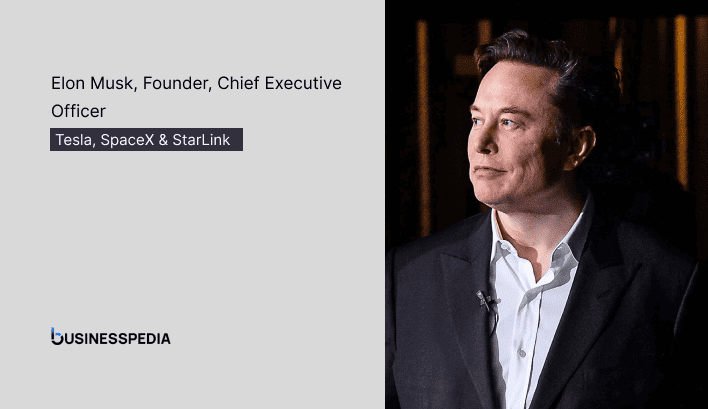
    Elon Musk, the billionaire entrepreneur, and innovator, is widely regarded as one of the most influential and inspirational figures of our time. He has been involved in a diverse range of industries, including technology, renewable energy, space exploration, and transportation. With his vision, creativity, and determination, Musk has redefined the meaning of success and inspired countless individuals worldwide.

    Early Life and Education of Elon Musk

    Elon Musk was born on June 28, 1971, in Pretoria, South Africa. His father was an engineer, and his mother was a model and dietitian. As a child, Musk was always fascinated by science and technology, often spending hours reading books and building computers. At the age of 12, he created a video game called Blastar, which he sold to a computer magazine for $500.

    After completing his secondary education in South Africa, Musk moved to the United States to attend the University of Pennsylvania. He graduated with degrees in Physics and Economics and later earned a graduate degree in Applied Physics and Materials Science from Stanford University.

    Entrepreneurial Career of Elon Musk

    Musk’s entrepreneurial career began in 1995 when he co-founded Zip2, a web software company that provided online business directories and city guides. In 1999, he sold the company to Compaq for $307 million and went on to co-found X.com, an online payment company that eventually became PayPal. In 2002, eBay acquired PayPal for $1.5 billion, and Musk became a multimillionaire overnight.

    In 2004, Musk founded SpaceX, a private aerospace company with a mission to reduce the cost of space travel and eventually enable humans to colonize Mars. Musk invested over $100 million of his own money into the company and faced numerous setbacks and failures in the early years. However, his perseverance paid off, and SpaceX became the first privately funded company to send a spacecraft to the International Space Station in 2012.

    In addition to SpaceX, Musk has also founded The Boring Company in 2016. This is a tunnel construction company that is designed to alleviate traffic congestion in major cities by creating an underground network of tunnels for cars to travel through. The company has already completed its first tunnel, a test tunnel under Los Angeles, and is working on expanding the network to other cities.

    Musk is also known for his interest in renewable energy and his efforts to combat climate change. In 2015, he founded Tesla Energy, a subsidiary of Tesla that produces energy storage products for homes, businesses, and utilities. The company’s goal is to create a world powered by sustainable energy, and it has made significant strides in this direction with its electric cars, solar panels, and energy storage solutions.

    In addition to his business ventures, Musk has also made significant contributions to various charitable causes. He has donated millions of dollars to education initiatives, including the creation of the Musk Foundation, which supports renewable energy research and provides grants to schools and universities. He has also donated to organizations focused on space exploration and colonizing Mars, such as the Mars Society.

    Despite his successes, Musk has faced criticism and controversy throughout his career. He has been criticized for his management style and treatment of employees at some of his companies. He has also faced backlash for his comments on social media, which have been seen as insensitive or controversial by some.

    Net Worth of Elon Musk

    As of 2022, Elon Musk has an estimated net worth of over $200 billion, making him one of the richest people in the world. His wealth comes from his various successful ventures, including Tesla, SpaceX, The Boring Company, and Neuralink. Musk’s net worth has increased significantly over the years, thanks to the success of his companies and his ability to innovate and disrupt industries. Despite his enormous wealth, Musk has also been known for his philanthropic efforts, including his pledge to donate the majority of his fortune to charitable causes.

    However, Musk’s drive and determination have inspired countless people around the world. He has been praised for his innovative thinking and willingness to take risks, and his vision for a future powered by sustainable energy and space exploration has captured the imagination of millions.

  • What Is the Stock Market and How Does It Work?

    What Is the Stock Market and How Does It Work?

    You must have heard the word Stock Market on the internet or people near by you talk about it. (Stock Market and Share Market are same, just to different name.)

    If you’re interested in learning exactly what is the stock market, then you’ve come across the perfect article. In article you’ll learn about learn what is stock market, In simple words.

    Even if you are a beginner, you will understand how the stock market works, and how can we make money work from the stock market? We are going to try to answer every single question related to the share market through this article.

    If you know the meaning of the market, then you have known half the stock market in the beginning.

    What is Stock Market?

    Market means where things are bought and sold. Similarly, the stock market is a place where a lot of companies around the world are listed and those companies have issued some of their company’s stake in the stock market, that is, to buy and sell. The share price of each company is different.

    People buy those shares at a lower price and sell them when their price goes up. This gives them some profit and they earn money in the stock market. But sometimes due to some reasons, if the company loses, then the price of its share also decreases.

    Which sometimes hurts us, because the share price of any company varies every minute according to its business and today their share price is something , then tomorrow there is something else.

    The purpose of most of the people behind investing money in the stock market is that the money they are going to invest in the stock market can get them good returns in the future.

    How does the stock market work?

    Many people want to invest their money in the stock market, but due to their lack of proper knowledge of the stock market, they are afraid to invest money in the stock market. Many people even invest their money in the stock market without any information, but due to this mistake, they also lose all their money.
    As we are talking about the stock market or the stock market, the stock market is known by many names. The share of the share market is also called “part” in its simple language. In the stock market, everything is a share job.

    Now the most important, Is how the stock market works? 

    Simply, the stock market is a digital market. It can also be called the electronic market. Where all the investors can easily buy and sell their shares. The place of buying and selling the share of the company which is listed in the stock market is called the share market or stock market.

    Buying and selling shares in the stock market takes place through exchange. Now you must have the question in your mind that what is exchange in the share market? Don’t worry, you will find the answers to all your questions.

    There are two largest stock exchanges in India

    1. BSE ( Bombay Stock Exchange )
    2. NSE ( National Stock Exchange )

    All the business in the stock market is done through these exchanges. BSE (Bombay Stock Exchange), which is the largest stock exchange in India, was established in 1875 as a large stock exchange in India. India’s second stock exchange NSE (National Stock Exchange) was established in 1992 as the first electronic stock exchange.

    The share price of all the companies that are listed in the stock market is recorded in the BSE (Bombay Stock Exchange). The share price of each company varies according to its profit and loss.
    In this way, by making these exchanges our medium, we have to work in the stock market.

    Difference Between NSE and BSE

    NSEBSE
    It is one of the biggest stock exchanges India along with being a harbinger of technological advances by the introduction of fully automated trading systems.The BSE is one of Asia’s oldest stock exchange markets which offers a legacy of high-speed trading.

    Conclusion

    I hope that after reading this article, you must have realized what this stock market is? And how exactly does the stock market work and how can we invest in the stock market?

    If you understand what a stock market is? Don’t forget to share this information with your friends. So that they can also know how to make money in the stock market.

  • What is Banding ? Characteristics , Advantages and its Importance

    What is Banding ? Characteristics , Advantages and its Importance

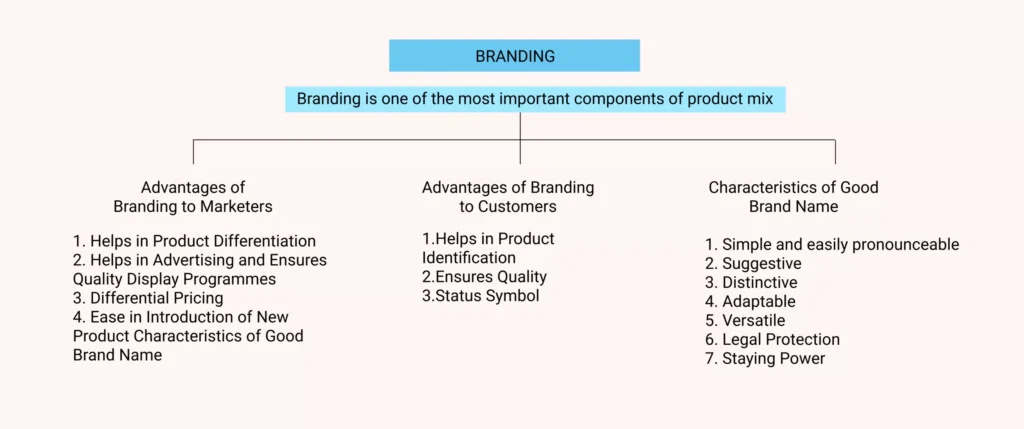
    Branding is one of the most important components of product mix.

    • Firms have to decide whether to sell the product in its Generic Name (name of the category of the product, say Fan, Pen, etc.) or to sell them in a Brand Name (such as Polar Fan or Rotomac Pen).
    • If products were sold by generic names, it would be very difficult for marketers to distinguish their products from that of their competitors.
    • Therefore, most marketers give a brand name to their products, which helps in identifying and distinguishing their products from the competitor’s products.

    What is Branding ?

    The process of giving a name, sign or symbol to a product is called branding. Through branding, firm tries to build a distinct and unique image for his product in the minds of public. An established brand name increases the reputation and goodwill of the firm and generates repeat sales.

    Important Terms related to Branding

    Brand: Brand is a name, sign, design, or some combination of them, which is used to identify a product. It differentiates the product from competing products For example, some of the common brands are Bata, Lifebuoy, Parker, etc. Brand is a comprehensive term, which has the following components:

    • Brand Name: Brand name refers to that part of a brand, which can be spoken. It is the verbal component of a brand. For example, brand names like Mercedes, Nike, Maggie, etc.
    • Brand Mark: Brand mark refers to that part of a brand, which cannot be spoken, but can be recognized in the form of sign, symbol or design. For example, Star of Mercedes , swoosh sign of Nike, etc.
    • Trade Mark: A brand or part of a brand that is given legal protection is called a trademark. The firm which gets its brand registered has the exclusive right for its use and no other firm can use such name or mark in the country.

    Advantages of Branding to Marketers

    1. Helps in Product Differentiation: Branding helps a firm in distinguishing its product from other competing products. It enables the firm to secure and control the market for its products.

    2. Helps in Advertising and Display Programmes: With a brand, name advertisement not only creates awareness about the product but popularises the brand. Without a brand name, the advertiser can only awareness of the generic product and can never be sure of the sale product. For example, people will not simply purchase toothpaste, but they will ask for a brand, like Close Up, Colgate, etc.

    3.Differential Pricing: An established brand name enables the firm to charge prices higher than the competing products. It is possible because customers are ready to pay more for preferable brands.

    4.Ease in Introduction of New Product: If a new product is introduced under a known brand, then the new product can enjoy all the advantages of a known brand. For example, Maggie (Noodles) extended this brand name to introduce many of its new products such as Tomato Ketchup, Soups, etc.

    Advantages of Branding to Customers

    1. Helps in Product Identification: Once a customer is satisfied with a particular brand, he does not make a close inspection every time. So, branding makes the identification of products easier and saves considerable time and energy in shopping.
    2. Ensures Quality: Branding ensures a particular level of quality of the product. In case of any deviation in the quality, customers can make a complaint to the manufacturer or the marketer. This builds up the confidence of the customers and helps in increasing his level of satisfaction.
    3. Status Symbol: Certain brands provide status and prestige to consumers because of their quality. Consumers feel proud in using such brands as it gives them psychological satisfaction. It adds to the level of satisfaction of the customers.

    Characteristics of Good Brand Name

    Choosing the right brand name is a very important decision because once a brand name is chosen and the product is launched in the market, it becomes very difficult to change it. The following factors should be kept in mind while choosing a brand name:

    • Simple and easily pronounceable: The brand name should be simple, short and easy to pronounce and remember. For example, Surf, Lux, VIP etc. Companies should avoid difficult words like Heinz.
    • Suggestive: The brand name should suggest the benefits, quality or purpose of the product. For example, Lijjat Papad suggests taste of papad.
    • Distinctive: The brand name should be unique and distinctive so that the product is easily differentiated. For example, Liril, Sprite, etc.
    • Adaptable: The brand name should be adaptable to packing or labelling requirements, to different advertising media and to different languages.
    • Versatile: The brand name should be versatile so that it can accommodate any new product added to the line. For example, names like Maggie or Colgate possess this characteristic.
    • Legal Protection: The brand name should be capable of being registered and protected legally to prevent any kind of imitation by the rivals. For example, Haldiram is a registered brand name.
    • Staying Power: The brand name should have staying power, i.e. it should have stable life. For example, Bata or Philips. It should not depend upon fashions and styles as they have a short life.
    What is Banding
    What is Banding
  • Sundar Pichai: A Biography of Success and Inspiration

    Sundar Pichai: A Biography of Success and Inspiration

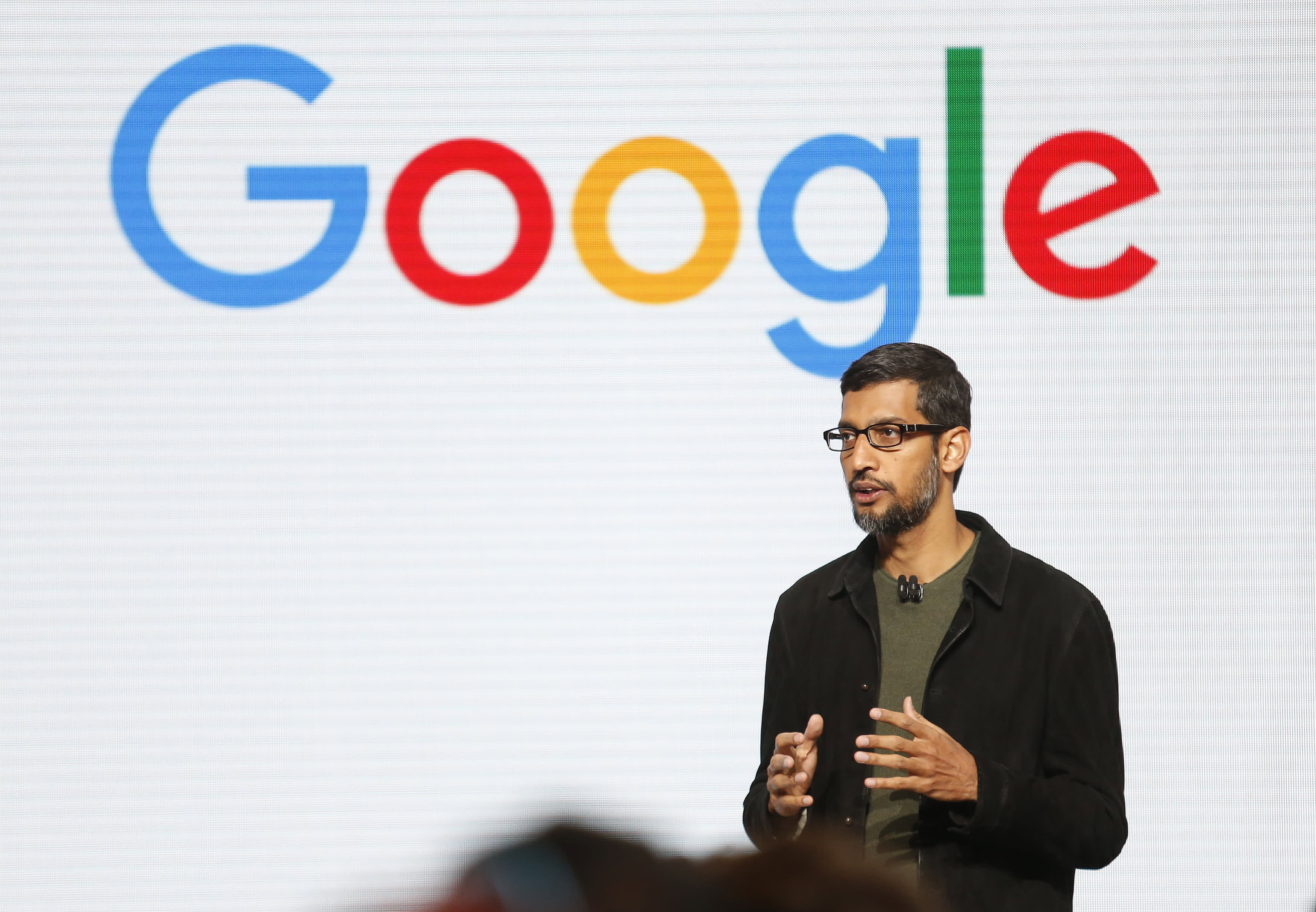
    From a modest upbringing in India to leading one of the world’s most influential technology companies, Sundar Pichai’s journey is a testament to his intelligence, hard work, and unwavering determination. His rise from a metallurgical engineer to the CEO of Alphabet Inc., the parent company of Google, is a story of innovation, leadership, and the pursuit of excellence.

    NameSundar Pichai
    BornJune 10, 1972 – Madurai, Tamil Nadu
    Age49
    CitizenshipThe United States of America
    EducationIndian Institute of Technology, Kharagpur (B.Tech.), Stanford University (MS), University of Pennsylvania (MBA)
    TitleCEO of Alphabet and Google
    Board member ofAlphabet Inc., Magic Leap
    Net worth$1.31 Billion(as of 2022)
    Monthly Income$18 Million(as of Jan 2022)
    WifeAnjali Pichai

    Early Life and Education

    Sundar Pichai, born Sundar Pichai Sundararajan on June 10, 1972 in Madurai, Tamil Nadu, India, is known through his work in technology and great leadership. He was an ordinary child in a modest family in India but could become the CEO of Alphabet Inc., which was before known as Google. This itself shows his smartness along with hard work and stronger will.

    The childhood of Pichai has been anchored in the true value of education.

    Sundar Pichai - Early Life and Education
    Sundar Pichai – Early Life and Education

    His father was an electrical engineer who worked really hard and made Sundar also love learning and solving problems. He did well at school, especially at mathematics and science. Then went to Jawahar Vidyalaya Senior Secondary School, Chennai, before moving over to the famous Indian Institute of Technology (IIT), Kharagpur where he earned a metallurgical engineering degree.

    A Tour to the United States

    After his undergraduate degree, Pichai felt that he needed to learn more. He went to the United States. There, he won a scholarship to study for a master’s degree in materials science and engineering at Stanford University. While at Stanford, he became very interested in technology and software, which later guided his career.

    Sundar Pichai – Journey at Google

    Sundar Pichai embarked on his professional journey as an engineering and product manager at Applied Materials before joining McKinsey & Company as a management consultant. In 2004, he joined Google as a manager and focused on enhancing their client software products, which included Google Chrome and Chrome OS. Additionally, Pichai is recognized as the visionary behind Google Drive.

    In 2009, Pichai presented a demonstration of the Chrome OS, leading to the trial and testing release of Chromebook in 2011. The public release of Chromebook followed in 2012. Furthermore, on March 13, 2013, Pichai expanded his responsibilities to include the oversight of Android, a role previously held by Andy Rubin.

    Although Pichai did not invent the Google Chrome browser, he played a pivotal role in its active development and transformation into the most widely utilized web browser. Consequently, Pichai’s exceptional decision-making abilities and the successful launch of various products under his supervision contributed to his appointment as the CEO of Google on August 10, 2015. Under his leadership, Google witnessed unprecedented growth and diversification, expanding into various domains such as artificial intelligence, cloud computing, and hardware.

    Reach for the Top

    Pichai rose very fast at Google. He really cared how the users feel, and it was very easy for him to lead teams that can create new ideas. Most of the key Google products, like Gmail, Google Maps, and Google Drive, owe a lot of their creation to him as he led in making ideas clear to many of them.

    Pichai became the next CEO of Google in 2015 by taking over Larry Page’s place, who was its founder. This actually proved to be a big moment, making him one among the most powerful people in tech. During his period, Google kept on making new innovations and expanding its wings to find new areas in which to make further growth such as artificial intelligence, machine learning, or self-driving cars.

    CEO of Alphabet Alphabet Inc. was founded in 2019 after Google’s change in the company structure. Sundar Pichai is the CEO of Alphabet and is in control of all of the businesses under the umbrella of Alphabet Inc., including Google, Waymo, Verily, and X.

    A Visionary Leader

    Pichai, the CEO of Alphabet, is leading the future of technology. He has a clear vision for the company and wants to use technology to help with big problems in the world. Under his guidance, Google has made important progress in fields like artificial intelligence, healthcare, and sustainability.

    Sundar Pichai – The Family Man

    Sundar Pichai is married to Anjali Pichai. Anjali was Sundar’s classmate at IIT Kharagpur. They have two kids, a boy named Kiran Pichai and a girl named Kavya Pichai. The couple stays in Los Altos hills.

    Sundar Pichai - The Family Man
    Sundar Pichai – The Family Man

    Sundar and his family are known for maintaining a low profile and rarely discuss their lives on public platforms.

    He is humble, smart, and dedicated to his job. He has also worked towards aiding other fellow humans. The Pichai Family Foundation, backed by him and his wife, is dedicated to the propagation of education and healthcare among needy masses.

    Sundar Pichai – Inspiration and Leadership

    Sundar Pichai’s journey from a small town in India to the pinnacle of the tech industry serves as an inspiration to millions worldwide. His story embodies the power of determination, hard work, and continuous learning. Pichai’s leadership style is characterized by humility, empathy, and a deep understanding of the evolving needs of users and customers. He encourages a culture of innovation and inclusivity within the company, fostering an environment where employees can thrive and push boundaries. Pichai’s commitment to empowering the next generation of technologists and bridging the digital divide has been evident through initiatives like Google’s “Grow with Google” program, which aims to provide digital skills training to individuals across the globe.

  • Inspirational Story of Narayana Murthy, Biography, Success, Inspiration

    Inspirational Story of Narayana Murthy, Biography, Success, Inspiration

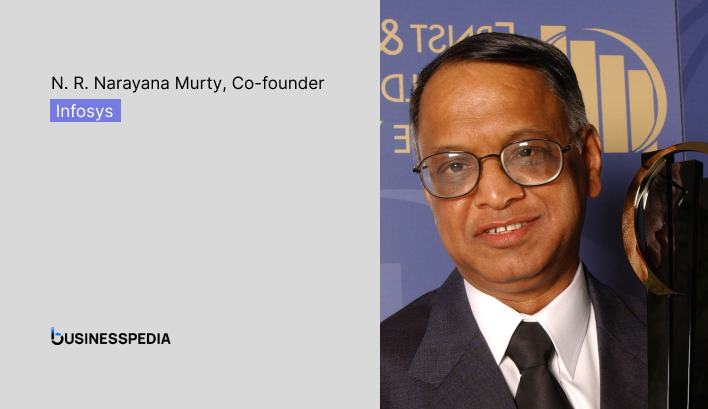
    Narayana Murthy is a visionary entrepreneur who is widely recognized for being the founder of one of India’s largest software companies, Infosys. He was born on August 20, 1946, in Mysore, India and went on to become a global icon in the technology industry. In this blog, we will take a closer look at Narayana Murthy’s life, his achievements, and his impact on the tech industry.

    Early Life and Education

    Narayana Murthy’s journey is a true testament to the power of determination and passion. Born into a modest family in the vibrant city of Mysore, he defied all odds to carve a path of excellence. With an unwavering thirst for knowledge, he pursued higher education, earning a degree in Electrical Engineering from the prestigious National Institute of Engineering.

    Driven by an insatiable curiosity, Murthy ventured to the United States to further expand his horizons. There, he immersed himself in the world of computer science, earning a master’s degree from the esteemed University of Mysore. But his thirst for knowledge didn’t stop there; Murthy went on to achieve a Master of Business Administration from Indiana University, adding an extra dimension to his already impressive skill set.

    Narayana Murthy’s passion for learning and his relentless pursuit of excellence have made him an inspiration to countless individuals around the globe. His remarkable journey serves as a vivid reminder that with determination and unwavering passion, one can achieve greatness, regardless of the challenges that lie ahead.

    Foundation of Infosys

    In the year 1981, a vision was born. Narayana Murthy, a true visionary and trailblazer, fearlessly embarked on a quest to redefine the world of software services. With unwavering determination and an unrivaled passion for excellence, he founded Infosys, a company that would revolutionize the industry.

    Amidst countless challenges and formidable obstacles, Narayana Murthy and his dedicated team of software professionals never wavered. Their relentless pursuit of perfection fueled their drive to overcome financial constraints, limited clients, and fierce competition. Each setback was merely a stepping stone to greater heights.

    Through sheer grit and visionary leadership, Infosys emerged as a towering presence, an indomitable force in the realm of software services. They unleashed a tidal wave of innovation, setting new standards and raising the bar for excellence. Clients from around the world flocked to embrace their cutting-edge solutions and unmatched quality.

    Today, as we reflect on the journey that began over three decades ago, we witness the lasting impact of Narayana Murthy’s passion and the enduring legacy of Infosys. A testament to the power of belief, resilience, and unyielding dedication, this is the story of a company that dared to dream, dared to defy the odds, and ultimately, triumphed against all adversaries.

    Visit Infosys and experience the awe-inspiring journey that continues to shape the world of software services.

    Growth and Expansion of Infosys

    Under Narayana Murthy’s leadership, Infosys grew rapidly and became a publicly traded company in 1993. The company quickly expanded its operations globally, establishing offices in several countries including the United States, Europe, and Asia. Infosys was also one of the pioneers of the offshore outsourcing model, which allowed it to provide high-quality software services at a fraction of the cost compared to its competitors. Today, Infosys is a leading global provider of consulting, technology, and outsourcing services and is widely regarded as one of India’s most successful technology companies.

    Philanthropic Work

    Narayana Murthy is also well known for his philanthropic work and commitment to social causes. He has established several charitable foundations and organizations aimed at improving the lives of the less fortunate. Through these organizations, he has provided education and healthcare services to thousands of people and has also played a major role in promoting literacy and financial inclusion in India.

    Conclusion

    In conclusion, Narayana Murthy is a true visionary who has had a profound impact on the technology industry. Through his hard work, determination, and leadership skills, he has transformed Infosys from a small startup into one of the world’s leading software companies. His philanthropic work and commitment to social causes have also earned him widespread recognition and respect. Narayana Murthy is an inspiration to aspiring entrepreneurs and a shining example of what can be achieved through hard work and determination.