Category: Business Communication

  • Oral Communication : Definition, Types, Advantages and Disadvantages

    Oral Communication : Definition, Types, Advantages and Disadvantages

    Oral communication implies communication through mouth. It includes individuals conversing with each other, be it direct conversation or telephonic conversation. Speeches, presentations, discussions are all forms of oral communication. Oral communication is generally recommended when the communication matter is of temporary kind or where a direct interaction is required. Face to face communication (meetings, lectures, conferences, interviews, etc.) is significant so as to build a rapport and trust.

    Great communication skills are your ticket to success in the academic and business world. But have you ever been overcome by fear or anxiety prior to going on a job interview or speaking in front of an audience?

    Knowing when to choose oral communication and polishing your speaking skills can help you at every stage of your career.

    What is Oral communication ?

    Oral communication is the process of verbally transmitting information and ideas from one individual or group to another. Oral communication can be either Formal or Informal.

    Examples of informal oral communication include:

    • Face-to-face conversations
    • Telephone conversations
    • Discussions that take place at business meetings

    More formal types of oral communication include:

    • Presentations at business meetings
    • Classroom lectures
    • Commencement speech given at a graduation ceremony

    With advances in technology, new forms of oral communication continue to develop. Video Phones and Video Conferences combine audio and video so that workers in distant locations can both see and speak with each other.

    Other modern forms of oral communication include Podcasts (audio clips that you can access on the Internet) and Voiceover Internet Protocol (VoIP), which allows callers to communicate over the Internet and avoid telephone charges. Skype is an example of VoIP.

    Advantages of Oral Communication

    • There is high level of understanding and transparency in oral communication as it is interpersonal. There is no element of rigidity in oral communication.
    • There is flexibility for allowing changes in the decisions previously taken.
    • The feedback is spontaneous in case of oral communication. Thus, decisions can be made quickly without any delay.
    • Oral communication is not only time saving, but it also saves upon money and efforts.
    • Oral communication is best in case of problem resolution. The conflicts, disputes and many issues/differences can be put to an end by talking them over. Oral communication is an essential for teamwork and group energy.
    • Oral communication promotes a receptive and encouraging morale among organizational employees.
    • Oral communication can be best used to transfer private and confidential information/matter.

    Disadvantages of Oral Communication

    • Relying only on oral communication may not be sufficient as business communication is formal and very organized.
    • Oral communication is less authentic than written communication as they are informal and not as organized as written communication.
    • Oral communication is time-saving as far as daily interactions are concerned, but in case of meetings, long speeches consume lot of time and are unproductive at times.
    • Oral communications are not easy to maintain and thus they are unsteady.
    • There may be misunderstandings as the information is not complete and may lack essentials. It requires attentiveness and great receptivity on part of the receivers/audience.
    • Oral communication (such as speeches) is not frequently used as legal records except in investigation work.

    Types of oral communication

    • Intrapersonal communication is self-talk or a conversation you hold with yourself under certain circumstances – for example, when you need to make an important decision or learn something about yourself. You may wonder whether intrapersonal communication is just another way of describing the thinking process. In a way, that would be correct.
    • Interpersonal communication is communication between several people. This form of communication may range from the impersonal to the very personal. Impersonal communication is when you talk with a person you do not really care about – there is often coldness or indifference in your attitude when you engage in this kind of communication.
    • Small group communication takes place in a group, usually comprising five to 10 people. This form of communication serves relationship needs (like companionship, family bonding and affection or support) as well as task-based needs, for example, deciding on disciplinary action or resolving conflict in the workplace.
    • Public communication, also known as public speaking, involves communication between a speaker and an audience. This audience may range from just a few people to thousands or even millions of people. The aim of the speaker is usually to inform or to persuade the audience to act, buy, or think in a certain way. A teacher may address an assembly of students on codes of behavior or school rules.
    • Mass communication is communication that is sent out from a source to many receivers all over the world. It takes place through media like films, radio, videos and television. Modern avenues of mass communication like the Internet and blogs can be very powerful indeed as information is disseminated instantly.
    • Corporate communication is communication that takes place among members of an organization, within that organization. Interacting in teams, conferencing with co-workers, talking with a supervisor or manager, giving employees explanations and directions, interviewing and making presentations are some examples of corporate communication

  • What is Public Address System?

    What is Public Address System?

    In this article, we’ll learn What is Public Address System and its Applications in various sector like health , railways and more.

    What is Public Address System

    Public Address System ( PA system) is an electronic sound amplification and distribution system with a microphone, amplifier and loudspeakers, used to allow a person to address a large public,

    For example for announcements of movements at large and noisy air and rail terminals. The simplest PA system consist of a microphone, an amplifier, and one or more loudspeakers .

    A sound source such as compact disc player or radio may be connected to a PA System so that music can be played through the system.

    The process begins with a sound source (such as a human voice), which creates waves of sound (acoustical energy). These waves are detected by a microphone, which converts them to electrical energy. This signal is amplified in an amplifier up to a required level. The loudspeaker converts the electrical signal back in to sound waves, which are heard by human ears. A PA system also contains  microphone, mixer, limiter, equalizer, amplifier and speaker.

    Application of Public Address System

    Public Address Systems (PAS) are widely used in various settings to provide amplified sound and broadcast announcements to a large audience. Here are some common applications of public address systems:

    1. Public Events: PAS are commonly used in public events such as concerts, festivals, sporting events, and rallies. They provide clear and amplified sound reinforcement to ensure that the audience can hear performances, speeches, and announcements.
    2. Public Venues: Public venues like stadiums, arenas, theaters, and auditoriums often have PAS installed to deliver sound to the entire audience. These systems distribute sound evenly and help overcome the acoustic challenges of large spaces.
    3. Educational Institutions: Public address systems find application in schools, colleges, and universities. They are used for making announcements, broadcasting school-wide messages, paging students and staff, and facilitating emergency communication during drills or actual emergencies.
    4. Transportation Hubs: Airports, train stations, bus terminals, and seaports often utilize PAS to make public announcements regarding arrivals, departures, gate changes, safety instructions, and emergency information. PAS helps ensure that important information is heard clearly by travelers in crowded and noisy environments.
    5. Workplace and Corporate Settings: Public address systems are used in workplaces and corporate environments for addressing employees, making general announcements, broadcasting safety protocols, and providing instructions during emergencies or evacuations.
    6. Retail Stores and Malls: PAS can be found in retail stores, shopping malls, and supermarkets to make store-wide announcements, notify customers about promotions or special offers, and play background music.
    7. Worship Places: Churches, mosques, temples, and other religious institutions often utilize PAS to amplify the voice of religious leaders, broadcast sermons, chants, and prayers to reach a larger congregation.
    8. Public Safety and Emergency Services: Public address systems play a crucial role in emergency management. They are used in emergency response vehicles, fire stations, police departments, and other public safety facilities to broadcast emergency alerts, evacuation instructions, and public safety announcements.
    9. Theme Parks and Entertainment Venues: PAS are extensively used in theme parks, amusement parks, and entertainment venues to provide information, announce showtimes, guide visitors, and enhance the overall guest experience.
    10. Outdoor Gatherings and Festivals: Public address systems are employed in outdoor events, including street festivals, parades, political rallies, and community gatherings. They ensure that announcements and speeches reach a wide audience in open spaces.

    In all these applications, public address systems are used to amplify sound, improve communication, and enhance the overall experience for the audience, employees, or visitors.

  • What is Group Discussion? Tips and Limitation

    What is Group Discussion? Tips and Limitation

    Group discussion, commonly known as GD, is an effective method of exchanging ideas and opinions among a group of individuals on a specific topic or subject. It is often used as an evaluation tool by various organizations, educational institutions, and competitive exams to assess a candidate’s ability to communicate, express their views, and engage in a group setting. In this article, we will discuss the guidelines, do’s, don’ts, and limitations of group discussions.

    Group discussion is primarily used to know the social framework, personality, behavior, interests, and leadership qualities of a number of candidates simultaneously.

    The interaction in a group occurs in two ways

    • Interaction occurring due to objective relationship
    • Interaction occurring due to personal relationship

    Guidelines for Group Discussion

    1. Be prepared: It is essential to research and gather information on the given topic before participating in the discussion. The more you know, the better you can present your opinions and ideas.
    2. Stay on topic: Focus on the subject at hand and avoid going off-topic. This ensures that the discussion is productive and efficient.
    3. Respect others: It is important to listen to others and respect their opinions, even if you disagree with them. Avoid interrupting or talking over others.
    4. Use appropriate language: Use polite and professional language while speaking. Avoid using slang, profanity, or offensive language.
    5. Maintain eye contact: Make eye contact with the other participants while speaking or listening. It shows that you are attentive and engaged in the discussion.
    6. Be concise: Keep your points brief and to the point. This allows others to understand your ideas and prevents the discussion from going off-topic.

    Tips on Group Discussion

    Let’s read about the points that you should keep in mind:

    1) Adequate matter/ Subject matter is essential : You should have subject knowledge and be well aware of the latest happenings around you, not just in India but around the world as well. To be in a better position, make sure that you have in-depth knowledge on the subject. Subject knowledge is a pre-requisite while you are preparing for a group discussion because you will then have the power to steer the conversation to whichever direction you want to. If you can memorize some relevant data, it will be an added advantage.

    2) Make Sure you Read Widely: Being an avid reader will help you in group discussions. Last minute preparations you are strictly a no, while you are preparing for group discussions. You should read over a period of time. Reading not only adds to your knowledge database, but enhances your vocabulary skills as well. Plus reading over a period of time, helps in your understanding of a particular subject/ topic better.

    3) Choose Magazines that are Rich in Content: Always opt for magazines that are content rich and not just full of advertisements. Often magazines have columns which are promoting a particular institute etc. Avoid such magazines, do some research and buy the best that will be beneficial for you in the long run.

    4) Work on your Communication Skills: You should be well versed in your communication skills. You should have a good vocabulary and a decent command over English. Much before your actual group discussion, rehearse well. You can sit with a group of friends and choose a topic and indulge in a friendly banter. Not only will this increase your knowledge, you will be a better speaker by the time it is time for your GD.

    5) Listen to the Topic Given during GD Carefully: Listen to the topic carefully and understand it… Be alert and vigilant. Sometimes, the topic may be really simple but the manner in which it is presented to you, can be baffling. The first thing that you should do after hearing the topic is by structuring it on the sheet that is given to you to make notes. Make a rough sketch of the points that you would like to speak aloud. You will be at an advantage if you open the discussion, but then beware of what you speak. Deviating from the main topic, or passing strong statements like ‘I agree/ or disagree …’ should be avoided. Your strategy should be to test the waters and make a generic statement relevant to the topic. If you can, back it up by relevant data.

    6) Try and Maintain a Balance in your Tone: Besides what you are saying, remember that the panelists are observing your body language as well. If you do not agree with the other student’s point of view, do not raise your tone in objection. Listen to his point of view and instead of dismissing it upfront, try and draw a common ground. .

    7) Listening Skills are Essential: Carefully listen to what others have to say. Just speaking throughout the discussion doesn’t make you smart, you should also give others a chance to speak. Try and listen to him/her, respect their view point too. If the speaker is making an eye-contact with you remember to acknowledge him by saying “yes, you agree” or just by nodding your head, so that the speaker is aware that his listeners are listening to him and paying full attention. This will also show that you are vigilant and are an active participant in the discussion.

    8) Body Gestures are very Important: The panelists observe the way you sit and react in the course of the discussion. . Body gestures are very important, because your body language says a lot about you.In a GD, sit straight, avoid leaning back on to the chair or knocking the table with pen or your fingers. Also, do not get distracted easily. For example, if the door in room you are sitting in opens, do not look back to see who it is, this will show how distracted you are.

    9) Be the first and also the Last to Speak: As mentioned earlier, initiating a GD is an advantage. Closing it too also adds brownie points. If you can grab the opportunity to close the discussion, then you should summarize it. If the group has not reached a conclusion try concluding it .

    Do’s in Group Discussion

    1. Listen attentively: Pay attention to what others are saying and actively listen to their viewpoints.
    2. Participate actively: Participate in the discussion by expressing your ideas and opinions.
    3. Initiate discussion: Initiate the discussion by asking questions or presenting your point of view.
    4. Provide evidence: Support your arguments with facts and evidence.
    5. Analyze the topic: Analyze the topic and provide a balanced view of the subject.

    Don’ts in Group Discussion:

    1. Interrupting others: Avoid interrupting others while they are speaking.
    2. Dominating the discussion: Do not dominate the discussion by talking too much or not letting others speak.
    3. Personal attacks: Avoid personal attacks or criticizing others’ opinions.
    4. Disrespectful behavior: Do not display disrespectful behavior towards other participants.

    Limitation of a Group Discussion

    1. Time constraints: The time allotted for group discussion is limited, which may not be enough for all participants to express their views.
    2. Dominance of individuals: Some individuals may dominate the discussion, which can lead to a biased outcome.
    3. Lack of preparation: Participants may not be adequately prepared for the discussion, which can result in unproductive conversations.
    4. Language barriers: Participants who are not fluent in the language of the discussion may have difficulty expressing their views.

    In conclusion, group discussion is an effective method of exchanging ideas and opinions among a group of individuals. Following the guidelines, do’s, and don’ts mentioned above can ensure a productive and efficient discussion. However, it is important to be aware of the limitations of group discussion and take steps to overcome them.

    FAQ related to Group Discussion

    What is Group Discussion?

    Group discussion, commonly known as GD, is an effective method of exchanging ideas and opinions among a group of individuals on a specific topic or subject. It is often used as an evaluation tool by various organizations, educational institutions, and competitive exams to assess a candidate’s ability to communicate, express their views, and engage in a group setting. In this article, we will discuss the guidelines, do’s, don’ts, and limitations of group discussions.

    What are the 3 C’s of group discussion?

    The three “Cs” which rank you high on this parameter are clarity (the main points to be discussed), content (the vertical depth in each point) and confidence.

    Can we interrupt in group discussion?

    The best time to interrupt a conversation is when the person in front of you completes what they are saying. In practice, the speaker may be able to express himself better, and while he is still holding on, he will continue to elaborate.

    Why is group discussion important?

    Group discussions promote a deeper understanding of a topic and increase long-term retention. Group discussions can also help increase participants’ attention and help maintain their focus by involving them in the learning process. Group discussions can also provide feedback to instructors on participant comprehension.
  • What is Grapevine Communication? Examples, Pros and Cons

    What is Grapevine Communication? Examples, Pros and Cons

    Grapevine is an informal channel of business communication. It is called so because it stretches throughout the organization in all directions irrespective of the authority levels. Man as we know is a social animal. Despite existence of formal channels in an organization, the informal channels tend to develop when he interacts with other people in organization. It exists more at lower levels of organization.

    What is Grapevine Communication?

    Grapevine generally develops due to various reasons. One of them is that when an organization is facing recession, the employees sense uncertainty. Also, at times employees do not have self-confidence due to which they form unions. Sometimes the managers show preferential treatment and favour some employees giving a segregated feeling to other employees.

    Thus, when employees sense a need to exchange their views, they go for grapevine network as they cannot use the formal channel of communication in that case. Generally during breaks in cafeteria,the subordinates talk about their superior’s attitude and behaviour and exchange views with their peers. They discuss rumours about promotion and transfer of other employees. Thus, grapevine spreads like fire and it is not easy to trace the cause of such communication at times.

    Types of Grapevine Communication

    There are 4 types of grapevine communication are:

    1. Single Strand Chain
    2. Gossip Chain
    3. Probability Chain
    4. Cluster Chain

    Characteristics of Grapevine Communication

    Some general characteristics of grapevine communication are:

    1. Huge Impact
    2. Extensive
    3. Flexibility
    4. Speed
    5. Distortion
    6. Oral Way
    7. Large Receivers
    8. Extra Ability
    9. Unsaid Information
    10. Contradictory Information

    Examples of Grapevine Network of Communication

    1. Suppose the profit amount of a company is known. Rumour is spread that this much profit is there and on that basis bonus is declared.
    2. CEO may be in relation to the Production Manager. They may have friendly relations with each other.

    Pros of Grapevine Communication

    1. Grapevine channels carry information rapidly. As soon as an employee gets to know some confidential information, he becomes inquisitive and passes the details then to his closest friend who in turn passes it to other. Thus, it spreads hastily.
    2. The managers get to know the reactions of their subordinates on their policies. Thus, the feedback obtained is quick compared to formal channel of communication.
    3. The grapevine creates a sense of unity among the employees who share and discuss their views with each other. Thus, grapevine helps in developing group cohesiveness.
    4. The grapevine serves as an emotional supportive value.
    5. The grapevine is a supplement in those cases where formal communication does not work.

    Cons of Grapevine Communication

    1. The grapevine carries partial information at times as it is more based on rumours. Thus, it does not clearly depicts the complete state of affairs.
    2. The grapevine is not trustworthy always as it does not follows official path of communication and is spread more by gossips and unconfirmed report.
    3. The productivity of employees may be hampered as they spend more time talking rather than working.
    4. The grapevine leads to making hostility against the executives.
    5. The grapevine may hamper the goodwill of the organization as it may carry false negative information about the high level people of the organization.

    A smart manager should take care of all the disadvantages of the grapevine and try to minimize them. At the same time, he should make best possible use of advantages of grapevine.

  • Oral Report: Characteristics, Structure, and Types

    Oral Report: Characteristics, Structure, and Types

    Effective communication is a vital skill in today’s fast-paced world, and oral reports play a crucial role in conveying information, presenting findings, or sharing ideas in a concise and engaging manner. Whether in academic, business, or professional settings, mastering the art of oral report writing is essential for success. In this article, we will explore the characteristics, structure, and types of oral reports to help you deliver impactful presentations with clarity and confidence.

    Characteristics of Oral Reports

    1. Clarity: Clear communication is the hallmark of an effective oral report. Presenters should use simple language, avoid jargon or technical terms, and express ideas in a way that is easily understandable to the audience.
    2. Conciseness: Oral reports require brevity and the ability to present information succinctly. Presenters should focus on the main points, omitting unnecessary details, and keeping the presentation concise yet informative.
    3. Organization: Structure and organization are crucial in oral reports. Presenters should follow a logical sequence, presenting ideas in a coherent and well-structured manner. This allows the audience to follow the flow of information easily.
    4. Engaging Delivery: Engaging the audience is a key characteristic of an effective oral report. Presenters should use appropriate tone, voice modulation, gestures, and eye contact to capture and maintain the audience’s attention throughout the presentation.

    Structure of Oral Reports

    1. Introduction: Begin the oral report with a compelling introduction that grabs the audience’s attention. Clearly state the purpose of the report, provide an overview of the topic, and establish its relevance and significance.
    2. Background Information: Provide necessary background information to set the context for the report. This helps the audience understand the subject matter and its importance.
    3. Main Body: Present the main points, findings, or ideas in a structured manner. Divide the content into logical sections or subtopics, and use clear transitions between them. Support each point with relevant evidence, examples, or data.
    4. Visual Aids: Incorporate visual aids such as slides, charts, graphs, or multimedia elements to enhance the presentation. Visuals should be clear, visually appealing, and used strategically to reinforce key points or illustrate complex concepts.
    5. Conclusion: Summarize the main findings, ideas, or recommendations in a concise manner. Reinforce the key takeaways from the report and leave the audience with a clear understanding of the main message.

    Types of Oral Reports

    1. Informative Reports: These reports aim to provide factual information or share knowledge on a specific topic. Examples include research presentations, educational lectures, or informative updates on a subject.
    2. Persuasive Reports: Persuasive oral reports seek to influence the audience’s opinions, attitudes, or actions. They present arguments, support them with evidence, and aim to convince the audience to adopt a particular viewpoint or take specific actions.
    3. Progress Reports: Progress reports track the progress of a project, task, or initiative. They provide updates on achievements, challenges, and future plans, ensuring stakeholders are informed about the project’s status.
    4. Problem-Solution Reports: These reports identify a problem or challenge and propose effective solutions or recommendations. They present a clear analysis of the problem, explore possible solutions, and outline the advantages of the proposed approach.
    5. Executive Summaries: Executive summaries are concise overviews of longer reports. They provide a high-level summary of the main points, findings, or recommendations, allowing busy executives to grasp the essence of the report quickly.

    In conclusion, oral reports are an essential component of effective communication. By understanding the characteristics of oral reports, structuring presentations effectively, and recognizing the different types of oral reports, presenters can deliver engaging and impactful presentations. Mastering the art of oral report writing will not only enhance your communication skills but also make you a more effective presenter and communicator. By incorporating the characteristics of clarity, conciseness, organization, and engaging delivery into your oral reports, you can capture the audience’s attention and deliver your message effectively.

  • What Is Communication? Definition, Components, and Model

    What Is Communication? Definition, Components, and Model

    Many theories have been proposed to describe, predict, and understand the behaviors and phenomena of which communication consists. When it comes to communicating in business, we are often less interested in theory than in making sure our communications generate the desired results. But in order to achieve results, it can be valuable to understand what communication is and how it works.

    Definitions of Communication

    Schramm defines communication as “a tool that makes societies possible and distinguish human from other societies”.

    Berelson and Steiner define communication as the transmission of information, ideas, emotions and skills through the use of symbols, words, pictures, figures, and graph.

    Rogers says, “Communication is the process of transmitting ideas, information, and attitudes from the source to a receiver for the purpose of influencing with intent”.

    Kar defines communication as “all those planned or unplanned processes through which one person influences behaviour of others.”

    A more comprehensive suggested definition to define communication would be: “a process of transmitting ideas, information, attitudes (images which we have formulated for ourselves) by the use of symbols, words, pictures, figures from the source (who is the originator of the message) to a receiver, for the purpose of influencing with intent”. So, communication is considered as a process through which senders and receivers of messages interact in a given social context. The concept of communication simply relies on four basic components.

    what is Communication ?
    Communication

    Communication Components

    Depending on the previous definitions, we can conclude that communication is a process used to timely and properly exchange information between a sender and a receiver to achieve a desired goal.

    Factors in the Definition

    1. Process: It suggests that the components of interaction are dynamic in nature. They cannot be regarded as unchanging elements in time and space. This simply means that no single aspect of communication can be meaningfully understood apart from the other elements.
    2. Interaction: It is the process of linking between senders and receivers of the message. The process specifies interaction or linkages between or among countless factors, so that the changes in any set of forces affect the operation of all other processes to produce a total effect. Communication is an attempt to bridge the gap between two individuals through producing and receiving messages which have meaning for both.
    3. Social Context: Human communication is, to a great extent, influenced by the social context in which it occurs. The context or the situation that consists of a set of rules which govern the origin, flow and effect of the messages.

    Communication Model

    It describes what is necessary for an act of communication to take place. A model represents the major features and eliminates the unnecessary details of communication.

    Functions of Communication Models

    • To clarify the scope of human interaction showing it to be a circular, complex, continuous, dynamic, or a coding process.
    • To point out where to book and under what conditions to analyse different responses.
    • To show the variables in human communication.
    • Used as a frame work in researches.

    Elements of communication model

    Communication is a process of exchanging verbal and non-verbal messages. It is a continuous process. Pre-requisite of communication is a message. This message must be conveyed through some medium to the recipient.

    It is essential that this message must be understood by the recipient in same terms as intended by the sender. He must respond within a time frame. Thus, communication is a two way process and is incomplete without a feedback from the recipient to the sender on how well the message is understood by him.

  • Difference Between Verbal and Nonverbal Communication

    Difference Between Verbal and Nonverbal Communication

    Verbal communication consists of getting your message across using sounds, words, and languages, while nonverbal communication involves unsaid things like eye movement, body language, and tone.

    BASIS FOR COMPARISONVERBAL COMMUNICATIONNON-VERBAL COMMUNICATION
    MeaningThe communication in which the sender uses words to transmit the message to the receiver is known as verbal communication.The communication that takes place between sender and receiver with the use of signs is known as non-verbal communication.
    TypesFormal and InformalChronemics, Vocalics, Haptics, Kinesics, Proxemics, Artifacts.
    Time ConsumingNoYes
    Chances of transmission of wrong messageRarely happens.Happens most of the time.
    Documentary EvidenceYes, in case of written communication.No
    AdvantageThe Message can be clearly understood and immediate feedback is possible.Helpful in understanding emotions, status, lifestyle and feelings of the sender.
    PresenceThe message can be transmitted through letters, phone calls, etc. so the personal presence of the parties, doesn’t make any change.The personal presence of both the parties to communication is a must.
  • Press Conference: Definition, Advantages, Disadvantages and Preparation

    Press Conference: Definition, Advantages, Disadvantages and Preparation

    In this article, you’ll learn about What is Press Conference , It’s Definition, Advantages, Disadvantages and Preparation.

    What is press conferences?

    Press conferences are occasions when someone with something to say which they believe is newsworthy calls reporters together so that they can tell them all at once. The person calling the press conference usually makes an announcement or statement first then allows reporters to ask questions.

    The terms, media conferences or media calls, are also used, though usually about an event to which a company invites the media in order to promote a product, performance or a celebrity.

    All sorts of people organise press conferences for all sorts of reasons.

    Examples:

    • A politician may call one to announce a new policy or to deny an allegation. ÿ A scientist may call one to reveal a discovery.
    • A police chief may call reporters together to give details of a crime or to ask for public help in solving a case.

    Advantages of press conference

    The main advantage of a press conference to the person calling it is that they do not have to repeat themselves to several different reporters at separate interviews. It also means that their announcement will have maximum impact by being in all the media at the same time (assuming that all the reporters think it is newsworthy).

    The main advantage to the journalist is that it reduces the chance of individual newspapers or broadcast stations missing the story. It also allows them to share the workload of questioning the interviewee. If one reporter forgets or overlooks something, another reporter will probably think of it.

    Disadvantages of press conference

    There are disadvantages to the media in press conference, the major of which is that it is more difficult to get an exclusive story from press conferences. When every reporter hears the same words from the interviewee, they cannot keep secrets from each other.

    There are ways of getting round this problem which we will discuss later.

    Press conferences can also give false importance to the topic being promoted. Promoters try to convince journalists that by getting them all in the same place at the same time the topic is of great importance, when often it is nothing more than free publicity or advertising.

    It is usual for the person who called the press conference to say what they want first then allow the journalists to ask questions. The speaker controls the situation from the start. They even control where and when the press conference takes place, although if journalists do not like the place or the time of the press conference they should let the organiser know.

    Many journalists regard press conferences as gifts from the organiser, not to be questioned. Remember, if someone calls a press conference it is usually because they need the publicity you can give them. That gives you some control over the situation.

    Preparation to press conference

    • Never go out to cover any story without knowing roughly what to expect
    • Do some research, it is vital. This can range from asking your editor or chief of staff what the press conference is about to a full-scale search through your local reference library for background material.
    • Ask other people in the newsroom. If a politician calls a press conference and politics is not your round, go to the political correspondent for advice.
    • Use your contacts outside the newsroom for background information.
    • Prepare some questions in advance. These should be good enough to provide you with a story if the announcement itself is not very newsworthy. Remember, people who call press conferences will not always have your skill in recognizing a news angle.

    Your questions do not have to be on the topic the organiser of the press conference wishes to talk about.

    For example, if a public figure has been accused of corruption then calls a press conference to announce a new move in foreign policy, it is quite fair to ask them questions about the corruption allegations. They may not wish to answer them, but that should never stop a good journalist from asking questions.

    Many people are suspicious of reporters’ questions, and may ask you to provide written questions in advance. This is acceptable if their sole purpose is to give you more accurate answers. It may, however, be an attempt to stop unpleasant questions. If you suspect that this is the case, you should try to get a promise that you will be allowed to ask other questions at the press conference itself. These are called supplementary questions. If they will not agree, you must ask yourself (and your editor) whether the press conference is worth attending.

    ON ARRIVAL

    • Arrive in good time.
    • Positioning is quite important, especially at large press conferences. You should always sit near to the speaker, so that you do not miss anything said. If there are many journalists present, sitting in the center of the front row will ensure that you are not overlooked at question time. It is important that you hear questions from other reporters. If you are seated at the front and you cannot hear the question, you can be sure that the interviewee will not hear it either, so it will have to be repeated anyway.
    • If you work for radio or television, or wish to record the press conference to support your notes, arrive with enough time to set up your microphone in front of the interviewee. For recording question time, you should either sit beside the interviewee holding the microphone so that you can point it towards questioners at the right moment, or use a tape recorder which has two microphones, one positioned in front of the interviewee, the other pointed towards the questioners.

    WHEN THE CONFERENCE STARTS

    Establish straight away whether what is being said is “on the record” (in which case everything can be quoted); “background” (in which the information can be quoted but not the name of the informant); or “off the record” (in which neither the information nor the informant can be quoted). “Off the record” information is for the reporter’s personal information.

    Too much “off the record” information will undermine the credibility of your story, so try to get the interviewee to make statements “on the record” whenever possible. You should also establish at the start who the speaker represents on this occasion, if it has not already been made clear.

    A statement may not be clear or may raise an interesting question. Make a quick note of anything you will want to ask at question time.

    QUESTION TIME

    Always try to ask at least one question, if only to show your presence.

    Phrase all your questions either

    • To clarify statements you did not understand or
    • To get new information. Avoid asking friendly questions simply to cover up an silence.

    It is difficult to get an exclusive story from a press conference, because every reporter hears all the questions and answers. If you have gone to the press conference with some information which you think will give you an exclusive story, do not mention it during question time. Wait until the other reporters have left then ask your questions.

    If speakers are unwilling to give a private interview, tempt them with a statement like: “There is something important I want to ask you that I don’t want anyone else to hear” said.

    If you go there expecting a certain announcement and it is not made, don’t shrug your shoulders and leave. Ask about the topic. They may have something to hide.

    AT THE END

    • Do not be in a hurry to get away, unless you are facing a tight deadline. Hang around on the chance of getting background information, picking up a bit of gossip or simply developing contacts.
    • If you have arranged a face-to-face interview, remind your interviewee and take them somewhere quiet to conduct it.
    • If you work for a newspaper or television, you should ask for any pictures you think you might need.

    For example, if a police chief says they are hunting an escaped criminal you should automatically ask if they have a picture of the man for publication. Also, if you want to illustrate your story with a picture of the speaker, think how you can get a better picture than simply a shot of him at the press conference.

    For example, if the Health Minister is launching a campaign to test people for chest cancer, will he pose for pictures with an X-ray machine – preferably being x-rayed himself?

    WRITE THE STORY

    There are several things which you must include in your story. These are:

    • The names and identities of speakers
    • The key points of any announcements, denials or questions, necessary background details – Plenty of strong quotes.
    • Do not include details such as the time and place of the press conference.
    • Do not mention the fact that the news came from a press conference at all unless that is of significance to the story as a whole.

    Don’t include the fact that it was a press conference in the intro, unless that is significant. Such a case would be if a minister was expected to announce a major policy change and then cancelled the scheduled press conference at the last minute.

    RIGHT:

    The Foreign Minister today cancelled a Press conference at which he was expected to announce new sanctions against South Africa. It is understood that the last-minute cancellation was due to a disagreement in Cabinet over the sanctions.

    WRONG:

    A police chief today told a Press conference about the theft of a light aircraft from Jacksons Airport.

    LET’S SUMMARISE

    • Press conferences are a useful way of getting information if you use them to your advantage.
    • Always prepare yourself before attending a press conference. Find out something about the possible topics and the people holding the press conference.
    • Arrive with enough time to settle in before the conference starts.
    • Always ask at least one question.
    • If you think you have an exclusive story, do not reveal it to other journalists at the conference.
    • Radio and television journalists should try to record an individual interview after the conference.
    • In newspapers, do not include your questions in the story – only the newsworthy answers.
  • Forms of Organizational Communication

    Forms of Organizational Communication

    In this article, you’ll learn about Forms of Organizational Communication, Formal and informal communication, Directional communication, Internal and external communication and more.

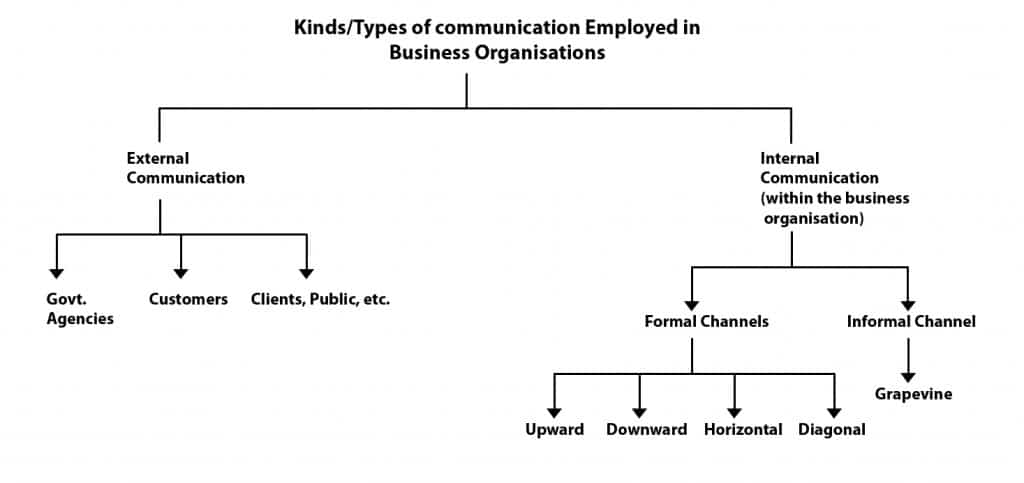
    Organizational culture can be split up into the following four categories: 

    • Formal and informal communication
    • Directional communication
    • Internal and external communication
    • Oral and written communication
    FormsINTERNAL EXTERNAL 
    FORMAL  Planned Communication among insiders ( letters, reports, memos, e-mail ) that follows the company’s chain of command.)Planned communication with outsiders ( letters, reports, memos, speeches, websites, and news releases.)
    INFORMALCasual Communication among employees ( email, face-to-face conversations, and phone calls that do not follow the company’s chain of command. )Casual communication with suppliers, customers, investors, and other outsiders ( Face-to-face conversations, email, and phone calls. )

    And, within each organizational structure, there are a number of subcategories that come into play. Let’s take a look at the main types of communication.

    And, within each organizational structure, there are a number of subcategories that come into play. Let’s take a look at the main types of communication.

    Formal and informal communication

    This category is quite simple. It’s all about the language and tone an organization uses when communicating. Corporate communication calls for the ability to assess what level of formality is required in a particular situation. 

    Formal communication

    Formal communication is often used when communicating with customers and clients, especially during an official press release. Formal communication tends to follow a specific organizational structure, such as mass communication in a carefully crafted email campaign or at a meeting. It may be used in the following circumstances:

    • Press releases
    • Job offers
    • Company-wide emails

    The key to formal communication is professionalism. It calls for careful wording and a communication strategy. Strategic communication makes miscommunication unlikely and organizational success likely. However, formal communications can sometimes feel stilted and impersonal.

    Informal communication

    Informal communication, also known as “grapevine” communication, is equally important, as it is the most common way internal organizational communication occurs. Employees use informal communication to connect with each other to:

    • Meet face-to-face in team meetings
    • Ask questions over messaging apps
    • Share work via email

    Many organizations favor informal over formal communication as it can help employees feel more in control of their own workload. However, miscommunication is more likely as informal communication is less strategic. As such, it’s important for organizations regularly using informal communications to have guidelines or employee handbooks for communication practices.

    Directional communication

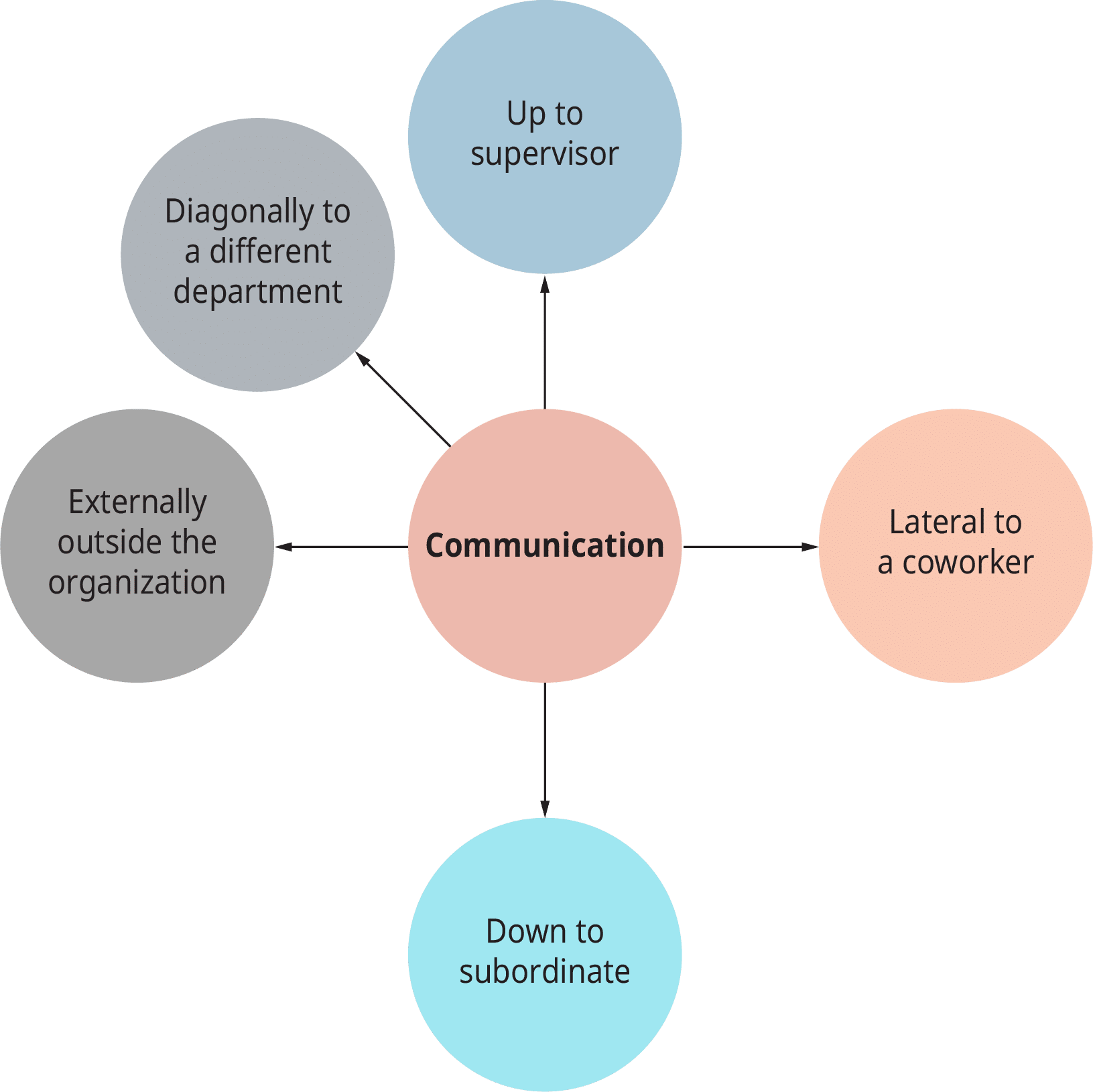
    Organizational communication is directional. This means that the way we communicate changes depending on the position of the person we’re talking to. There are three types of directional communication: downward, upward, and horizontal/lateral.

    Directional communication—downward

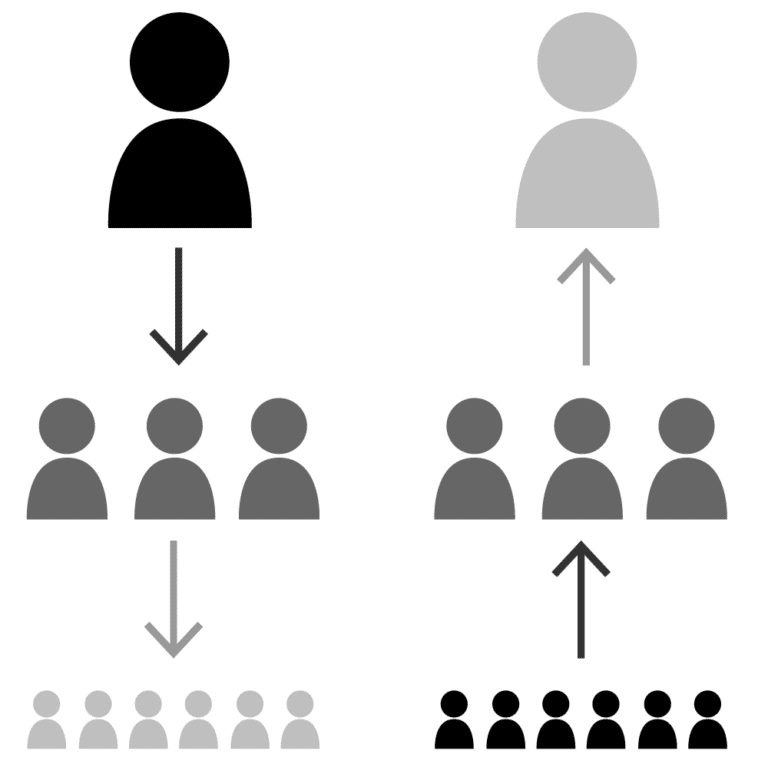
    Downward communication refers to an employee communicating with another employee in a lower-ranking position. Downward communication is most commonly used in an instructional sense, such as:

    • A supervisor discussing work performance with a frontline employee
    • The CEO sending a mass email about upcoming changes
    • A manager delegating tasks in a team meeting

    In most workplaces, downward communicators will take place via email or messages. However, they can also take place via video call or face-to-face.   

    Directional communication—upward

    Upward communication is the reversal of downward communication. It’s most commonly used in the following workplace situations:

    • A frontline employee asking a manager for advice or guidance on a task
    • An employee giving feedback to a supervisor or manager 
    • A frontline employee sharing information with a supervisor

    Upward communication is effective because it can help build a more equal workplace. When an organization encourages employees to speak about their experiences to senior management and make suggestions for improvement, it’s likely to see more engaged employees and a boost in productivity. 

    Directional communication—horizontal

    Horizontal communication refers to the communication of employees on the same hierarchical level. It might occur in the following situations:

    • A team meeting to share ideas 
    • An employee asking a colleague for advice or support
    • Managers reporting to other managers on the results of their teams’ tasks

    Horizontal communications often occur face-to-face. However, with more companies working remotely, employees are needing to find fast and effective ways to communicate through a screen. Communication channels such as team messaging services enable employees to chat horizontally throughout the day, no matter where they’re based.

    Internal and external communication

    Communication in organizations can also be split into internal and external communication. This refers to the types of people employees communicate with.

    Internal communication

    Internal communications focus on the way employees interact with one another. This workplace communication may involve the following:

    • Professional collaboration via numerous communication channels such as video, email or live chat
    • Employee training modules such as decision-making courses or two-way reviews
    • Messaging around an organization’s mission
    • Interpersonal communications between management and employees
    • Workplace social activities

    Internal communication focuses on employee engagement and employee communication. Businesses need to ensure that employees can bond and make effective professional connections. This can be more challenging for large organizations or those that encourage employees to work from anywhere. 

    External communication

    External communication applies to the way an organization communicates with the outside world. This includes:

    • Public relations announcements, for example by social media, TV, or radio
    • Marketing materials
    • Branding of products or services
    • Job posts and hiring, including LinkedIn adverts or recruitment drives
    • Communication with stakeholders
    • Customer support

    External communication is important for building a brand, as well as maintaining strong customer relationships. There should be an overarching tone to all external communication in order to show a cohesive organizational image. It needs to fit with the organization’s mission, ethics, and industry. Additionally, having clear guidelines on how to communicate with customers ensures a consistent, high-quality customer experience.

    Oral and written communication

    The final category when analyzing organizational communication is oral and written communication. Both types are used regularly and play a big role in organizational success.

    Oral communication

    Oral (spoken) communication is important. It’s the way a person communicates face-to-face to their colleagues, employees, or customers. Interpersonal communication relies on body language, eye contact, and gestures, as well as the words being said. An employee may use oral communication in a one-to-one session, a small group meeting, or in front of a large crowd of people. As such, oral communication helps us to form stronger relationships and build trust. 

    Remote working can mean that oral communication is more challenging. But, considering its importance in building and maintaining professional relationships, it’s still necessary. Many organizations rely on video calling to ensure that teams can stay connected and have interpersonal communication.  

    Written communication

    Written communication is also important when running a business. It occurs via email, instant messages, and social media, and can be both formal and informal.  

    There are a number of benefits to written communication over oral communication. For example, an employee has more time to think of their response and ensure it adheres to the company guidelines. Written communication is less impulsive and therefore can be more strategic. 

    However, written communication can also have its drawbacks. It can be more difficult to portray the company’s personality, and organizations risk losing a tone of voice if the written communication is shared among many members of staff. This is where a handbook is useful.