Author: Rashmi Kumari

  • The Great Indian Paint Heist: How Vijay Mallya Lost Berger to Two Brothers

    The Great Indian Paint Heist: How Vijay Mallya Lost Berger to Two Brothers

    Did you know that the famous business tycoon Vijay Mallya once owned one of India’s biggest paint companies, Berger Paints? Even more incredible is the story of how he lost it, and how two brothers turned that failing company into a ₹10,000 crore success!

    This is a true story of risk, focus, and the power of Indian entrepreneurship.

    Mallya’s Distraction and Berger’s Decline

    Back in 1991, Vijay Mallya did indeed own Berger Paints. However, Mallya’s attention was elsewhere. He was heavily focused on his other ventures: the liquor business and his ambitious Kingfisher Airlines.

    As a result, Berger Paints suffered from neglect and was severely underperforming. It was, in business terms, running on “God’s grace”—a complete mess.

    The Entry of the Dhingra Brothers

    Enter the Dhingra Brothers from Amritsar.

    The Dhingras were already successful in the paint industry. Starting with a small shop 20 years earlier, they had worked their way up to become one of the largest exporters of paint from India to Russia. They had big dreams and saw a massive opportunity.

    They decided to go all-in: they put everything at risk and acquired Berger Paints from Vijay Mallya. This was a company ten times bigger than their existing business!

    The Shocking Truth and the Turnaround Plan

    After the acquisition, the Dhingra brothers were shocked. The company was in even worse shape than they imagined. They realized a massive overhaul was needed.

    They got straight to work and implemented a brilliant two-part strategy:

    1. Employee Motivation: They transformed Berger from a slow-moving multinational into a homegrown Indian powerhouse. They motivated employees for growth by offering them stock options, making every employee feel like an owner.
    2. Smart Management: They cut out all unnecessary costs and implemented strict cash management protocols. No more wasteful spending!

    The Unbelievable Result

    The results of their focused approach were nothing short of spectacular.

    The Dhingra brothers grew Berger Paints from a struggling company with minimal sales to a massive enterprise hitting ₹10,000 crores in sales!

    Today, Berger Paints stands tall as the second-largest paint company in India, a testament to the vision and focus of the Dhingra Brothers. They prove that with the right focus, even a failing business can be turned into a spectacular success story.

  • Ather Energy: Pioneering the Electric Two-Wheeler Revolution in India

    Ather Energy: Pioneering the Electric Two-Wheeler Revolution in India

    Ather Energy has emerged as a prominent player in India’s burgeoning electric vehicle (EV) market, particularly in the two-wheeler segment. Founded in 2013 by IIT Madras graduates Tarun Mehta and Swapnil Jain, Ather Energy has carved a niche for itself with its focus on high-performance, technologically advanced electric scooters. This article delves into the company’s journey, its innovative products, its impact on the EV landscape, and its future prospects.  

    Early Days and Vision

    Ather Energy’s journey began with a vision to revolutionize urban mobility through sustainable and technologically advanced electric vehicles. Recognizing the potential of electric two-wheelers in addressing urban transportation challenges, the founders embarked on a mission to develop high-performance scooters that could rival traditional gasoline-powered vehicles in terms of speed, range, and overall riding experience.

    Product Portfolio

    Ather Energy primarily focuses on premium electric scooters, catering to a discerning customer base seeking a blend of performance, technology, and sustainability.  

    • Ather 450X: This flagship model is a high-performance electric scooter known for its impressive acceleration, top speed, and a range of up to 146 km on a single charge. It boasts advanced features such as a touchscreen display, smartphone connectivity, regenerative braking, and a host of customization options.  
    • Ather 450 Plus: Positioned as a more affordable option, the 450 Plus retains many of the key features of the 450X while offering a slightly lower price point. It caters to customers who prioritize a balance of performance and affordability.

    Technological Innovations

    Ather Energy has consistently emphasized technological innovation as a key differentiator. Some of its notable technological advancements include:  

    • Proprietary Operating System: Ather Energy has developed its own proprietary operating system, “Ather OS,” which powers the touchscreen display on its scooters. This operating system offers a user-friendly interface, customizable features, and over-the-air (OTA) updates, allowing for continuous improvement and new feature additions.  
    • Rapid Charging Infrastructure: Ather Energy has been actively developing its own fast-charging network, known as “Ather Grid,” to address range anxiety concerns among potential customers. This network of fast chargers provides rapid charging solutions, enabling users to quickly top up their scooters and continue their journeys.  
    • Cloud Connectivity: Ather Energy’s scooters are cloud-connected, enabling remote diagnostics, over-the-air updates, and personalized riding experiences. This connectivity also allows for data collection and analysis, which can be used to improve vehicle performance, optimize charging infrastructure, and enhance customer service.  

    Market Impact and Growth

    Ather Energy has played a significant role in shaping the Indian electric two-wheeler market. Its entry into the market has spurred competition, driving innovation and pushing other manufacturers to improve their offerings. The company has also contributed to raising consumer awareness about the benefits of electric vehicles, such as reduced emissions, lower running costs, and a smoother, quieter riding experience.  

    Ather Energy’s growth trajectory has been impressive. The company has expanded its presence across major Indian cities, establishing a strong retail network and service centers to cater to the growing demand for its scooters. It has also secured significant investments from prominent investors, providing a strong foundation for future growth and expansion.  

    Challenges and Future Prospects

    Despite its successes, Ather Energy faces several challenges. The Indian EV market is still in its nascent stages, with infrastructure development and consumer awareness remaining key areas of focus. Competition is also intensifying, with established players and new entrants vying for market share.  

    However, Ather Energy’s future prospects remain promising. The company is well-positioned to capitalize on the growing demand for electric vehicles in India, driven by factors such as government incentives, rising fuel prices, and increasing environmental concerns. The company’s focus on technology, innovation, and customer experience positions it well to maintain its competitive edge and continue its growth trajectory.  

    Key Takeaways

    • Ather Energy is a leading electric scooter manufacturer in India, known for its high-performance, technologically advanced scooters.  
    • The company has played a significant role in shaping the Indian EV market, driving innovation and raising consumer awareness.  
    • Ather Energy’s focus on technology, including its proprietary operating system, fast-charging infrastructure, and cloud connectivity, sets it apart from the competition.  
    • The company faces challenges such as market maturity, infrastructure development, and intensifying competition.
    • However, Ather Energy’s future prospects remain strong, driven by favorable market dynamics and the company’s commitment to innovation and customer satisfaction.

    Conclusion

    Ather Energy has emerged as a trailblazer in India’s electric two-wheeler revolution. With its focus on technology, performance,and customer experience, the company has successfully established itself as a premium brand in the segment. While challenges remain, Ather Energy is well-positioned to capitalize on the growing demand for electric vehicles and continue its journey towards sustainable and technologically advanced urban mobility.

  • Forecasting: Meaning, Nature, Planning and Forecasting, Importance and Limitations

    Forecasting: Meaning, Nature, Planning and Forecasting, Importance and Limitations

    For businesses to operate successfully, they need to be able to anticipate future trends and events. This is where forecasting comes in. Forecasting is the process of making predictions about the future based on past data and current trends. It is an essential tool for businesses of all sizes, as it allows them to make informed decisions about everything from production levels to marketing campaigns.

    What is Forecasting

    Forecasting involves predicting future events that can impact a business. By analyzing past data, identifying trends, and considering current conditions, businesses can anticipate future sales, finances, customer demand, and market shifts. This information empowers informed decision-making, effective planning, and proactive risk management. Forecasting methods encompass a range of techniques, from analyzing historical data to employing sophisticated statistical models. However, it’s crucial to acknowledge that the future is inherently uncertain. Unforeseen events can significantly impact the accuracy of forecasts, necessitating regular review and updates as new information becomes available.

    Nature of Forecasting

    Forecasting involves utilizing past data, identifying trends, and recognizing patterns to make informed predictions about future events or outcomes. This practice is fundamental for effective planning and decision-making across various fields, including business, finance, economics, and meteorology.

    Key aspects of forecasting include:

    • Goal-Oriented Focus: The primary objective of forecasting is to support informed decision-making, effective risk management, and strategic planning to achieve specific goals and objectives.
    • Inherent Uncertainty: The future is inherently unpredictable. Unexpected events or factors can significantly impact the accuracy of any forecast.
    • Reliance on Assumptions: Forecasting often relies on specific assumptions about future conditions. If these assumptions prove inaccurate, the forecast’s reliability diminishes.
    • Time Horizon Variability: Forecasts can be generated for different timeframes, such as short-term, medium-term, and long-term. Generally, the accuracy of predictions decreases as the forecast horizon extends further into the future.
    • Diverse Methodologies: A wide range of methods and techniques are employed in forecasting, encompassing both qualitative approaches (such as expert opinions and market research) and quantitative methods (such as statistical modeling and data analysis).
    • Continuous Adaptation: Forecasting is an ongoing process that necessitates regular review and updates. New information, changes in market conditions, and shifts in underlying assumptions require adjustments to the forecast.

    Planning and Forecasting

    Planning and forecasting are interconnected processes crucial for effective decision-making and resource allocation.  

    • Planning: Involves setting goals, determining the best course of action to achieve those goals, and efficiently utilizing resources (time, money, and personnel).  
    • Forecasting: Involves making educated predictions about future events or trends based on past data, patterns, and statistical analysis.  

    Forecasting provides the essential information and predictions that guide the planning process. Conversely, planning helps organizations determine priorities and allocate resources based on the forecasted outcomes. For example, a business can use sales forecasts to determine production levels, marketing strategies, and staffing needs. This allows the company to create a detailed plan to achieve its sales targets and effectively utilize its resources.  

    Importance of Forecasting in Business

    Forecasting plays a vital role in business success by:

    • Improving Decision-Making: By anticipating future events, businesses can make more informed decisions, increasing their chances of success.  
    • Optimizing Resource Allocation: Forecasting helps businesses allocate resources effectively, such as adjusting production levels, staffing requirements, and budgets to meet anticipated demand.  
    • Mitigating Risks: By identifying potential risks and uncertainties, businesses can develop contingency plans and strategies to minimize potential negative impacts.  
    • Setting Realistic Goals: Forecasting enables businesses to set achievable goals and targets, providing a framework for monitoring progress and making necessary adjustments.  
    • Improving Financial Planning: Accurate financial forecasts are crucial for budgeting and financial planning, enabling businesses to estimate revenues, costs, and cash flow effectively.  
    • Optimizing Supply Chain Management: Forecasting helps optimize inventory levels, reduce stockouts, and minimize holding costs by predicting demand and ensuring a smooth flow of goods within the supply chain.  

    Limitations of Forecasting

    Despite its importance, forecasting has inherent limitations:

    • Uncertainty: The future is inherently uncertain, and unforeseen events can significantly impact the accuracy of any forecast.  
    • Data Dependence: The accuracy of forecasts relies heavily on the quality and completeness of the data used. Inaccurate or incomplete data can lead to unreliable predictions.  
    • Assumption Reliance: Forecasts often rely on assumptions about future conditions, which may not always hold true.  
    • Complexity: Forecasting can be a complex process, especially when dealing with large datasets and sophisticated models.  
    • Time-Consuming: The process of developing and maintaining accurate forecasts can be time-consuming, requiring ongoing data collection, analysis, and updates.  
    • Limited Scope: Forecasts may not always account for all possible factors or unforeseen events, potentially limiting their accuracy and applicability.

  • What Is White Label ? Benefits and How It Works

    What Is White Label ? Benefits and How It Works

    In this article, you’ll learn about What Is a White Label, What Is a White Label Product, How do white-labeling products work and more.

    What is white label?

    White label refers to the process of manufacturing generic products and selling them under multiple brand names. White label products may have different logos, branding, packaging, and even different prices, but the basic construction is identical.

    What Is a White Label Product?

    A white label product is a generic product that is rebranded and sold by another company. It’s like buying a plain t-shirt and then adding your own unique design and logo to it. The original manufacturer remains anonymous, allowing the reseller to market the product as their own.  

    How do white-labeling products work?

    Imagine you’re a small business owner who wants to offer a specific service, like web hosting or graphic design tools, to your clients. Developing these services from scratch can be incredibly time-consuming and expensive. This is where white labeling comes in.

    Instead of building everything yourself, you can purchase a pre-built service from another company. This service is typically a high-quality, functional product that’s ready to go. You then customize it with your own branding, such as your company logo, color scheme, and contact information. To your clients, it appears as if you developed the service in-house.  

    Businesses That Use Them

    White label products are used across a wide range of industries, including:

    • Software:
      • CRM systems: Many small businesses use white-labeled CRM software to manage customer relationships without the need to develop their own platform.  
      • Project management tools: Agencies often rebrand project management software to offer it as a service to their clients.  
      • E-commerce platforms: Some companies offer white-labeled e-commerce platforms that businesses can use to create their own online stores.  
    • Marketing:
      • SEO services: Many digital marketing agencies use white-labeled SEO tools and services to provide comprehensive SEO solutions to their clients.  
      • Social media management: Agencies can rebrand social media management tools to offer a suite of social media marketing services.  
      • Email marketing platforms: White-labeled email marketing platforms allow businesses to offer email marketing services to their clients under their own brand.  
    • Technology:
      • Cloud storage: Many companies offer white-labeled cloud storage solutions to their clients, providing secure and scalable storage options.  
      • Virtual assistants: Some companies provide white-labeled virtual assistant services, allowing businesses to offer virtual assistant support to their clients.  
    • Finance:
      • Payment processing: Many businesses use white-labeled payment processing solutions to offer secure and convenient payment options to their customers.  
      • Insurance products: Some insurance companies offer white-labeled insurance products to other businesses, allowing them to offer insurance to their customers.  

    Advantages and Disadvantages

    Advantages:

    • Reduced development costs: Developing a product or service from scratch can be incredibly expensive. White labeling eliminates the need for significant upfront investment in research, development, and testing.  
    • Faster time to market: By using pre-built products, businesses can quickly bring new offerings to market, giving them a competitive edge.  
    • Improved efficiency: White-labeled products often come with built-in features and functionalities, streamlining operations and improving efficiency.  
    • Access to expertise: By partnering with experienced providers, businesses can gain access to specialized knowledge and expertise in specific areas.
    • Enhanced brand consistency: White labeling allows businesses to maintain brand consistency across all their offerings, ensuring a cohesive customer experience.  
    • Increased revenue streams: White-labeled products can open up new revenue streams for businesses by allowing them to offer a wider range of services to their clients.  

    Disadvantages:

    • Limited customization: While some level of customization is often possible, the extent of customization may be limited by the capabilities of the white-labeled product.  
    • Reduced control: Businesses may have limited control over the underlying technology and may be reliant on the provider for updates and maintenance.  
    • Potential for brand dilution: If the white-labeled product is not of high quality or if the provider’s reputation suffers, it can negatively impact the reseller’s brand.  
    • Potential for competition: If the provider decides to compete directly with the reseller, it could pose a significant threat to their business.
    • Dependence on the provider: Businesses that rely heavily on white-labeled products may become overly dependent on their providers, which can create vulnerabilities.  

    Real-World Example

    Let’s consider a hypothetical scenario:

    • Company A: A small marketing agency specializing in social media management.
    • Challenge: Company A wants to offer its clients a comprehensive suite of social media analytics tools.
    • Solution: Instead of developing its own analytics platform from scratch, Company A partners with a company that provides a white-labeled social media analytics platform.
    • Implementation: Company A integrates the white-labeled platform into its existing service offerings. They customize the platform with their own branding, including their logo and color scheme.  
    • Outcome: Company A can now offer advanced social media analytics to its clients, enhancing its service offerings and increasing its revenue.

  • What is Business Economics? Definition, Scope, Importance

    What is Business Economics? Definition, Scope, Importance

    In this article, you’ll learn about What is Business Economics? Definition, Scope, Importance.

    What is Business Economics?

    Business Economics is the integration of economic theory with business practice for the purpose of facilitating decision making and forward planning by management.

    Business Economics, also referred to as Managerial Economics, generally refers to the integration of economic theory with business practice.

    While the theories of Economics provide the tools, which explain various concepts such as demand, supply, costs, price, competition etc., Business Economics applies these tools in the process of business decision making.

    Business Economics is playing an important role in our daily economic life and business practices. Organisations face many problems on a day to day basis. For example, organisations are always concerned with producing maximum output in the most economical way.

    To solve problems of such nature, managers are required to apply various economic concepts and theories. The application of economic concepts, theories, and tools in business decision making is called business economics or managerial economics.

    Business Economics Definition

    Definition of economics by different economists have a different point of view, but the essence is the same. The following are some popular definition of business economics.

    Managerial economics is concerned with the application of economic concepts and economics to the problems of formulating rational decision making.

    Mansfield

    Managerial economics is concerned with the application of economic principles and methodologies to the decision-making process within the firm or organization. It seeks to establish rules and principles to facilitate the attainment of the desired economic goals of management.

    Douglas

    Managerial economics applies the principles and methods of economics to analyze problems faced by the management of a business, or other types of organizations and to help find solutions that advance the best interests of such organization.

    Davis and Chang

    From the above-mentioned business economics definitions, it can be concluded that business economics is a link between two disciplines, which are management and economics.

    The management discipline focuses on a number of principles that aid the decision-making process of organisations.

    On the other hand, economics is related to the optimum allocation of limited resources for attaining the set objectives of organisations.

    Characteristics of Business Economics

    Characteristics of business economics are:

    1. Microeconomics
    2. Normative science
    3. Pragmatic
    4. Prescriptive
    5. Uses macroeconomics
    6. Management oriented

    Microeconomics

    Business economics is microeconomic in character. This is so because it studies the problems of an individual business unit. It does not study the problems of the entire economy.

    Normative science

    Managerial economics is a normative science. It is concerned with what management should do under particular circumstances. It determines the goals of the enterprise. Then it develops the ways to achieve these goals.

    Pragmatic

    Business economics is pragmatic. It concentrates on making economic theory more application-oriented. It tries to solve the managerial problems in their day-to-day functioning.

    Prescriptive

    Managerial economics is prescriptive rather than descriptive. It prescribes solutions to various business problems.

    Uses macroeconomics

    Macroeconomics is also useful to business economics. Macro-economics provides an intelligent understanding of the environment in which the business operates.

    Management oriented

    The main aim of managerial economics is to help the management in taking correct decisions and preparing plans and policies for the future.

    Scope of Business Economics

    The scope of business economics is quite wide. Business economics involves the application of various economic tools, theories, and methodologies for analyzing solving different business problems.

    Two Categories

    There are two categories of business issues to which economic theories can be directly applied, namely:

    1. Microeconomics applied to internal or operational issues
    2. Macroeconomics applied to external or environmental issues

    Therefore, the scope of Business Economics may be discussed under the above two heads.

    Scope of microeconomics

    Operational issues include all those issues that arise within the organisation and fall within the purview and control of the management.

    The following Microeconomic theories deal with most of these issues.

    • Demand analysis and forecasting: Demand analysis is a process of identifying potential consumers, the amount of goods they want to purchase, and the price they are willing to pay for it.

      This process is important for an organisation to analyse the demand for its products, and to produce accordingly and helping organisations in business planning and deciding on strategic issues.

    • Cost and benefit analysis (CBA): By analysing costs, management can estimate costs required for running the organisation successfully.

      Cost analysis helps firms in determining hidden and uncontrollable costs and taking measures for effective cost control. Also, help in determine the return on investment (ROI).

    • Pricing decisions, policies, and practices: Pricing is one of the key areas of business economics. It is a process of finding the value of a product or service that an organisation receives in exchange for its product/service.

      The profit of an organisation depends a great deal on its pricing strategies and policies. Business economics includes various pricing-related concepts, such as pricing methods, product-line pricing, and price forecasting.

    • Profit maximisation: Profit generation and maximisation is the main aim of every organisation (except for non-profit organisations).

      In order to maximise profit, organisations need to have complete knowledge about various economic concepts, such as profit policies and techniques, and break-even analysis.

    • Capital management: Organisations often find it difficult to make decisions related to capital investment. These decisions require sound knowledge and expertise in various economic aspects.

      To make sound capital investment decisions, an organisation needs to determine various aspects, such as the cost of capital and rate of return.

    • Risk and Uncertainty Analysis: Business ­rms generally operate under conditions of risk and uncertainty.

      Analysis of risks and uncertainties helps the business firm in arriving at efficient decisions and in formulating plans on the basis of past data, current information and future prediction.

    Scope of macroeconomics

    Environmental factors have signi­cant influence upon the functioning and performance of the business.

    The major scope of macroeconomics factors relate to:

    • The type of economic system stage of business cycle is the general trends in national income, employment, prices, saving and investment.
    • Government’s economic policies like industrial policy, competition policy, monetary and ­scal policy, price policy, foreign trade policy and globalization policies.
    • Working of ­nancial sector and capital market
    • Socio-economic organisations like trade unions, producer and consumer unions and cooperatives.
    • Social and political environment: Business decisions cannot be taken without considering these present and future environmental factors.
    • Business decisions cannot be taken without considering these present and future environmental factors. As the management of the fi­rm has no control over these factors, it should ­ne-tune its policies to minimise their adverse effects

    Importance of Business Economics

    Business economics plays an important role in decision making in an organisation. Decision making is a process of selecting the best course of action from the available alternatives. Role and responsibilities of managerial economics are explained below.

    The following points explain the importance of business economics:

    1. Identifying, analyzing problems and finding solutions
    2. Identify, analyze various internal & external business factors
    3. Framing various policies
    4. Predict the future
    5. Establishing relationships between different economic factors
    • Business economics covers various important concepts, such as Demand and Supply analysis; Short run cost and Long run costs; and Law of Diminishing Marginal Utility. These concepts support managers in identifying and analysing problems and finding solutions.
    • It helps managers to identify and analyse various internal and external business factors and their impact on the functioning of the organisation.
    • Business economics helps managers in framing various policies, such as pricing policies and cost policies, on the basis of economic study and findings.
    • By studying various economic variables, such as cost production and business capital, organisations can predict the future.
    • Business economics helps in establishing relationships between different economic factors, such as income, profits, losses, and market structure. This helps in guiding managers in effective decision making and running the organisation.

    Difference Between Economics and Business Economics

    ECONOMICSBUSINESS ECONOMICS
    Economics is a traditional subject that has prevailed from a long time.Business economics is a modern concept and is still developing.
    Economics mainly covers theoretical aspects.Business economics covers practical aspects.
    In economics, the problems of individuals and societies are studied.In Business economics, the main area of study is the problems of organizations.
    In economics, only economic factors are considered.In business economic, both economic and non-economic factors are considered.
    Both microeconomics and macroeconomics fall under the scope of economics.Only microeconomics falls under the scope of business economics.
    Economics has a wider scope and covers the economic issues of nations.Business economics is a part of economics and is limited to the economic problems of organisations
  • Adam’s Equity Theory of Motivation

    Adam’s Equity Theory of Motivation

    Adam’s Equity Theory, also known as simply Equity Theory, is a theory of motivation that focuses on fairness in the workplace. Developed by J. Stacy Adams in 1963, it proposes that employees are motivated by their perception of fairness between the inputs they contribute and the outputs they receive compared to their colleagues.

    Key Concepts of Adams’ Equity Theory

    • Inputs: These are the contributions an employee makes to their job. Inputs can include education, experience, skills, effort, dedication, and time spent working.
    • Outputs: These are the rewards an employee receives from their job. Outputs can include salary, benefits, recognition, promotions, and opportunities for growth.
    • Comparison Other: This refers to the process employees go through when they compare their own ratio of inputs to outputs with that of their colleagues.

    The Core Principle: Perceived Fairness

    Adams’ Equity Theory states that employees strive to maintain a sense of fairness (equity) between their own input-to-output ratio and that of their referent others (colleagues they compare themselves to). When employees perceive equity, they are more likely to be motivated and satisfied with their work. Conversely, when employees perceive inequity, they experience distress and take steps to restore a sense of fairness.

    Equity vs. Inequity: Potential Responses

    • Equity: When employees perceive a fair balance between their contributions and rewards compared to their colleagues, they are likely to be motivated, satisfied, and maintain their current level of effort.
    • Under-equity: When employees perceive they are putting in more effort or receiving fewer rewards than their colleagues, they may feel undervalued and demotivated. This can lead to behaviors such as decreased effort, reduced productivity, increased absenteeism, or even looking for a new job.
    • Over-equity: When employees perceive they are receiving more rewards or putting in less effort than their colleagues, they may feel guilty or anxious. This can lead to behaviors such as increased effort to justify their perceived advantage or hiding their true abilities to avoid appearing like they are not contributing enough.

    Implications for Managers

    Understanding Adams’ Equity Theory can help managers create a work environment that fosters motivation and fairness. Here are some key takeaways:

    • Transparency in Rewards: Communicating clearly about how salaries, benefits, and other rewards are determined can help employees understand the rationale behind their outputs.
    • Job Design: Ensuring that job tasks are challenging but achievable and that employees have the resources they need to succeed can help them feel their inputs are valued.
    • Performance Recognition: Providing recognition for effort and achievement, not just outcomes, can help employees feel valued even if they face challenges.
    • Open Communication: Encouraging open communication with employees allows them to voice concerns about fairness and work collaboratively to find solutions.

    Limitations of Adams’ Equity Theory

    • Subjectivity of Perceptions: Perceptions of fairness are subjective and can vary greatly between individuals.
    • Focus on Tangible Rewards: The theory primarily focuses on tangible rewards, neglecting the importance of intrinsic motivators like the work itself or the desire for growth.
    • Limited Scope: The theory may not fully explain motivation in all situations, particularly complex ones with many contributing factors.

    Despite these limitations, Adams’ Equity Theory remains a valuable tool for understanding employee motivation and promoting fairness in the workplace. By fostering a sense of equity, managers can create a more motivated and productive workforce.

  • Interview Acceptance Letter Format

    This type of letter is written by a prospective interviewee to a company that has agreed to see him or her for an interview. Receiving a call letter from a company or office is a matter of great pleasure and honor for any person. This letter is one such person, who has received an interview call from a firm/company. He feels greatly honored for it.

    From,
    
    Your name…
    
    Address and Contact information…
    
    Date: DD/MM/YY
    
    To,
    
    Concern Authority…
    
    Company/Firm name…
    
    Sub: Interview Acceptance Letter
    
    Dear Mr./Ms.(Name),
    
    I received a call from your Human Resources Department yesterday (Date), and I’m writing you this letter to inform you that I have at this minute formally accepted your offer for the post of (Job Position). (Describe in your words).
    
    It gives me great pleasure to have received this letter, and I at this time assure you of my presence at the interview to be held on the (date). (Describe all about the situation). Your company is one of the most reputed likely ones in the country, and I believe I am enthusiastic and qualified enough to do your expectations justice. (Cordially describe your greetings).
    
    Yours sincerely,
    
    Your name…
    
    Signature…

    Interview Acceptance Email Format

    To: receiver name, name00@email.com
    
    From: sender name, name99@email.com
    
    Subject: Interview Acceptance
    
    Dear Sir,
    
    This is concerning the interview call letter received on (Interview date, when a letter was received). (Describe in your words). I acknowledge the receipt of the same and confirm my presence for the interview on (Which Date you would appear for the Interview). (Describe all about the situation).
    
    As it is one of the prestigious firms, appearing for the interview will be a matter of honor. I shall be present be at the given time and address, with all the related documents. (Cordially describe your greetings).
    
    Thanking You.
    
    Yours truly,
    
    Name and Signature…
  • Maslow’s Hierarchy of Needs

    Maslow’s Hierarchy of Needs

    Psychologist Abraham Maslow proposed Maslow’s Hierarchy of Needs theory in psychology in 1940. Maslow’s hierarchy of needs is one of the earliest and best-known of motivation theories.

    Maslow wanted to understand what motivates people. He believed that individuals possess a set of motivation systems unrelated to rewards or unconscious desires.

    Maslow (1943) stated that people are motivated to achieve certain needs. When one need/goal is fulfilled then a person seeks to fulfil the next one, and so on.

    Maslow’s Hierarchy of Needs

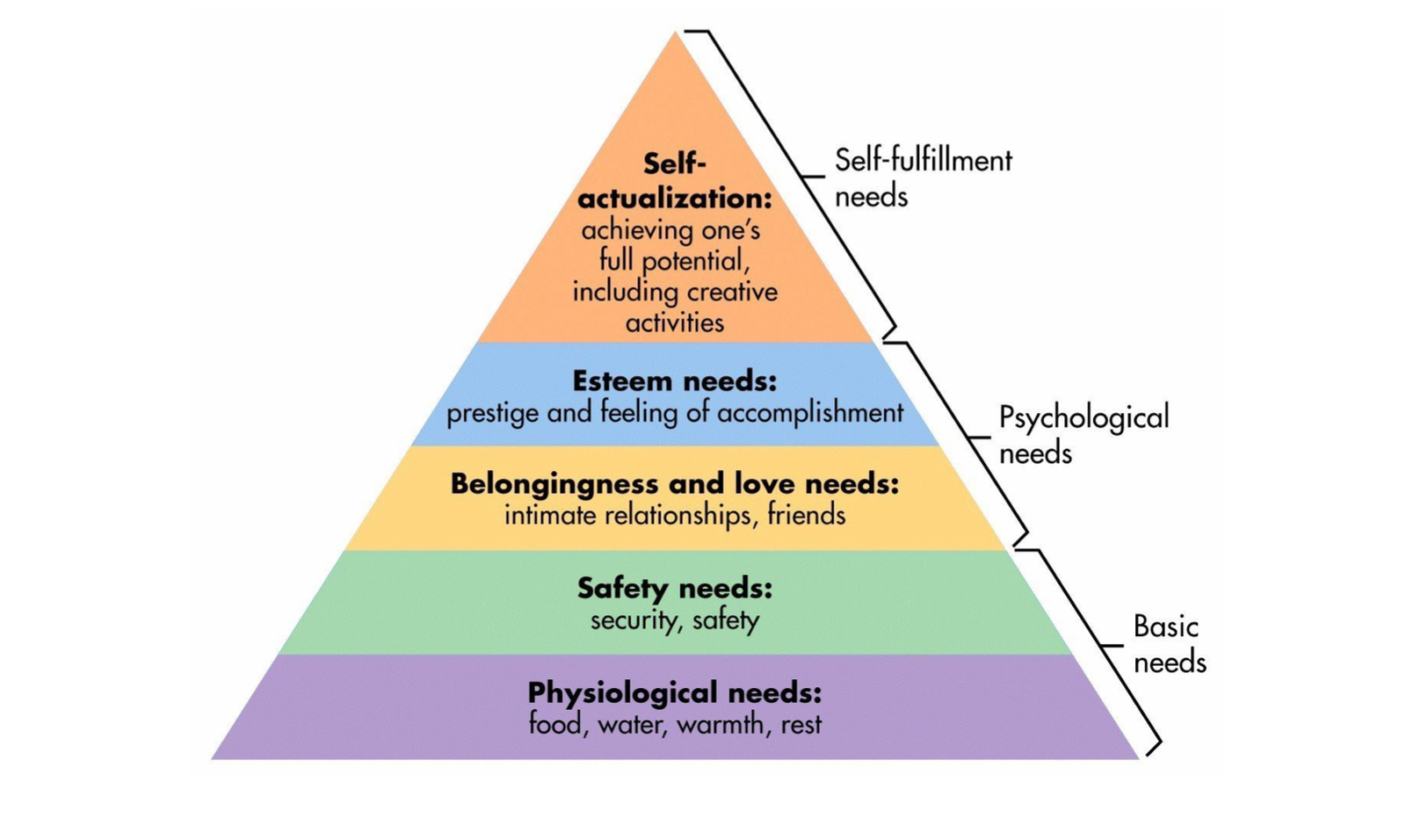
    The Maslow’s Hierarchy of Needs theory assumes that people are motivated to satisfy 5 levels of needs those are a psychological need, security need, social need, esteem and self-actualization needs.

    Maslow’s Hierarchy of Needs
    Maslow’s Hierarchy of Needs

    Maslow categorized the five needs into higher and lower orders.

    Lower-order: Physiological and Safety.
    Higher-order needs: Love and Belonging, Esteem, and Self-actualization.

    1. Physiological Needs
    2. Security Needs
    3. Love and Belonging Needs
    4. Esteem Needs
    5. Self-Actualization Needs

    Maslow suggests that five levels of needs are arranged in accordance with the importance. Starting from the bottom of the hierarchy, an individual is motivated first and foremost to psychological need.

    When the need are satisfied then he is motivated and moves up the hierarchy to satisfy security need. This moving up and process continue till the end-user reaches the self-actualization

    Physiological Needs

    Definition: Physiological needs are considered the most important because they are a most immediate need and hence are also known as basic needs.

    • These are also needed our body to stay functional.
    • It is the bottom and most important needs.

    Example:
    1. It includes food, clothes, shelter, air, water, sexual activities etc.
    2. Basic pay, workspace in the context of organization behaviour.

    Security Needs

    Definition: Security or safety needs are referred to as a requirement for a secure physical and emotional environment.

    • The need is free from worry about money and job security and desire for safe working condition.
    • Security needs are satisfied for people in the workplace by job continuity.
    • A grievance resolving system and an adequate insurance and sentiment benefit package.

    Example:
    1. Financial security, Heath and wellness, a desire for adequate housing.
    2. Job security, adequate medical benefits, and safe working conditions in the context of organization behaviour.

    Love and belongingness Needs

    Definition: Love and belongingness are needs related to a special aspect of human life. They include the needed for love and affection and the need is affected by one’s peers.

    • For most people, these needs are satisfied by a combination of family and community relationship and friendship on the job.
    • Manager can help the ensure the satisfaction of these important needs by allowing social interaction and making employees feel like a part of a team or workgroup.

    Example:
    1. Social acceptance, need to belong, to relate to others.
    2. Good co-workers and supervisors, participating in social functions in the context of organization behaviour.
    3. Friendship, intimacy, trust, and acceptance, receiving and giving affection and love.

    Esteem Needs

    Definition: The Esteem needs are concerned with self-respect, self-confidence, feeling of personal worth.

    • A feeling of being unique and recognition satisfaction. It is the image of the self in the eye of others.
    • A person with high esteem thinks that people think highly of him. It is our esteem that gives us a recognition of our skill.

    Example:
    1. when someone says that he is funny, entertaining and amiable. He must have heard other saying the most of think about him.
    2. Promotions and being recognized at work in the context of organization behaviour.

    Self-Actualization Needs

    Definition: Self-actualization is the realizing of oneself. Many people reach a stage in their life where they start wondering what is expected out of them in their life.

    • It is the final need on Maslow’s Hierarchy of Needs.
    • They hear a voice that tells them to fulfil their destiny. Such people to figure out the meaning of their lives and faces of an existential question.

    Example:
    1. Obtaining our full potential, becoming confident, eager to express our beliefs, and willing to reach out to others to help them.
    2. Challenging projects, opportunity for innovation and creativity in the context of organization behaviour.

    Deficiency Needs vs Growth Needs


    Physiological, security, social, and esteem needs arose due to deprivation are termed as deficiency needs. In order to avoid unpleasant feelings or consequences, we must satisfy these lower-level needs.

    Growth needs don’t stem from a lack of something, but rather from a desire to grow as a better individual. It is termed as the highest level of the pyramid.

    Advantages of Maslow’s Hierarchy of Needs

    • Simple to understand
    • It takes into account human nature
    • Relevant in all field

    Disadvantages of Maslow’s Hierarchy of Needs

    • Needs do not necessarily follow a hierarchy
    • The theory is difficult to test/measure
  • Azim Premji: Biography, Success, Inspiration

    Azim Premji: Biography, Success, Inspiration

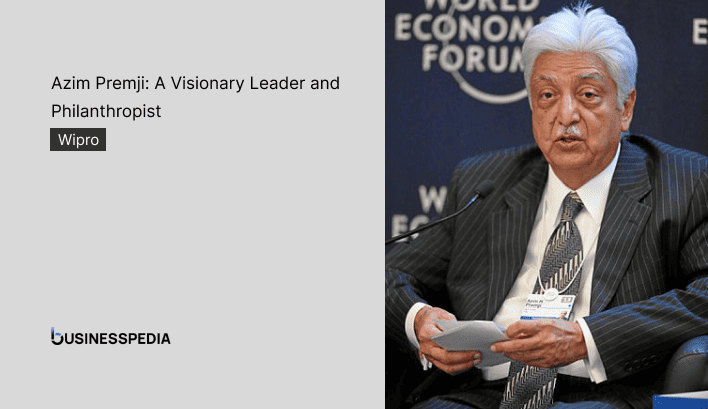
    Azim Premji, a visionary leader and philanthropist, is an extraordinary individual whose life story is an inspiration to millions around the world. From transforming Wipro Limited into a global IT services giant to his unwavering commitment to social causes, Premji’s journey showcases the power of entrepreneurship, leadership, and giving back. In this article, we delve into the biography of Azim Premji, explore his remarkable success, and draw inspiration from his invaluable contributions to society.

    Azim Premji: A Visionary Leader and Philanthropist

    Early Life and Education

    Azim Premji was born on July 24, 1945, in Mumbai, India. He hails from a business-oriented Gujarati family. His father, Mohamed Hashem Premji, was the founder of Western India Vegetable Products Limited (now known as Wipro Limited). Despite being born into wealth and privilege, Premji was instilled with a strong work ethic and a sense of responsibility from an early age.

    Premji completed his schooling at St. Mary’s School in Mumbai and went on to pursue a Bachelor of Science in Electrical Engineering from Stanford University, USA. However, destiny had other plans for him as he had to return to India in 1966 following his father’s sudden demise, taking over the reins of the family business at the young age of 21.

    Building the Wipro Empire

    Under Azim Premji’s leadership, Wipro Limited expanded its business beyond the production of vegetable oils. Recognizing the potential of the emerging IT industry, he shifted the company’s focus towards information technology services. With his visionary mindset, Premji guided Wipro through strategic acquisitions, partnerships, and investments, positioning the company as a major player in the global IT services sector.

    Leading Wipro’s Transformation

    Premji’s leadership skills played a pivotal role in Wipro’s transformation into a powerhouse of IT services. He fostered a culture of innovation, excellence, and customer-centricity within the organization. By investing in research and development, nurturing talent, and embracing emerging technologies, Premji steered Wipro towards sustained growth and profitability.

    Philanthropy: A Guiding Principle

    Beyond his business acumen, Azim Premji is renowned for his profound commitment to philanthropy. He firmly believes in sharing his success and making a positive impact on society. Premji started his philanthropic journey by setting up the Azim Premji Foundation in 2001, focusing on education initiatives in rural India. The foundation works towards improving the quality of education and creating equitable opportunities for underprivileged children.

    The Azim Premji Foundation: Revolutionizing Education

    The Azim Premji Foundation has been instrumental in revolutionizing education in India. It actively works with governments, schools, and communities to improve the quality of education through teacher training programs, curriculum development, and research-based interventions. By emphasizing inclusivity and equity, the foundation has positively impacted the lives of millions of children across the country.

    Honors and Recognitions

    Azim Premji’s contributions to the business world and society have been widely recognized. He has received numerous national and international awards, including the Padma Vibhushan, India’s second-highest civilian award, and the Forbes Lifetime Achievement Award. In addition, he has been conferred with honorary degrees from several esteemed institutions around the world.

    Inspirational Lessons from Azim Premji

    Azim Premji’s life offers valuable lessons for aspiring entrepreneurs and leaders. His unwavering integrity, ethical business practices, and emphasis on social responsibility serve as guiding principles. He exemplifies the importance of innovation, adaptability, and a long-term perspective in navigating the challenges of the business world.

    A Lasting Legacy

    Azim Premji’s leadership and philanthropic endeavors have left an indelible mark on the business and social landscape. His dedication to ethical practices, inclusive growth, and education has set a precedent for businesses and individuals alike. Beyond Wipro’s success, Premji’s true legacy lies in his commitment to giving back and creating a more equitable society.

    Through the Azim Premji Foundation, his philanthropic efforts extend far beyond the corporate realm. The foundation’s initiatives have reached remote and marginalized communities, transforming education and empowering individuals. Premji’s focus on education as a catalyst for social change has inspired others to prioritize education and bridge the gap between privilege and disadvantage.

    His visionary approach to philanthropy goes beyond monetary contributions. Azim Premji has pledged a significant portion of his wealth to charitable causes, setting an example of responsible wealth management and urging fellow billionaires to join the Giving Pledge, a commitment to donate the majority of their wealth for the greater good.

    Conclusion

    Azim Premji’s Enduring Inspiration Azim Premji’s journey from a young entrepreneur to a global business leader and philanthropist is a testament to the power of vision, perseverance, and compassion. His life demonstrates that success is not solely measured by financial achievements but by the impact one makes on society. Premji’s unwavering commitment to ethical practices, social responsibility, and philanthropy serves as an inspiration to aspiring entrepreneurs, leaders, and individuals around the world.

    As we reflect on Azim Premji’s biography, his remarkable success in building Wipro Limited, his transformative philanthropic work, and the invaluable lessons he imparts, we are reminded of the immense potential within each of us to make a positive difference. By following in his footsteps and embracing the values he embodies, we can create a world where business success goes hand in hand with social progress, and where giving back becomes an integral part of our individual and collective journeys.


  • Components Of Communication Process

    Components Of Communication Process

    In this article, we’ll discuss about Components Of Communication Process, how they play a major role in making communication possible.

    Components Of Communication Process

    The main components of communication process are as follows:

    1. Context – Communication is affected by the context in which it takes place. This context may be physical, social, chronological or cultural. Every communication proceeds with context. The sender chooses the message to communicate within a context.

    2. Sender / Encoder – Sender / Encoder is a person who sends the message. A sender makes use of symbols (words or graphic or visual aids) to convey the message and produce the required response. For instance – a training manager conducting training for new batch of employees. Sender may be an individual or a group or an organization.

    The views, background, approach, skills, competencies, and knowledge of the sender have a great impact on the message. The verbal and non-verbal symbols chosen are essential in ascertaining interpretation of the message by the recipient in the same terms as intended by the sender.

    Components Of Communication Process
    Components Of Communication Process

    3. Message – Message is a key idea that the sender wants to communicate. It is a sign that elicits the response of recipient. Communication process begins with deciding about the message to be conveyed. It must be ensured that the main objective of the message is clear.

    4. Medium – Medium is a means used to exchange / transmit the message. The sender must choose an appropriate medium for transmitting the message else the message might not be conveyed to the desired recipients. The choice of appropriate medium of communication is essential for making the message effective and correctly interpreted by the recipient. This choice of communication medium varies depending upon the features of communication.

    For instance – Written medium is chosen when a message has to be conveyed to a small group of people, while an oral medium is chosen when spontaneous feedback is required from the recipient as misunderstandings are cleared then and there.

    5. Recipient / Decoder – Recipient / Decoder is a person for whom the message is intended / aimed / targeted. The degree to which the decoder understands the message is dependent upon various factors such as knowledge of recipient, their responsiveness to the message, and the reliance of encoder on decoder.

    6. Feedback – Feedback is the main component of communication process as it permits the sender to analyse the efficacy of the message. It helps the sender in confirming the correct interpretation of message by the decoder.

    There are two kinds of feedback:

    1. Positive Feedback: Confirms the source that the intended effect of the message was achieved. Positive feedback tells the source that everything is going in the desired way.
    2. Negative Feedback: informs the source that the intended effect of the message was not achieved.

    Communication Noise

    Communication channels are subject to noise. Noise can be identified as the loss of meaning during the transmission.

    There are two major types of noise:

    1. Channel Noise: This type of noise includes any disturbance, which interferes with the physical transmission of the message. In mass communication channel noise includes static on the radio, ink in the newspaper, a rolling screen in television, or type too small to read in a magazine. In interpersonal communication, someone speaking in a room over another conversation, a door shutting etc.

    2. Semantic Noise: This type of noise results in the wrong interpretation of messages, even though the message is received exactly as it was sent such as words too difficult, subject too difficult for receiver to understand also differences of selected meaning of words between the message sender and a receiver, for example receiver thinking that the words prints to something different than that is intended by the sender.