Author: Rashmi Kumari

  • Story of Meesho – “Not just a homemaker, a Meesho Entrepreneur “

    Story of Meesho – “Not just a homemaker, a Meesho Entrepreneur “

    Meesho is a social commerce platform based in Bengaluru, India, that connects suppliers and resellers to create a network of online sellers.

    A Spark Ignited

    Two IIT Delhi graduates, Vidit Aatrey and Sanjeev Barnwal, had a vision for Bengaluru, the tech city. They wanted to put their might behind India’s smaller businesses and homemakers with the internet. In 2015, they launched Fashnear, the platform that connected local stores with online customers. They soon realized, however, that a newer approach was needed to really change the e-commerce world.

    The Birth of Meesho

    Fashnear turned into Meesho, a social commerce platform that enables one to start his or her online business without requiring even a single penny as an upfront investment. It uses the social media space, whereby resellers share products among their friends and earn from each sale. Meesho’s easy interface and very low-cost model have, in fact, changed the game for millions of Indians, especially women.

    Empowering the Underprivileged

    Meesho has become the light of hope for most women who, before were stuck at home. This has enabled them to generate income and hence become economically independent and take care of their families. Many of them have developed good businesses which earn them good incomes, thereby improving their quality of life.

    A Unique Business Model

    A unique business model Meesho’s special business model has transformed the regular e-commerce industry. It has brought down the costs significantly because it has eliminated the necessity of large warehouses and delivery systems. This has made it easy for more sellers to join the platform, thus providing a wide variety of products on the platform catering to the different needs of Indian consumers.

    Getting Past Challenges and Growing Bigger

    Meesho has overcome many difficulties during its process. It fights with such complicated rules, and there it faces great competition along with some other huge e-commerce companies in addition to building up trust among sellers and buyers. It became a market leader by all these efforts with sheer hard work and a new idea of e-commerce concepts.

    A Bright Future

    Meesho is rapidly growing and transforming. Now, it will be beneficial for millions more Indians as well. Its objective-to help women and small business-is in perfect sync with the government’s vision to make India a digital society. Meesho promotes economic growth while making a society fair and inclusive. It does this by working with technology and new thinking.

    A Testament to the Power of Entrepreneurship

    The story of Meesho teaches one the importance of entrepreneurship. It proves that a small idea, if executed with hard work, dedication, and faith in one’s vision, can bring in great success. The story of Meesho inspires aspiring entrepreneurs, especially women, who wish to bring about change in the world.

    The Impact on Society

    Meesho transformed the Indian society in various aspects other than building the Indian economy. The platform was essential in assisting the women grow, creating employment, and enhancing digital skill; this is where small businesses grew all-roundedly -very essential for the country’s economy.

    The Road Ahead

    As Meesho moves forward, the company will face new challenges and chances. The business will need to come up with new ideas, alter its course according to what the consumers want, and improve its supply chain. However, with its very strong base, experienced leaders, and dedicated team, Meesho is positioned well to reach even more success.

    Conclusion

    This story of Meesho is pretty amazing, with strong technology and human spirit behind it. It is all about helping people and developing new ideas to change the face of society. When Meesho continues growing and changing, surely there will be a lot more effect on the Indian economy and the people of India.

  • Story of CarDekho – “Search New, Buy Used”

    Story of CarDekho – “Search New, Buy Used”

    CarDekho is an Indian automotive website that was founded in 2008 by siblings Amit Jain and Anurag Jain in Jaipur, India. The idea for CarDekho came about when Amit, a graduate of the Indian Institute of Technology Delhi, was unable to find information on used cars online in India. He recognized a need for a website that would provide comprehensive information about cars, including pricing, reviews, and comparisons.

    The brothers started the company with a team of just five people and initially focused on creating a database of cars available in India. They visited car dealerships, collected data on cars, and manually entered it into their system. They also created content for the website, including reviews, news, and articles related to the automobile industry.

    In the early days, CarDekho struggled to gain traction as there were already established players in the Indian automotive market. To differentiate themselves, the founders focused on creating a user-friendly website and providing reliable information to car buyers. They also introduced new features such as a used car valuation tool and a mobile app, which helped them to gain a larger audience.

    Over the years, CarDekho has grown significantly and has expanded into other areas of the automotive industry. They launched a finance comparison tool, an insurance comparison platform, and a platform for buying and selling used cars called Gaadi.com. The company has also raised significant funding, including a $110 million investment in 2019 led by Sequoia Capital India and Hillhouse Capital.

    Today, CarDekho is one of the leading automotive websites in India, with over 41 million monthly visits and a database of over 30,000 cars. The company has also expanded into other countries, including Indonesia and the Philippines. The founders have credited their success to their focus on providing value to car buyers and creating a trusted brand in the industry.

  • 10 Polite Ways to Express “Waiting for Your Response”

    In our fast-paced digital age, effective communication is essential. Whether you’re corresponding with a colleague, friend, or potential business partner, waiting for a response can be both anxious and frustrating. It’s tempting to send a follow-up message that conveys your impatience, but it’s crucial to maintain courtesy and professionalism. In this article, we’ll explore ten polite ways to express “waiting for your response” that will help you maintain positive relationships and convey your message respectfully.

    10 Polite Ways to Express “Waiting for Your Response”

    1. “Looking Forward to Your Feedback”

    This phrase subtly conveys your anticipation without imposing any pressure on the recipient. It expresses your eagerness to hear their thoughts and maintains a positive tone.

    1. “Awaiting Your Thoughts”

    Using “awaiting” instead of “waiting” adds a touch of formality to your message. It demonstrates your patience while leaving room for the other person to respond at their own pace.

    1. “Eagerly Awaiting Your Reply”

    By adding the word “eagerly,” you convey your excitement to hear from the other person, demonstrating your interest in their input.

    1. “Anticipating Your Response”

    This phrase conveys your readiness for their reply, suggesting that you are well-prepared to continue the conversation or project.

    1. “Hoping for Your Input”

    By expressing hope, you convey a sense of optimism and create a friendly tone. It subtly encourages the other person to respond promptly.

    1. “Looking Forward to Hearing from You Soon”

    This polite expression combines anticipation with a sense of urgency, implying that you value their response and would appreciate it sooner rather than later.

    1. “Whenever You Have a Moment, I’m Here”

    This phrase emphasizes flexibility and understanding. It shows that you respect the other person’s schedule and are willing to accommodate their time.

    1. “I’m Available Whenever You’re Ready”

    Similar to the previous expression, this one offers flexibility and reassures the recipient that they can respond when it’s convenient for them.

    1. “Let’s Connect at Your Convenience”

    This expression shifts the focus from waiting to actively proposing a time frame for a response or meeting. It demonstrates your willingness to adapt to their schedule.

    1. “No Rush, Take Your Time”

    When patience is your priority, this phrase conveys a relaxed attitude. It reassures the other person that there is no pressure to respond quickly and that you value their thoughtful input.

    Conclusion

    Waiting for a response can be a test of patience but maintaining polite and respectful communication is vital in personal and professional interactions. These ten polite ways to express “waiting for your response” not only convey your anticipation but also reflect your respect for the other person’s time and priorities. By using these phrases, you can foster positive relationships and ensure that your messages are received with warmth and professionalism. Remember, effective communication is a two-way street, and courtesy goes a long way in building and maintaining connections in today’s digital world.

  • Vroom’s Expectancy Theory of Motivation

    Vroom’s Expectancy Theory of Motivation

    Expectancy theory is a motivation theory first proposed by Victor Vroom of the Yale School of Management in 1964. The theory also assumes that people are rational and logically calculating.

    Maslow’s Hierarchy of Needs and Herzberg Two Factor Theory were based on the relationship between internal needs and the resulting effort expended to fulfil them, while Vroom’s Expectancy Theory separates effort, performance and outcomes.

    What is Vroom’s Expectancy Theory?

    Vroom’s Expectancy Theory is one of the process of motivation theories. It is based on the idea that people believe that effort will lead to desired outcomes. Through experience, the individual expects that they can achieve performance. Finally, they direct their effort towards outcomes which help to fulfil their needs.

    According to Vroom’s Expectancy Theory, motivation boils down to the decision of how much efforts to exert in a specific situation.

    Expectancy Theory Assumptions

    Vroom’s Expectancy Theory has assumed four assumptions:

    1. First assumption: is that individuals join organizations with some expectations about their motivations, needs, and past experiences. These influence how individuals behave in an organization.
    2. Second assumption: is that an individual’s behavior is a result of conscious choice. That is, people are independent to behave in a certain way according to their own expectancy calculations.
    3. Third assumption: is that individuals expect different things from the organization (e.g., job security, advancement, good salary  and challenge).
    4. Fourth assumption: is that individuals will behave in a certain way so as to optimize outcomes for them personally.

    Components of Expectancy Theory

    The expectancy theory state three components that are linked to a person’s motivation. These components are:

    1. Expectancy
    2. Instrumentality
    3. Valence

    Expectancy

    Expectancy means an individual belief that particular degree of effort will lead to increased performance.

    • Effort–performance relationship.
    • Expectancy is a probability which may vary from 0 to 1.
    • Expectancy of 0 indicates that the effort has no impact on performance.
    • Expectancy of 1 indicates that a particular first-level outcome will follow behaviour.

    Example: if I work harder then this will be better.

    Instrumentality

    Instrumentality represent a person’s belief that a particular outcome is dependent on a specific level of performance

    • Performance–reward relationship
    • This is a perception by an individual that first level outcome is associated with second-level outcome.
    • Instrumentality ranges from -1 to 1.
    • An instrument of 1 indicates that a particular outcome is totally dependent on performance on performance
    • An instrumentality of 0 indicates that there is no relationship between performance and outcome
    • Finally, an instrumentality of -1 reveals that high-performance reduces the chance of obtaining outcome why low performance increase a chance

    Example: superior performance is instrumental in getting a promotion

    Valence

    Valence refers to the positive or negative value the people place on outcome.

    • Rewards–personal goals relationship
    • We assign value to an outcome depending on our requirements and needs.
    • Mostly people attach high value to outcome such as increased salary, promotion or recognition but no value to stress or layoffs.
    • An outcome of valence depends on individual needs and is measured with scale ranging from negative value to a positive value.

    Example: If an employee has a strong preference for attaining a reward, valence is positive.

    Vroom’s Expectancy Theory Formula

    Vroom’s Expectancy Theory proposed the formula to calculate the motivational force

    Motivation = Expectancy x Instrumentality x Valence

    The multiplier effect in the equation is significant. High level of expectancy, instrumentality, and valence will leads to results in higher levels of motivation.

    • The overall level of motivation will be zero if, any one of the three factors is zero.
    • Therefore, even if an individual thinks that his effort will lead to better performance, which will result in reward, motivation will be zero if the valence of the reward he expects to receive is zero.
    • Example: if he believes that the reward he will receive for his effort has no value for him.

    How a Manager can use Expectancy Theory?

    The managers can be benefitted from the expectancy theory as it helps them to understand the psychological processes that cause motivation.

    • The thinking, perceptions, beliefs, estimates of chances and probabilities and other such factors of employees strongly influence their motivation, performance and behaviour. It makes the process of understanding organizational behaviour easier.
    • By understanding the factors that motivate and demotivate individual employees, the managers can create a work environment, climate and culture that will increase the motivation levels of employees

    Advantages of the Expectancy Theory

    • Self-interest: an individual who wants to achieve minimize dissatisfaction and attain maximum satisfaction.
    • Common sense: explains the gamut of motivation by breaking it down into separately recognizable stages.
    • More scientific: It explains many of the phenomenon related to employee efforts, work performance, employee motivation etc. that are observed in organizations.

    Limitations of the Expectancy Theory

    • Idealistic theory: few experts believe that the complexity of the theory makes it difficult not only to test but also to implement.
    • Limited use and is more valid where individuals clearly perceive effort– performance and performance–reward linkages.
  • What is Face to Face communication and it’s Importance

    What is Face to Face communication and it’s Importance

    As more communication up and down the line at work is done electronically, face-to-face discussion can easily fall by the wayside. While the speed and volume of communication increases with e-mail, voicemail and instant messaging, some of the dialogue and personal touch can start to disappear.

    A global survey shows that 67 percent of senior executives and managers say their organization would be more productive if their superiors communicated more often by personal discussion. While they desire more personal discussion from their superiors, however, the top personal method of communicating for these same business leaders is e-mail, based on the survey by NFI Research.

    “Too many people take the easy way out and try and do everything via e-mail and in a lot of cases consume more time on both sides of the equation than they would have by simply picking up the phone or going to see the person,” said one survey respondent. “I often find that when I look the other person in the eyes and ask them something I get far more than I ever would over e-mail.”

    “Personal discussion is the foundation of communications,” said another respondent. “Once this foundation is established, it enables all of the other forms of communication. Having a personal connection builds trust and minimizes misinterpretation and misunderstanding.”

    Reasons to Communication Face to Face

    We all know how technology enables communication – email, voicemail, text message, instant message, Twitter . . . the list goes on. There are more than enough ways to communicate, and too often they add up to message overload for employees.

    That’s why when something is important, nothing compares to communicating face to face. When a leader needs to inspire people—or move them to action—the best way to do it is to look people in the eye and tell them exactly what they need to know.

    Communicating face-to-face sends a message before you say a word. People will not only hear what you are saying, they will perceive the greater meaning of your tone, voice inflection, emotion and body language.

    Six good reasons for leaders to make the time to communicate face to face

    1. Demonstrate importance

    Being there in person tells your audience they are important to you and the issue you are discussing is worth your time and theirs. Your focus will get people’s attention and increase the potential for your message to be heard.

    2. Interpret thoughts and feelings

    When you are face to face, you can see and respond to people’s reactions – like facial expressions and body language – as well as their tone of voice. Leaders have the chance to show they care by asking probing questions and actively listening to understand the audience’s perspective. This is especially critical when you need employees to adopt new behaviors to advance your goals, such as in times of change.

    3. Enhance credibility and trust

    Leaders need to build employee trust to be effective. Face-to-face situations allow you to share your strategy, explain it clearly, and answer questions honestly. Employees see how actions align with words, which enhances leaders’ credibility and trust.

    4. Build relationships

    Interacting directly with other leaders, managers and employees expands your network and establishes shared experience that can enhance future communication. It also helps create camaraderie that is the basis of cooperation and success across the organization.

    5. Gather feedback

    Meeting in person helps employees feel valued and gives them a chance to contribute input to organizational strategies and communication. It gives the leader a chance to confirm people’s understanding of key issues, identify gaps and encourage ongoing feedback and engagement.

    6. Address sensitive issues

    You demonstrate respect for employees and a commitment to a successful outcome when you deal with a sensitive issue face to face. Whether you are providing specific feedback to increase their success or delivering a tough message, focus on your desired outcome and prepare by understanding the employee’s mind-set and possible reactions. Ultimately your involvement means a lot and taking the time to meet can help turn a challenging conversation into a trust-building interaction.

  • Difference between groups and teams

    Difference between groups and teams

    When we use the terminologies, group and team, we mostly take these as synonyms of each other. Though both refers to the assemblage of two or more individuals, a team is a particular type of a group which is more focused towards the desired mutual goal with every member contributing in the best possible manner.

    Difference between groups and teams

    Groups differ from teams in several ways:

    1. Task orientation: Teams require coordination of tasks and activities to achieve a shared aim. Groups do not need to focus on specific outcomes or a common purpose.
    2. Degree of interdependence: Team members are interdependent since they bring to bear a set of resources to produce a common outcome. Individuals in a group can be entirely disconnected from one another and not rely on fellow members at all.
    3. Purpose: Teams are formed for a particular reason and can be short- or long-lived. Groups can exist as a matter of fact; for example, a group can be comprised of people of the same race or ethnic background.
    4. Degree of formal structure: Team members’ individual roles and duties are specified and their ways of working together are defined. Groups are generally much more informal; roles do not need to be assigned and norms of behavior do not need to develop.
    5. Familiarity among members: Team members are aware of the set of people they collaborate with, since they interact to complete tasks and activities. Members of a group may have personal relationships or they may have little knowledge of each other and no interactions whatsoever.

    Groups Vs Teams

    GroupsTeams
    Members work independently and they often are not working towards the same goal.Members work inter-dependently and work towards both personal and team goals, and they understand these goals are accomplished best by mutual support.
    Members focus on mostly on themselves because they are not involved in the planning of their group’s objectives and goals.Members feel a sense of ownership towards their role in the group because they committed themselves to goals they helped create.
    Members are given their task or told what their duty/job is, and suggestions are rarely welcomed.Members collaborate and use their talent and experience to contribute to the success of the team’s objectives.
    Members may not fully understand what is taking place in their group.Members base their success on trust and encourage all members to express their opinions, varying views and question.
    Members may or may not participate in group decision making, and conformity is valued more than positive results.Members participate equally in decision- making, but each member understands that the leader might need to make the final decision of the team cannot reach consensus.
  • Herzberg Two Factor Theory

    Herzberg Two Factor Theory

    Herzberg Two Factor Theory is also known as the Herzberg’s motivation-hygiene theory and dual-factor theory was coined by Frederick Herzberg in 1959.

    What is the Two Factor Theory?

    Herzberg Two Factor Theory or Herzberg’s Motivation-Hygiene Theory, argues that there are two factors that influence the motivation of the employee in the organization.

    In 1959, Herzberg conducted a study on 200 engineers and accountants from over nine companies in the United States.

    He asked professionals to describe two important incidents at their job. when did they felt either extremely bad or exceptionally good about their jobs and rated their feelings on these experiences.

    Responses about satisfied feelings are generally related to “job content” (motivation factors/ satisfiers ) and responses about dissatisfied feelings are associated with “job context” (hygiene factor/ dissatisfiers). This is why it is known as Two Factor Theory.

    Motivation factors

    Motivation factors, which are the drivers of human behavior related to the intrinsic nature of the work.

    There are six motivation factors that include:

    1. Achievement
    2. Recognition
    3. Work itself
    4. Responsibility
    5. Advancement
    6. Possibility of Growth

    Achievement

    Achievement factor refers to successful performance of individual’s work tasks, solving problems, justification and seeing the results of one’s work.

    Recognition

    Recognition depends on praise, notice and criticism received from colleagues or management and it mainly means getting recognition due to achievement in tasks.

    Work itself

    Work itself describes the actual content of one’s job, basically meaning the tasks of the job.

    Responsibility

    Responsibility means the sense of responsibility given to an employee for his/her own work or being given new responsibilities.

    Advancement

    Advancement refers to a change in one’s position at work and, therefore, involves the concept of promotion.

    Possibility of Growth

    JOb must give equal and adequate opportunities for the employee to learn new skills and to achieve career advancement.

    Hygiene Factors

    Hygiene factors, which are contingent factors may demotivate the employee.

    These are hygiene factors which includes:

    1. Company Policy
    2. Work Conditions
    3. Supervision
    4. Salary
    5. Interpersonal Relations
    6. Job Security

    Company policy

    Company policy and administration relate specifically to organization management at workplaces and they also require personnel policies.

    Work conditions

    Working conditions require the physical environment of working and especially the available facilities with all their space and tools, for instance.

    Supervision

    Supervision, refers to the actual behavior of managers towards employees, for example, how fair or unfair they are and how willing they are to envoy responsibilities.

    Salary

    Salary is an economic benefit for work.

    Interpersonal Relations

    It refer to the social interactions between colleagues and between workers and their supervisors.

    Job Security

    The employee must have a sense of belongingness and feel secure. They must not work under the stress that their job can be laid off anytime.

    Four State in Organization

    Four different combinations can exist at an organization:

    High Hygiene + High Motivation

    Employees are highly motivated and have few complaints.

    High Hygiene + Low Motivation

    Employees is not highly motivated and have few complaints.

    Low Hygiene + High motivation

    Employees are motivated but have a lot of complaints.

    Low hygiene + Low motivation

    Employees is not motivated and also have a lot of complaints

    Two factor theory or Herzberg’s Motivation-Hygiene theory sought that manager should consider all the two factors in order to optimally motivate and satisfy employees to get the best out of them rather than to be one-sided in considering factors to motivate employees.

    How Manager can use Two Factor Theory?

    Every organization and manager wants the team to give their best possible performance. But How do you motivate employees? Motivating people really works when eliminating the things that bother them.

    Eliminate job dissatisfaction

    According to Herzberg (1987) managers can eliminate the dissatisfaction among the employee by applying the motivation factors of two factor theory as follow:

    • Fix poor and obstructive company policies.
    • Provide effective, supportive and non-intrusive supervision.
    • Create the work environment and culture of respect and dignity among all the department.
    • Provide competitive wages and salaries and job security.
    • Providing meaningful work for all positions and build job status.

    Create job satisfaction

    According to Herzberg (1987), job enrichment is the motivating factors that are needed to be addressed. He suggested that every job should be examined to determine how it could be made better and more satisfying to the person doing it.

    Hence, managers need to consider and include:

    • Providing equal and adequate opportunities for achievement and growth.
    • Recognizing employee contributions.
    • Assigning work that matches the skills and abilities of the employee and is rewarding.
    • Assigning equal responsibility among each team member as possible.
    • Providing opportunities for internal promotions.
    • Offering training and development opportunities so that employee can pursue the growth in his career.

    Critique of Two Factor Theory

    Although, Two Factor Theory has a few issues with it but still it is widely used.

    First, when things are going well employees tend to look at the aspects of their work that they like and project them onto themselves. But, dring bad times, external factor play a big role.

    Another, critique of Two Factor Theory is that Herzberg didn’t take account that external factors might influence productivity. He only consider job satisfaction results in higher productivity.

    Finally, it is only applies to white-collar employees.

    Summary of Two Factor Theory

    Two Factor Theory is one of the content motivation theories. Herzberg in Two Factor Theory or Herzberg’s Motivation-Hygiene Theory states that two factors affect motivation in the workplace.

    These two factor are hygiene factors and motivating factors.

    • Workers motivated to work harder by motivators e.g. more responsibility and appreciation etc..
    • Workers can become de-motivated if hygiene factors are not met e.g. salary and work conditions.

    To successfully implement two factor theory, first hygiene factor should be resolved. once those are resolved, then motivators factor should be implemented to enhance motivation.

  • Zomato: From Startup to Global Food-Tech Giant

    Zomato: From Startup to Global Food-Tech Giant

    In the dynamic world of technology and entrepreneurship, few success stories capture the imagination quite like that of Zomato. What started as a simple restaurant discovery platform in 2008 has transformed into a global food-tech powerhouse, revolutionizing the way people explore, order, and experience food. Zomato’s journey from a startup to a global food giant is nothing short of mind-blowing, showcasing the power of innovation, perseverance, and a customer-centric approach. In this article, we delve into the incredible success story of Zomato and the key factors that have propelled its meteoric rise.

    The Genesis of Zomato

    Zomato was founded in 2008 by Deepinder Goyal and Pankaj Chaddah, two Indian entrepreneurs with a passion for food and technology. Originally named “Foodiebay,” the platform aimed to provide a comprehensive database of restaurant information, menus, and reviews to help people make informed dining choices. Starting with a humble team and limited resources, the founders embarked on a mission to disrupt the traditional food industry and create a seamless food discovery experience.

    Focus on User Experience

    Right from its early days, Zomato prioritized user experience as the cornerstone of its business strategy. The platform invested heavily in building a user-friendly interface, intuitive navigation, and accurate restaurant information. Zomato understood the importance of engaging users and keeping them coming back for more. By offering a seamless and delightful experience, Zomato gained a loyal user base, laying the foundation for its rapid expansion.

    Expansion and Global Reach

    Zomato’s expansion strategy was nothing short of ambitious. After establishing a strong presence in the Indian market, the company set its sights on international expansion. It entered several countries, including the United Arab Emirates, United Kingdom, Australia, and New Zealand, through a series of strategic acquisitions and partnerships. This global expansion not only broadened Zomato’s user base but also strengthened its position as a global food discovery platform.

    Diversification and Innovations

    Recognizing the evolving needs of its users, Zomato ventured beyond its core restaurant discovery platform. The company introduced online food ordering and delivery services, enabling users to enjoy their favorite meals from the comfort of their homes. This diversification further propelled Zomato’s growth and positioned it as a comprehensive food-tech platform. Zomato’s innovative features like real-time table reservations, cashless transactions, and personalized recommendations have kept it at the forefront of the industry.

    Strategic Partnerships and Acquisitions

    Zomato’s success can also be attributed to its strategic partnerships and acquisitions. The company forged alliances with restaurant chains, aggregators, and technology companies, expanding its reach and enhancing its services. Notable acquisitions, such as Urbanspoon in the United States and Cibando in Italy, helped Zomato penetrate new markets and gain a competitive edge. These strategic moves reinforced Zomato’s position as a global player in the food-tech industry.

    Adaptation to Changing Market Dynamics

    Zomato’s ability to adapt to changing market dynamics has been instrumental in its success. The company recognized the rising trend of online food delivery and swiftly pivoted to meet the demand. By launching Zomato Delivery, it tapped into a massive market, catering to the growing appetite for convenient food delivery services. Zomato’s agility in embracing new technologies and consumer preferences has been pivotal in its transformation into a global food giant.

    Brand Building and Marketing

    Zomato’s brand-building efforts have played a crucial role in its success. The company invested heavily in marketing campaigns, both online and offline, to create brand awareness and engage with its target audience. Zomato leveraged social media platforms, influencers, and innovative marketing campaigns to establish a strong brand presence. The iconic Zomato logo, with its distinctive spoon and fork, became instantly recognizable, further enhancing brand recall. By consistently delivering on its promises and maintaining high-quality standards, Zomato earned the trust and loyalty of its customers, solidifying its position as a leader in the food-tech industry.

    Embracing Technology and Data

    Zomato harnessed the power of technology and data to drive its success. The platform leveraged advanced algorithms and data analytics to provide personalized recommendations, ensuring that users discover restaurants tailored to their preferences. Zomato’s data-driven approach also benefited restaurant partners, providing valuable insights into customer behavior and helping them make informed business decisions. By continuously investing in technology and innovation, Zomato stayed ahead of the competition and continually improved its offerings.

    Going Public and Future Prospects

    In July 2021, Zomato made its highly anticipated debut on the Indian stock market with a successful initial public offering (IPO). The IPO not only marked a significant milestone for the company but also showcased investor confidence in its growth potential. The funds raised through the IPO will fuel further expansion, innovation, and diversification, ensuring Zomato’s sustained growth in the years to come. With its solid foundation, global presence, and customer-centric approach, Zomato is well-positioned to capitalize on the evolving food-tech landscape and shape the future of the industry.

    Impact on the Food Industry

    Zomato’s success story has had a profound impact on the food industry, transforming the way people discover, order, and experience food. It has empowered both users and restaurants, offering a platform for seamless connections and driving digital transformation in the industry. Zomato’s emphasis on customer feedback and reviews has also raised the bar for restaurant quality and service, encouraging establishments to prioritize customer satisfaction.

    In conclusion, the success story of Zomato is a testament to the power of innovation, user-centricity, and adaptability. From its humble beginnings as a restaurant discovery platform, Zomato has evolved into a global food-tech giant, disrupting traditional models and redefining the way people interact with food. Through strategic expansion, diversification, and a relentless focus on user experience, Zomato has cemented its position as a leader in the industry. As it continues to innovate and expand, Zomato’s journey serves as an inspiration for aspiring entrepreneurs and a testament to the transformative potential of technology in shaping the future of the food industry.

  • What is Demand? Determinants, Types, and Importance

    What is Demand? Determinants, Types, and Importance

    What is Demand in Economics?

    Demand in Economics is an economic principle that can be defined as the quantity of a product that a consumer desires to purchase goods and services at a specific price and time.

    Factors such as the price of the product, the standard of living of people, and changes in customers’ preferences influence the demand. The demand for a product in the market is governed by the Laws of Economics.

    Demand Definition

    The word ‘demand’ is used to imply the quantity (how much) of a given commodity or service, the consumers are willing and able to buy, in a market during the particular period of time, at any price, or at any income or at any price of related goods.

    Demand is not just the desire for the commodity, rather when the desire is supported by the means to purchase, the willingness of the consumer to use those means to buy the commodity, and purchasing power of the consumer, then only it is termed as demand.

    Determinants of Demand

    1. Price of the Commodity: Other things being constant, there is an inverse relationship between the commodity’s price and its demand, i.e. an increase in the price of the commodity, results in the decrease in its demand, and vice versa. 

    For instance: The rise in the price of detergent produced by A Ltd. will decrease its demand, as the price-sensitive consumers may choose detergent produced by some other company over the detergent produced by A Ltd.

    1. Price of Related Goods: Related goods refer to the goods whose change in price may change the quantity demanded of a commodity. The related goods are classified as:
    1. Complementary Goods: The products which are used or taken together or simultaneously are called complementary goods. 

    For instance: Shampoo and Conditioner wherein a fall in the price of Shampoo leads to the rise in the demand of Conditioner.

    1. Competing Goods: When two commodities share similar wants and can be used interchangeably are called as Competing Goods or Substitute Goods.

    For instance: Soap or Shower Gel wherein a fall in the price of Shower Gel results in the fall in quantity demanded of its Soap. So, there is a direct relationship between demand for the commodity and the price of its substitutes.

    1. Income of the Consumer: Other things remain constant, the income level of the consumer also influences the demand for a commodity, as the buying power of the consumer depends on the income level itself.The nature of consumer goods decides the nature of the relationship between income and the quantity demanded. As the income of the consumer increases, the consumer wants more of a given commodity, but this is not true in all the situations, as in case of inferior goods, where the rise in the level of income leads to decrease in its demand, because the consumer switch to better quality product, which they can afford after the rise in their income.
    1. Consumer Expectations: When the price of a particular commodity, is expected to rise in the near future, the demand for that good, goes up, for that particular time. In the same way, when the price of a commodity is expected to fall, the demand for it usually comes down, as the customers will postpone the purchase. 

    For instance: If the gold prices are expected to rise in the coming time, then its demand increases for that duration.

    1. Tastes and Preferences of Consumer: The tastes and preferences of the consumer also have a significant effect on the demand for its commodity. We all know that when something is in fashion, it is high in demand, which may change over a period of time.
      For instance: With the introduction of 5G technology handsets in the market, the demand for 4G smartphones has been reduced.
      1. Demonstration Effect: A person’s demand for a particular good or service is also influenced by his seeing his relative, friend, colleagues, neighbours consuming it. There are two main reasons behind it, i.e. by seeing the other person consuming it, the individual also gets the desire to consume the same, or he/she thinks that if his relative can afford it, then he/she can also afford it. This is called a Demonstration Effect.
      2. Snob Effect: The opposite of the demonstration effect is the snob effect, which says that if a commodity is common among all the people, some people will stop using it, leading to the decrease in overall demand.
      3. Veblen Effect: Goods which are high in price is a status symbol for rich people and so are consumed by that class only, to fulfil their need for prestige. This is called a Veblen Effect.

    In addition to the above factors, there are factors like the size of the population, the composition of the population, national income, and its distribution, which also affect the demand for a commodity.

    Types of Demand in Economics

    Types of Demand in Economics are:

    1. Price Demand
    2. Income Demand
    3. Cross Demand
    4. Individual demand and Market demand
    5. Joint Demand
    6. Composite Demand
    7. Direct and Derived Demand

    Price Demand

    Price demand is a demand for different quantities of a product or service that consumers intend to purchase at a given price and time period assuming other factors, such as prices of the related goods, level of income of consumers, and consumer preferences, remain unchanged.

    Price demand is inversely proportional to the price of a commodity or service. As the price of a commodity or service rises, its demand falls and vice versa.

    Therefore, price demand indicates the functional relationship between the price of a commodity or service and the quantity demanded. It can be mathematically expressed as follows:

    Therefore, price demand indicates the functional relationship between the price of a commodity or service and the quantity demanded. It can be mathematically expressed as follows:

    DA= f (PA) where,
    DA = Demand for commodity A
    f = Function
    PA =Price of commodity A

    Income Demand

    Income demand is a demand for different quantities of a commodity or service that consumers intend to purchase at different levels of income assuming other factors remain the same.

    Generally, the demand for a commodity or service increases with an increase in the level of income of individuals except for inferior goods. Therefore, demand and income are directly proportional to normal goods whereas demand and income are inversely proportional to inferior goods.

    The relationship between demand and income can be mathematically expressed as follows:

    DA = f ( YA ), where,
    DA = Demand for commodity A
    f = Function
    YA = Income of consumer A

    Cross Demand

    Cross demand is refers to the demand for different quantities of a commodity or service whose demand depends not only on its own price but also the price of other related commodities or services.

    For example, tea and coffee are considered to be the substitutes of each other. Thus, when the price of coffee increases, people switch to tea. Consequently, the demand for tea increases. Thus, it can be said that tea and coffee have cross demand.

    Mathematically, this can be expressed as follows:

    DA = f (PB), where,
    DA = Demand for commodity A
    f = Function
    PB = Price of commodity B

    Individual demand and Market demand

    Individual demand and market demand: This is the classification of demand based on the number of consumers in the market. In dividual demand refers to the quantity of a commodity or service demanded by an individual consumer at a given price at a given time period.

    For example, the quantity of sugar that an individual or household purchases in a month is the individual or household demand. The individual demand of a product is influenced by the price of a product, the income of customers, and their tastes and preferences.

    On the other hand, market demand is the aggregate of individual demands of all the consumers of a product over a period of time at a specific price while other factors are constant.

    Joint Demand

    Joint demand is the quantity demanded two or more commodities or services that are used jointly and are, thus demanded together.

    For example, car and petrol, bread and butter, pen and refill, etc. are commodities that are used jointly and are demanded together.

    Composite Demand

    Composite demand is the demand for commodities or services that have multiple uses. For example, the demand for steel is a result of its use for various purposes like making utensils, car bodies, pipes, cans, etc.

    For example, the demand for steel is a result of its use for various purposes like making utensils, car bodies, pipes, cans, etc. In the case of a commodity or service having composite demand, a change in price results in a large change in the demand. This is because the demand for the commodity or service would change across its various usages.

    Direct and Derived Demand

    Direct and derived demand: Direct demand is the demand for commodities or services meant for final consumption. This demand arises out of the natural desire of an individual to consume a particular product.

    For example, the demand for food, shelter, clothes, and vehicles is direct demand as it arises out of the biological, physical, and other personal needs of consumers.

    On the other hand, derived demand refers to the demand for a product that arises due to the demand for other products.

    For example, the demand for cotton to produce cotton fabrics is derived demand.

    Importance of Demand

    Demand is considered the basis of the entire process of economic development, hence demand plays an important role in the economic, social and political fields.

    The importance of demand are:

    1. Importance in Consumption
    2. Advantageous to producers
    3. Importance in Exchange
    4. Importance in Distribution
    5. Importance in Public Finance
    6. Importance of Law of Demand and Elasticity of Demand
    7. Importance in Religion, Culture and Politics

  • Supply Chain Management

    Supply Chain Management

    Supply chain Management (SCM) refers to the management of key business processes which are related to the product flow and conversion of goods from the raw material to the goods ready for use by the final consumer.

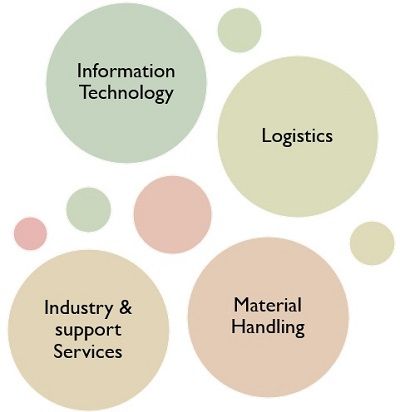
    SCM involves a complete series of activities which may or may not be interconnected to one another, such as sourcing, procurement, transformation, material handling, logistics, as well as collaborating with the channel partners that assist in the process of acquiring raw material and distributing it to the ultimate user.

    Channel partners can be suppliers, wholesalers, distributors, retailers, dealers, third party service providers, customers, etc.

    Supply Chain Management Processes

    According to Global Supply Chain Forum (GSCF), there are several Supply Chain Management processes given as under:

    1. Customer Relationship Management: It plans, controls and assesses customer interaction and data, during the lifecycle, with the aim of building strong relations.
    2. Customer Service Management: It assists in administering product and service contracts.
    3. Supplier Relationship Management: It guides in developing and maintaining a good relationship with the suppliers. At the time of selecting suppliers, priority is given to suppliers capability regarding quality, reliability, innovation, services and cost reductions.
    4. Manufacturing Flow Management: It covers activities associated with the movement of products inside and outside the factories, to have flexibility in the manufacturing process.
    5. Demand Management: A comprehensive structure is provided to best understand the customer’s needs.
    6. Order Fulfilment: It encompasses all the activities which identify customer needs, frames the logistics network and fulfils orders.
    7. Product Development and Commercialization: A framework is provided for developing and introducing new products into the market.
    8. Returns Management: It is concerned with functions associated with returns, reverse logistics etc. It is an indispensable part of the SCM process and is required in both the upstream and downstream movement of goods for the best possible use of organizations resources.

    Supply Chain Management is an improvement over the traditional logistics management which helps in the timely delivery of the products to customers. It also plays a crucial role in increasing business profits, by reducing the overall cost, which improves its competitiveness also.

    Elements of Supply Chain Management

    • Plan: It represents a strategic segment of the supply chain management, as you require some sort of strategy to manage resource utilization for satisfying customer requirements, for goods and services.
    • Source: Selecting the suppliers for supplying raw material to produce the product.
    • Make: This segment is all about the production which schedules all the operations essential for production, testing, packaging, labelling, etc.
    • Deliver: It indicates logistics, which starts with the receipt of orders from the customer. Further, it builds a network of warehouses for storing the product, choosing carriers to deliver the product to the customer and establishing a system for receiving payments.
    • Return: This is the most critical part of the entire system, wherein a network is created to take back excess or defective products delivered to customers and also providing support services to those who encounter some problem with its usage.

    The supply chain management system brings together all the key activities like purchasing, production, storage transportation and distribution, under a single system, in order to produce and distribute the merchandise in desired quality and quantity, at right time and place, so that the overall cost is reduced and service levels are improved.

    Types of Supply Chain

    • Push Model: In this model, the actual demand determines the inventory to be produced. So, it is concerned with the individual customer, and it has a marketing-oriented approach.
    • Pull Model: As per this model, the customer places the order first, after that the manufacturing of the product is done. It has a customer-oriented approach.

    In a nutshell, Supply Chain Management is nothing but the unification of core business functions, from the final consumer through suppliers, that supplies goods, services and information, that assist in the value addition of customers and other parties.

    An ideal supply chain management system has a number of benefits like inventory reduction, customer responsiveness and improvement in productivity, order management and financial cycle.