Author: Rashmi Kumari

  • What Is Job Satisfaction? Definition, Factors and Importance

    What Is Job Satisfaction? Definition, Factors and Importance

    What is Job Satisfaction?

    Job satisfaction is the level of contentment a person feels regarding his or her job. This feeling is mainly based on an individual’s perception of satisfaction. Job satisfaction can be influenced by a person’s ability to complete required tasks, the level of communication in an organization, and the way management treats employees.

    Choose a job you love, and you will never have to work a day in your life.

    Confucius

    Factors Affecting Job Satisfaction

    An employee’s overall satisfaction with his job is the result of a combination of factors — and financial compensation is only one of them. Management’s role in enhancing employees’ job satisfaction is to make sure the work environment is positive, morale is high and employees have the resources they need to accomplish the tasks they have been assigned.

    • Working Conditions

    Because employees spend so much time in their work environment each week, it’s important for companies to try to optimize working conditions. Such things as providing spacious work areas rather than cramped ones, adequate lighting and comfortable work stations contribute to favorable work conditions. Providing productivity tools such as upgraded information technology to help employees accomplish tasks more efficiently contributes to job satisfaction as well.

    • Opportunity for Advancement

    Employees are more satisfied with their current job if they see a path available to move up the ranks in the company and be given more responsibility and along with it higher compensation. Many companies encourage employees to acquire more advanced skills that will lead to the chance of promotion. Companies often pay the cost of tuition for employees taking university courses, for example. During an employee’s annual performance review, a supervisor should map out a path showing her what she needs to accomplish and what new skills she needs to develop in order to be on a track to advancement within the organization.

    • Workload and Stress Level

    Dealing with a workload that is far too heavy and deadlines that are impossible to reach can cause job satisfaction to erode for even the most dedicated employee. Falling short of deadlines results in conflict between employees and supervisors and raises the stress level of the workplace. Many times, this environment is caused by ineffective management and poor planning. The office operates in a crisis mode because supervisors don’t allow enough time for employees to perform their assigned tasks effectively or because staff levels are inadequate.

    • Respect from Co-Workers

    Employees seek to be treated with respect by those they work with. A hostile work environment — with rude or unpleasant co-workers — is one that usually has lower job satisfaction. Managers need to step in and mediate conflicts before they escalate into more serious problems requiring disciplinary action. Employees may need to be reminded what behaviors are considered inappropriate when interacting with co-workers.

    • Relationship with Supervisors

    Effective managers know their employees need recognition and praise for their efforts and accomplishments. Employees also need to know their supervisor’s door is always open for them to discuss any concerns they have that are affecting their ability to do their jobs effectively and impeding their satisfaction at the office.

    • Financial Rewards

    Job satisfaction is impacted by an employee’s views about the fairness of the company wage scale as well as the current compensation she may be receiving. Companies need to have a mechanism in place to evaluate employee performance and provide salary increases to top performers. Opportunities to earn special incentives, such as bonuses, extra paid time off or vacations, also bring excitement and higher job satisfaction to the workplace.

    Therefore, the employer should tell employees early and often that it is the employees’ responsibility to recognize and pursue their own career contentment.  Employers’ emphasis should be on matching employees with meaningful work. Employees who learn to take charge of their own happiness at work will be highly motivated. Satisfied employees will stay with the company for a relatively long period. Thus, they must concentrate on removing dissatisfies from the workplace to enable employees to get on with their own satisfaction in an environment. Managers must concentrate on employing the right people for the organization in order to maximize on the possibility that employees will be satisfied.

    Importance of Job satisfaction

    Job satisfaction is a matter of great significance for employers. 

    • Lower staff turnover
    • Higher productivity
    • Reduction in conflicts and complaints
    • Punctuality (reduced lateness)
    • Better worked morale

    Job satisfaction and productivity

    In the right conditions and settings, job satisfaction can to a great degree lead to higher productivity. If employees feel that their jobs are fun and interesting, they will be more willing to give extra effort at work for the benefit of the whole organization. Instead if employees have the feeling that their occupations are meaningless and boring, they will have a negative attitude which will definitely lead to a decline in productivity.

    Job satisfaction helps to create a better working environment

    When employees are enjoying a higher degree of job satisfaction they tend to be more helpful and friendly with their colleagues at work. This helps to promote teamwork where sharing of information and knowledge is enhanced. Moreover studies have shown that job satisfaction among employees may lead to a better and safer working environment with lesser negative conflicts which otherwise would impede the smooth running of the organization.

    Job satisfaction and absenteeism and turnover

    High rate of turnover has always been a great problem to many organizations. It obviously results in loss of potentials and talents and causes huge losses in terms of additional costs. According to Sattler and Mullen, generally, the more productive people are, the more satisfied they tend to be and when employees feel satisfied they are less likely to leave the organization.

    Employee satisfaction can lead to customer satisfaction

    When our staff is happy, our customers will be too. At the heart of these endeavors is a strong belief that today’s employee satisfaction, loyalty and commitment influence tomorrow’s customer satisfaction, loyalty and commitment-and, ultimately, the organization’s profit and growth.
  • 20 Sentences and Phrases for Beginning an Email

    In this article, we’ll see 20 Sentences and Phrases for Beginning an Email. In the fast-paced world of digital communication, the way we begin our emails can set the tone for the entire conversation. Whether you’re reaching out to a colleague, client, or friend, a well-crafted opening can make a significant difference in capturing attention and establishing a positive connection. So, Here are some Sentences and Phrases for Beginning an Email.

    20 Sentences and Phrases for Beginning an Email

    No.Expressions
    1Thank you for your message/email/phone call.
    2I hope you are doing well.
    3I hope you had a great weekend.
    4I hope this finds you well.
    5Just checking in.
    6Thanks again for your help.
    7It was great talking to you.
    8It was great meeting you.
    9Thanks for the additional info.
    10Just wanted to send you a quick note to…
    11How is everything?
    12Thanks for the quick response.
    13Thanks for your help with.
    14I have a quick question.
    15I have a quick request.
    16Thanks for the update.
    17Just checking in to make sure that.
    18I wanted to reach out to you because.
    19I am looking forward to.
    20It is great to hear from you.

    In conclusion, the way you begin your emails plays a crucial role in establishing the tone and building rapport. Happy this adds value to your email and don’t forget to share this with your friends.

  • Web Designer Cover Letter (With Template And Example)

    As a web designer, you are responsible for creating visually appealing and functional websites that meet the needs of your clients. When applying for a web designer job, your cover letter is an important tool that can help you stand out from other candidates. In this article, we will discuss how to write an effective web designer cover letter, provide a template you can use, and give an example cover letter.

    How to Write a Web Designer Cover Letter

    1. Start with a strong opening: Begin your cover letter with a brief introduction of yourself and your experience as a web designer. Mention the job you’re applying for and where you found the listing.
    2. Show your understanding of the company: Do some research on the company you’re applying to and demonstrate your understanding of their mission and values. This will show the employer that you are genuinely interested in working for them.
    3. Highlight your relevant skills: In the body of your cover letter, describe your experience in web design and the relevant skills you possess. Provide specific examples of websites you have designed or projects you have worked on.
    4. Discuss your design process: Explain your design process, including how you approach design problems, the tools you use, and how you collaborate with clients and other team members.
    5. Show your passion for design: Demonstrate your passion for design by discussing your favorite design projects or the latest design trends you are following. This will show the employer that you are invested in your work and always looking to improve.
    6. Include a call to action: Close your cover letter by thanking the employer for their time and consideration, and invite them to contact you for further discussion or to schedule an interview.

    Web Designer Cover Letter Template

    [Your Name] [Your Address] [City, State ZIP Code] [Your Email Address] [Your Phone Number] [Date]
    
    [Recipient's Name] [Recipient's Title] [Company Name] [Address] [City, State ZIP Code]
    
    Dear [Recipient's Name],
    
    I am writing to express my interest in the web designer position at [Company Name]. I am excited about the opportunity to apply my experience and skills to create visually appealing and functional websites that meet the needs of your clients.
    
    I was drawn to [Company Name] because of your focus on creating high-quality websites that are both user-friendly and visually appealing. I appreciate the emphasis you place on collaboration and communication with clients, and I believe my skills and experience align well with your values.
    
    As a web designer with [Number] years of experience, I have designed websites for clients in a variety of industries. My skills include proficiency in [Skill 1], [Skill 2], and [Skill 3], as well as experience with [Tool 1], [Tool 2], and [Tool 3]. I am also well-versed in responsive design and can ensure that your clients' websites look great on any device.
    
    In my design process, I first work to understand the client's needs and goals. I then collaborate with other team members, such as developers and project managers, to ensure that the final product meets the client's expectations. I am skilled in working with clients throughout the design process to ensure that their feedback is incorporated into the final product.
    
    I am passionate about design and always looking for ways to improve my skills. Some of my favorite design projects include [Project 1] and [Project 2], where I was able to incorporate innovative design elements and create a unique user experience.
    
    Thank you for considering my application. I look forward to the opportunity to discuss my qualifications further and how they align with the needs of [Company Name]. Please do not hesitate to contact me if you have any questions or if you would like to schedule an interview.
    
    Sincerely,
    
    [Your Name]

    Web Designer Cover Letter Example

    John Doe
    1234 Main Street
    Anytown, USA 12345
    johndoe@email.com
    555-555-1234
    
    March 15, 2023
    
    Jane Smith
    Hiring Manager
    ABC Web Design
    4567 Elm Street
    Anytown, USA 12345
    
    Dear Ms. Smith,
    
    I am excited to apply for the web designer position at ABC Web Design that I found on your website. With over five years of experience in web design, I am confident that I have the skills and experience necessary to contribute to your team.
    
    I was drawn to ABC Web Design because of your commitment to creating websites that not only look great, but also function well for users. As a web designer, I share this same passion for designing websites that are user-friendly and visually appealing.
    
    As a web designer, I have experience with a variety of web design tools and technologies, including Adobe Creative Suite, HTML/CSS, and responsive design. I have also worked on projects for clients in a variety of industries, including healthcare, finance, and retail.
    
    In my design process, I first work to understand the client's needs and goals. I then collaborate with other team members, such as developers and project managers, to ensure that the final product meets the client's expectations. I am skilled in working with clients throughout the design process to ensure that their feedback is incorporated into the final product.
    
    One of my favorite design projects was for a healthcare client where I was able to create a website that was both informative and engaging for users. I incorporated design elements such as icons and infographics to make the content more visually appealing and user-friendly.
    
    Thank you for considering my application. I am excited about the opportunity to apply my skills and experience to contribute to the success of ABC Web Design. Please feel free to contact me at any time to discuss my application further.
    
    Sincerely,
    
    John Doe

    As you can see from the example above, a well-written web designer cover letter should be tailored to the specific job and company, demonstrate your skills and experience, and show your passion for design. By following these tips and using the template and example provided, you can create a cover letter that will help you stand out from other candidates and increase your chances of being invited for an interview.

  • Key Elements of Organizational Behaviour

    Key Elements of Organizational Behaviour

    In this article, you’ll learn about Key Elements of Organizational Behaviour such as People, Structure, Technology, Environment and more.

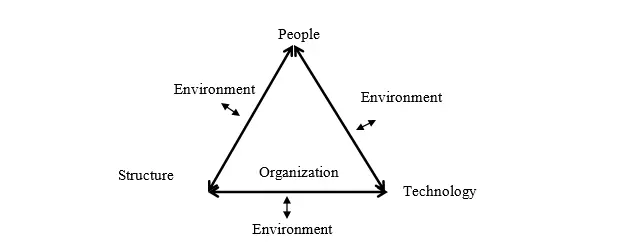
    The key elements of organizational behaviour are people, structure technology and the environment in which the organizations operates. When people join together in an organisation to accomplish an objective, some kind of structure is required. People also use technology to help get the job done, so there is an interaction of people, structure and the technology. In addition, these elements are influenced by the external environment, and they influence it.

    Key Elements in Organizational Behaviour
    Key Elements in Organizational Behaviour

    Key Elements of Organizational Behaviour

    Each of the four elements of organizational behaviour will be considered briefly.

    People

    People make up the internal social system of the organisation. They consist of individuals and groups. There are formal and informal groups. Groups are dynamic. They form, change and disband. Organizations exist to serve people, rather than people existing to serve organizations.

    Structure

    Structure defines the formal relationships of people in organisations. Different jobs are required to accomplish all of an organisation’s activities. There are managers and employees, accountants and assemblers. These people have to be related in some structural way so that their work can be effectively co-ordinated. These relationships create complex problems of cooperation, negotiation and decision-making.

    Technology

    Technology provides the resources with which people work and affects the tasks that they perform. The technology used has a significant influence in working relationships. The great benefit of technology is that it allows people to do more and better work, but it also restricts people in various ways. It has costs as well as benefits.

    Environment

    All organizations operate within an external environment A single organisation does not exist alone. It is part of a larger system that contains many other elements such as Govt., the family, and other organizations. 

    All of these mutually influence each other in a complex system that creates a context for a group of people. Individual organizations, such as factory or a school, cannot escape being influenced by this external environment. It influences the attitudes of people, affects working conditions, and provides competition for resources and power. It must be considered in the study of human behaviour in organizations.

    Who is the father of organizational behaviour?

    Frederick Winslow Taylor, a 19th-century engineer and one of the first management consultants, is often called the “father of scientific management” and is considered one of the pioneers of organizational behavior.

    Who invented organizational behaviour?

    The need for organizational behavior began following the industrial revolution. Max Weber and Frederick Taylor were two of the early pioneers of business management. Both men were interested in developing the innate motivation of employees.
  • Perception Definition, Nature & Process

    Perception Definition, Nature & Process

    Perception means perceiving, i.e., giving meaning to the environment around us. It can be defined as a process which involves seeing, receiving, selecting, organising, interpreting and giving meaning to the environment.

    Perception Definition

    A process by which individuals organize and interpret their sensory impressions in order to give meaning to their environment.

    Stephen P. Robbins

    Perception is an important meditative cognitive process through which persons make interpretations of the stimuli’s or situation they are faced with.

    Fred Luthans

     Nature of perception

    • Perception is the intellectual process.
    • Perception is the basic cognitive or psychological process.
    • Perception becomes a subjective process and different people may perceive the same event differently.

    Perception and Sensation

    There is a distinction between sensation and perception. Sensation is the response of a physical sensory organ. The physical senses are vision, hearing, tough, smell and taste. These senses are bombarded by stimuli and reactions in particular sense organ take place because of these, e.g., of sensation may be reaction of eye to colour, ear to sound and so on. Sensation percedes perception. Perception is much more than sensation. Perception depends upon the sensory raw data.

    The perceptual process adds to or/and subtracts from the sensory world. Perception is determined by both physiological and psychological characteristics, of the organism. However, sensation only activates the organs of the body and is not affected by such psychological factors as learning and motives. Activation of eyes to see an object is sensation and the inference what is being seen is perception. For managerial action, it is the latter which is important.

    Perceptual Process

    Perception is a process of receiving, selecting, organising, interpreting, checking and reacting to stimuli. This is like an input-through put-output process in which the stimuli can be considered as ‘inputs’ transformation of ‘input’ through selection, organization and interpretation as ‘through puts’ and the ultimate behaviour/action as ‘output’. The whole perceptional process can be presented as follows : These are explained one by one

    Perceptual Process
    Perceptual Process
    1. Receiving Stimuli : The first process in the perception is the presence of stimuli. The stimuli are received from the various sources. Through the five organs. It is a physiological aspect of perception process. Stimuli may be external to us (such as sound waves) and inside us (such as energy generation by muscles).
    2. Selection of Stimuli : After receiving the stimuli or data, some are selected. Others are screened out. Two types of factors affect selection of stimuli for processing : external and internal factors. External factors relate to stimuli such as intensity of stimuli, its size, movement, repetition, etc. Internal factors, relate to the perceiver such as his/her age, learning, interest, etc. Normally, he will select the objects which interest him and will avoid that for which he is indifferent. This is also called ‘selective perception’.
    3. Organization of Stimuli: Organising the bits of information into a meaningful whole is called “organization”. There are three ways by which the selected data, i.e., inputs are organised. These are
      • Grouping: In grouping, the perceiver groups the various stimuli on the basis of their similarity or proximity. For example, all the workers coming from the same place may be perceived as similar on the basis of proximity.
      • Closure: When faced with incomplete information, people fill up the gaps themselves to make the information meaningful. This may be done on the basis of past experience, past data, or hunches. For example, in many advertisement, alphabets are written by putting electric bulbs indicating the shape of the concerned alphabets but broken lines. In such cases, people tend to fill up the gap among different bulbs to get meaning out of these.
      • Simplification: People identify main stimulus features and assesses how they are organized. He interprets a stimulus situation, the perceiver simples the information.

    Importance of perception

    People in organisations are always assessing others. Managers must appraise their subordinate’s performance, evaluate how co-workers are working. When a new person joins a department he or she is immediately assessed by the other persons. These have important effect on the organisation. 

    • Employment Interview: Interviewers make perceptual judgments that are often inaccurate. Different interviewers see different things in the same candidate and arrive at different conclusions about the applicant. Employment interview is an important input into the hiring decision, and perceptual factors influence who is hired and vis-à-vis the Quality of an organisation’s labour force. 
    • Performance Appraisals: An employee’s performance appraisal is very much dependent on the perceptual process. An employee’s future is closely tied to his or her appraisal – promotions, increments and continuation of employment are among the common outcomes.

    The performance appraisal represents an assessment of an employee’s work. While this may be objective most jobs are evaluated in subjective terms. Subjective measures are judgmental. The evaluator forms a general impression of an employee’s work, to the degree that managers use subjective measures in appraising employee’s the evaluator perceives to be `good or bad’ employee characteristics/behaviours will significantly influence the appraisal outcome.

    • Assessing Level of Effort: In many organisations, the level of an employee’s effort is given high importance. Assessment of an individual’s effort is a subjective judgment susceptible to perceptual distortions and bias. 
    • Assessing Loyalty: Another important judgment that managers decide about employees is, whether they are loyal to the organisation?
    • Implications of Perception on Performance and Satisfaction Productivity: What individuals perceive from their work situation will influence their productivity. More than the situation itself than whether a job is actually interesting or challenging is not relevant.
      How a manager successfully plans and organizes the work of his subordinates and actually helps them in structuring their work is far less important than how his subordinates perceive his efforts. Therefore, to be able to influence productivity, it is necessary to assess how workers perceive their jobs. 
    • Absenteeism and Turnover: Absence and Turnover are some of the reactions to the individual’s perception. Managers must understand how each individual interprets his job and where there is a significant difference between what is seen and what exists and try to eliminate the distortions. Failure to deal with the differences when individuals perceive the job in negative terms will result in increased absenteeism and turnover. 
    • Job Satisfaction: Job satisfaction is a highly subjective, and feeling of the benefits that derive from the job. Clearly his variable is critically linked to perception. If job satisfaction is to be improved, the worker’s perception of the job characteristics, supervision and the organisation as a whole must be positive. 

    Understanding the process of perception is important because

    1. It is unlikely that any person’s definition of reality will be identical to an objective assessment of reality.
    2. It is unlikely that two different person’s definition of reality will be exactly the same.
    3. Individual perceptions directly influences the behaviour exhibited in a given situation. The important fact is that people who work together often see things differently, and this difference can create problems in their ability to work together effectively.
  • Conflict: Definition , Nature and Types

    Conflict: Definition , Nature and Types

    In this article, you’ll learn about What is Conflict, Nature of Conflict, Levels of Conflict, Types Of Conflict and more.

    What is Conflict?

    Conflict is a process in which one party perceives that another party has taken or will take actions that are incompatible with one’s own interests. It refers to some form of friction, disagreement, or discord arising within a group when the beliefs or actions of one or more members of the group are either resisted by or unacceptable to one or more members of another group.

    Nature of Conflict

    1. Conflict is a Process

    Conflict occurs in ‘layers’. First layer is always misunderstanding. The other layers are differences of values, differences of viewpoint, differences of interest, and interpersonal differences. It is also called a process because it begins with one party perceiving the other to oppose or negatively affect its interests and ends with competing, collaborating, compromising or avoiding.

    2. Conflict is Inevitable

    Conflict exists everywhere. No two persons are the same. Hence they may have individual differences. And the differences may be because of values or otherwise, lead to conflict. Although inevitable, conflict can be minimized, diverted and/or resolved. Conflict develops because we are dealing with people’s lives, jobs, children, pride, self-concept, ego and sense of mission. Conflict is inevitable and often good, for example, good teams always go through a “form, storm, norm and perform” period.

    3. Conflict is a Normal Part of Life

    Individuals, groups, and organizations have unlimited needs and different values but limited resources. Thus, this incompatibility is bound to lead to conflicts. The conflict is not a problem, but if it is poorly managed then it becomes a problem.

    4. Perception

    It must be perceived by the parties to it, otherwise it does not exist. In interpersonal interaction, perception is more important than reality. What we perceive and think affects our behaviour, attitudes, and communication.

    5. Opposition

    One party to the conflict must be perceiving or doing something the other party does not like or want.

    6. Interdependence and Interaction

    There must be some kind of real or perceived interdependence. Without interdependence, there can be no interaction. Conflict occurs only when some kind of interaction takes place.

    7. Everyone is inflicted with Conflict

    Conflict may occur within an individual, between two or more individuals, groups or between organisations.

    8. Conflict is Multidimensional

    It comes into different ways in accordance with degree of seriousness and capacity. At times, it may improve even a difficult situation.

    Levels of Conflict

    1. Intrapersonal Conflict refers to conflict within one person. This type of conflict is a product of an individual’s mind, heart, values, and preferences. It can happen if an individual is torn between two competing desires, like doing something or not doing something.
    2. Interpersonal Conflict might arise between two or more individuals within the organization. This type of conflict can be caused by differences in personality, communication styles, or work habits.
    3. Intragroup Conflict occurs within a group or team. This type of conflict can arise due to differences in opinions, goals, or work processes.
    4. Intergroup Conflict happens between two or more groups or departments within the organization. This type of conflict can be caused by differences in goals, values, or resources.

    Understanding and managing these levels of conflict is essential for promoting a healthy work environment and effective problem resolution.

    Types Of Conflict

    There are several different types of conflict

    1. Relationship Conflict
    2. Value Conflict
    3. Interest Conflict

    Relationship Conflict is a personal perspective and can arise when one person behaves in a negative manner or another person has a skewed perception due to things like stereotypes and rumors. The relationship between people is affected negatively, and in the workplace, performance is eroded due to poor team cohesion.

    Value Conflict arises when two people or groups have dissenting views on moral values– that basic understanding of what is naturally right or wrong. Relationship and value conflicts are the most subjective conflict types, because they are based totally on what someone “feels” about a person or situation.

    Interest Conflict arises when one person’s desired outcome is in conflict with another person or group’s interests. Typically, this occurs when one person believes that another person’s desires if enacted, will prevent his or her own interests from being met. This type of conflict can be experienced when two people who have relationship conflict are required by a team
    manager to work as a part of a team.

  • Emerging trends in Organizational behavior

    Emerging trends in Organizational behavior

    In this article, we are going to learn about Emerging trends in Organizational behavior. Organizations have witnessed a great development from the olden times particularly in respect of structure, operations and people. There is a considerable change in the cross-culture environment, influence of MNCs, growth in the technical know-how and quality management which has provided different environment in the modern organizations.

    Emerging trends in Organizational behavior

    • Globalization
    • Emerging employment relationships 
    • changing workforce
    • Knowledge Management
    • Information technology and OB

    Globalization

    Organisation in recent days has changed the style of working and tries to spread worldwide. Trapping new market place, new technology or reducing cost through specialization or cheap labour are few of the different reasons that motivates organizations to become global Moreover the way companies integrate their business practices with other countries has also changed. Instead of controlling the whole supply chain countries outsource some part of it to gain advantage of specialization.

    Thomas Friedman highlights this phenomenon in his book “The world is flat” There are several types of organizational changes that has occurred to help business adopt to globalization, as the old principles no longer work in the age of globalization Strategic changes, technological change, change in organizational cultural including organizational structural change and a redesign of work tasks are some of the important one.

    In line with these changes, there is strong expectation of employee to improve their knowledge and become an integral part of successful business formula in order to respond to the challenges brought by the global economy. In other words it leads to formation of a learning organisation, which is characterized by creating, gaining and transferring the knowledge, and thus constantly modifying the organizational behavior.

    Emerging employment relationship

    Changing trends in organisations in recent years have made it utmost important to consider some of the emerging employee relations issues which can affect employers in the coming decade. Understanding these issues will help management to better plan and respond to changes in the workplace. Employer employee relationship is also showing change in the modern era. Employers are no more autocrats and participative style of leadership is welcomed.

    Flexible working hours and increased authority motivates employees to perform to their best. Management now welcomes upward communication and participation of lower level employees in the decision making process.

    Changing workforce

    The demographic of the workforce has changed in the recent years.. This is due to a number of factors such as an aging population, labour shortages and immigration. Another significant factor that has changed the workforce is the changes in the attitudes of workers. Employers need to adapt their recruitment, training and management processes to adapt to changing workforce.

    An example of this is that where employers may have previously looked to younger people as a source of recruits, they may now have to broaden their view as there are currently a large number of older people either currently employed or seeking employment. These people may need extra training to bring their skills up to date.

    New parents now want to work closer to home or from home, employers may find that they need to make this a possible option in order to retain or find new staff. Allowing people to work from home will also make the employer and job more attractive to a wider range of people.

    Recent days is also witnessing a shortage of skilled labour in many sectors. Hence employers may have to take on less skilled workers initially and develop them, rather than simply hiring experienced people. Hiring employees from overseas also serves the purpose.

    Knowledge Management

    Knowledge management is a structured activity that improves an organization’s capacity to acquire, share, and utilize knowledge for its survival and success. Knowledge management is around us from a very long period of time in one form or the other. The decisions we make and the action we take both are enabled by knowledge of some type. Hence to improve quality of these actions and decisions it is important to understand the process of knowledge management.

    Studies in knowledge management has proved an inseparable relationship between knowledge management and organizational culture (Davenport and Prusak,2000; Von Krogh, 2000; Nonaka and Takeuchi, 1995) Research has also proved that organizational culture is a major barrier to leveraging intellectual assets. They focus on four ways in which culture influences organizational behaviours central to knowledge creation, sharing, and use.

    The first is the shared assumptions about what knowledge is and which knowledge is worth managing. Second is the relationship between individual and organizational knowledge. Third is the context for social interaction that determines how knowledge will be used in particular situations. Fourth is the processes by which knowledge is created, legitimated, and distributed in organizations.

    There are three basic elements of knowledge management

    1. Knowledge acquisition: It is method of learning through experiences, sensation or perception. 
    2. Knowledge sharing: Knowledge sharing is a process through which knowledge is shared among family, friends or any community.
    3. Knowledge dissemination: It is conceptual and instrumental use of new knowledge. Increased awareness and ability to make informed choice among available alternatives are the outcomes of knowledge dissemination.
    4.  Knowledge maps: Knowledge maps guide employees to understand what knowledge is needed to increase their efficiency and productivity and where these knowledge are located. 

    Information Technology and OB

    Technological change and advancement is one of the most salient factors impacting organizations and employees today. In particular, the prominence of information technology (IT) has grown many folds in recent years. This innovation in IT has opened new ways for conducting business that are different from the past. Technology has changed the nature of work as well as the roles of employees.

    Managerial decision making, stress handling, and attitude towards work have changed as an impact of technology. It is also seen from decades that there is a normal tendency of human being to resist to changes, making adoption of new technologies a little difficult. 

    It has become important for the business and management to understand and take these issues into consideration while introducing or implementing any new technology. Frequent sessions on change management can help employees understand, use and adopt new technologies easily. 

  • Approaches to Organizational Behaviour

    Approaches to Organizational Behaviour

    In this article, you’ll learn about approaches to Organizational Behaviour. Studying approaches to organizational behavior is valuable for several reasons, as it provides insights into understanding, managing, and improving the dynamics within an organization.

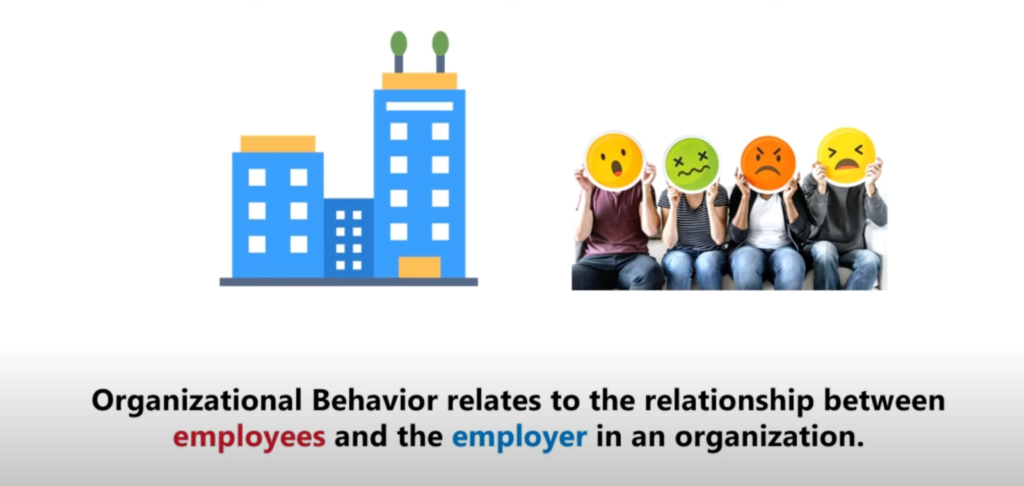
    Organizational Behavior relates to the relationship between employees and the employer in an organization.

    Both are working towards the realization of the goals and objectives of any organization, and a close and fruitful coordination between the two is one of the major factors towards this realization.

    Organizational behavior approaches are a result of the research done by experts in this field.

    There are 5 Approaches to Organizational Behaviour

    1. Human resources (supportive) approach 

    The human resources approach is developmental. It is concerned with the growth and development of people towards higher levels of competency, creativity, and fulfillment because people are the central resource in any organisation and any society. The nature of the human resources approach can be understood by comparing it with the traditional management approach in the early 1900s.

    In the traditional approach, managers decided what should be done and management was directive and controlling. The human resources approach, on the other hand, is supportive. It helps employees become better, more responsible persons and then tries to create a climate in which they may contribute to the limits of their improved abilities. Essentially, the human resources approach means that better people achieve better results.

    Give a person a fish, and you feed that person for a day, Teach a person to fish, and you feed that person for life.

    2. Contingency approach

    Traditional management relied on the principle of ―one best way of managing. There was a correct way to organize, delegate, and divide work. The correct way is applied regardless of the type of organisation or situation involved. The contingency approach to organizational behaviour means that different situations require different behavioural practices for effectiveness.

    No longer is there a one best way. Each situation must be analysed carefully to determine the significant variables that exist in order to establish the kinds of practices that will be more effective. The strength of the contingency approach is that it encourages analysis of each situation prior to action, while at the same time discouraging habitual practice based on Universal assumptions about people.

    The contingency approach also is more interdisciplinary, more system oriented, and more research-oriented than the traditional approach. Thus it helps to use in the most appropriate manner all the current knowledge about people in organisations.

    3. Productivity approach

    Productivity is a ratio that compares units of output with units of input. If more outputs can be produced from the same amount of inputs, productivity is improved or if fewer inputs can be used to produce the same amount of outputs, productivity has increased.

    The idea of productivity does not imply that one should produce more output; rather it is a measure of how efficiently one produces whatever output is desired. Consequently, better productivity is a valuable measure of how well resources are used in society. It means that less is consumed to produce each unit of output. There is less waste and better conservation of resources.

    Productivity often is measured in terms of economic inputs and outputs, but human and social inputs and outputs are also important, For example. if better organizational behaviour can improve job satisfaction, a human output or benefit occurs. In the same manner, when employee development programmes lead to a by-product of better citizens in a community, a valuable social output occurs.

    Equations showing the role of organizational behaviour is work systems

    Knowledge X skill                           =          Ability

    Attitude X situation                         =         Motivation

    Ability X Motivation                      =         Potential human performance

    Human performance X Resources  =          Organizational productivity

    4. Systems Approach

    A system implies that there are many variables in organisations and that each of them affects all the others in a complex relationship. All people in organisations should be concerned with improving organizational behaviour.  Managers represent the administrative system and their role is to use organizational behaviour to improve people – organisation relationships as shown in the following figure.

    Managers try to build a climate in which people are motivated work together, productively, and become more effective persons.

    Systems Approach
    Systems Approach

    When organizational behaviour is applied with a systems approach it creates a triple reward system in which human, organizational and social objectives are met. People find more satisfaction in work when there is cooperation and teamwork. They are learning to grow and contribute. The organization also is more successful, because it operates more effectively.

    Quality is better and costs are less. Perhaps the greatest beneficiary of the triple reward system is society itself; because it has better products and services, better citizens and a climate of co-operation and progress.

    5. Interdisciplinary Approach

    This approach advocates that efficiency can be attained by finding the right methods to get the job done through specialization on the job by planning and scheduling, by using standard operating mechanisms, establishing standard time to do the job, by proper selection and training of personnel and through wage incentives.

  • What is Trade Cycle? Meaning, Definition Features, and Types

    What is Trade Cycle? Meaning, Definition Features, and Types

    The trade cycle, a dynamic economic phenomenon, involves recurring patterns of expansion and contraction, influencing business cycles. Explore its meaning, features, and types for comprehensive insights.

    What is Trade Cycle

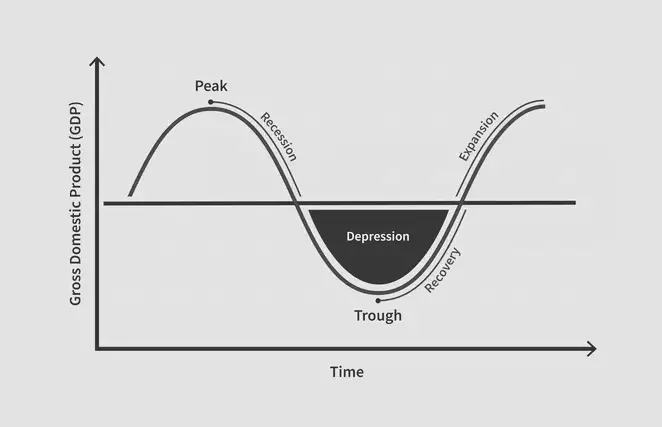
    The alternating periods of expansion and contraction in the economic activity have been called business cycles or trade cycles.

    What is Trade Cycle? Meaning, Definition Features, and Types

    The period of high income, high output, and high employment is called the Period of Expansion, Upswing, or Prosperity.

    The period of low income, low output, and low employment are called the Period of Contraction, Recession, Downswing, or Depression.

    Definition of Trade Cycle

    A trade cycle is composed of periods of Good Trade, characterized by rising prices and low unemployment percentages, shifting with periods of bad trade characterized by falling prices and high unemployment percentages.

    Keynes

    Features of Trade Cycle

    The characteristics or features of the trade cycle are

    1. Movement in Economic Activity : A trade cycle is a wave-like movement in economic activity showing an upward trend and a downward trend in the economy.
    2. Periodical : Trade cycles occur periodically but they do not show the same regularity.
    3. Different Phases : Trade cycles have different phases such as Prosperity, Recession, Depression and Recovery.
    4. Different Types : There are minor and major trade cycles. Minor trade cycles operate for 3-4 years, while major trade cycles operate for 4-8 years or more. Though trade cycles differ in timing, they have a common pattern of sequential phases.
    5. Duration : The duration of trade cycles may vary from a minimum of 2 years to a maximum of 12 years.
    6. Dynamic : Business cycles cause changes in all sectors of the economy. Fluctuations occur not only in production and income but also in other variables like employment, investment, consumption, rate of interest, price level, etc.
    7. Phases are Cumulative : Expansion and contraction in a trade cycle are cumulative, in effect, i.e. increasing or decreasing progressively.
    8. Uncertainty to businessmen : There is uncertainty in the economy, especially for the businessmen as profits fluctuate more than any other type of income.
    9. International Nature : Trade Cycles are international in character. For e.g. Great Depression of 1930s.

    Types of Trade Cycle

    Dynamic forces operating in a capitalist economy create various kinds of economic fluctuations. These fluctuations can be classified as follows

    1. Short-Time Cycle : This trade cycle occur for a short period of time. It is also known as minor cycles. It lasts for about 3-4 years.
    2. Secular Trends : This trade cycle occurs for a long period of time and is known as Long term cycle. It lasts for about 4-8 years or more. It is also known as major cycle.
    3. Seasonal Fluctuations : This refers to trade cycles, which take place due to seasonal changes in the economy. For e.g. failure of monsoon can cause a downtrend in the economy which may be followed by a good monsoon and up to trend.
    4. Irregular or Random Fluctuations : These trade cycles are unpredictable and occur during a period of strikes, war, etc., causing a shock to the economic system.
    5. Cyclic Fluctuation : These fluctuations are wave-like changes in economic activity caused by recurring phases of expansion and contraction. There is an upswing from a trough (low point) to peak and downswing from the peak to trough caused due to economic changes in demand, or supply or various other factors.


    To sum it up, a trade cycle is like a rollercoaster for the economy. It goes up and down in a wave-like pattern. These cycles have phases like good times (Prosperity), bad times (Recession), really bad times (Depression), and recovery. They happen regularly but not always at the same pace. Some last for a few years, while others can stretch for a longer time. These cycles affect everything – jobs, money, investments, and more.

  • Models of Organisational Behaviour

    Models of Organisational Behaviour

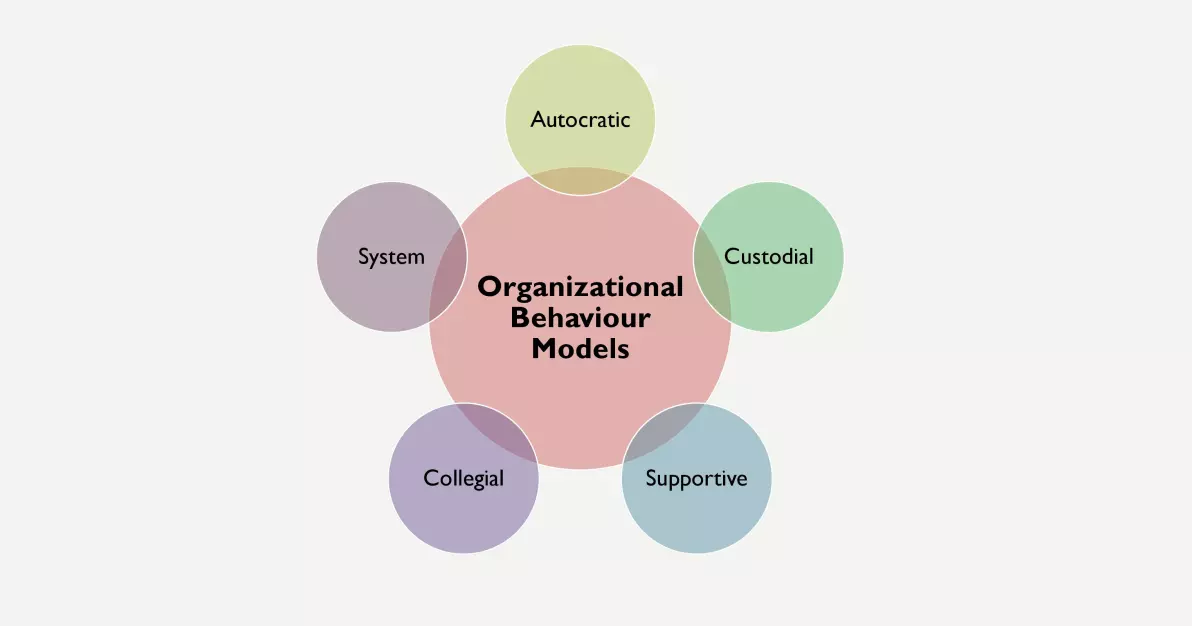
    In this article, you’ll learn about Models of Organisational Behaviour. Since the dawn of industrial revolution, four models of organisational behaviour have been followed by managers of different organisations at different times.

    These are

    1. Autocratic Model
    2. Custodial Model
    3. Supportive Model
    4. Collegial Model
    5. System Model
    Model  Autocratic  CustodialSupportiveCollegialSystem
    Basis of Model  Power Economic resources  LeadershipPartnership Partnership
    Managerial orientation  AuthorityMoneySupport  Teamwork     Teamwork
    Employee orientationObedience   Security and benefitsJob performanceResponsible behaviour
    Employee psychological result  Dependence on bossDependence on Organization   SecurityParticipationSelf – discipline Self – motivation
    Employee needs metSubsistence SecurityStatus and recognitionSelf – actualizationHigher order needs
    Performance resultMinimumPassive Cooperation Awakened drivesModerate enthusiasm Full enthusiasm 

    Models of Organizational Behaviour

    Autocratic Model 

    • The autocratic model depends on power. Those who are in command must have the power to demand ―you do this-or else, meaning that an employee who does not follow orders will be penalized. 
    • In an autocratic environment the managerial orientation is formal, official authority. This authority is delegated by right of command over the people to it applies. 
    • Under autocratic environment the employee is obedience to a boss, not respect for a manager
    • The psychological result for employees is dependence on their boss, whose power to hire, fire, and ―perspire they is almost absolute. 
    • The boss pays minimum wages because minimum performance is given by employees. They are willing to give minimum performance-though sometimes reluctantly-because they must satisfy subsistence needs for themselves and their families.
    • Some employees give higher performance because of internal achievement drives, because they personally like their boss, because the boss is ―a natural-born leader, or because of some other factor; but most of them give only minimum performance. 

    The Custodial Model 

    • A successful custodial approach depends on economic resources
    • This approach depends on money to pay wages and benefits.
    • Since employee’s physical needs are already reasonably met, the employer looks to security needs as a motivating force. If an organization does not have the wealth to provide pensions and pay other benefits, it cannot follow a custodial approach.
    • The custodial approach leads to employee dependence on the organization. Rather than being dependence on their boss for their weekly bread, employees now depend on organizations for their security and welfare. 
    • Employees working in a custodial environment become psychologically preoccupied with their economic rewards and benefits. As a result of their treatment, they are well maintained and contended. However, contentment does not necessarily produce strong motivation; it may produce only passive cooperation. The result tends to be those employees do not perform much more effectively than under the old autocratic approach. 

    The Supportive Model 

    • The supportive model depends on leadership instead of power or money. Through leadership, management provides a climate to help employees grow and accomplish in the interests of the organization the things of which they are capable. 
    • The leader assumes that workers are not by nature passive and resistant to organizational needs, but that they are made so by an inadequately supportive climate at work. They will take responsibility, develop a drive to contribute, and improve themselves if management will give them a chance. Management orientation, therefore, is to support the employee’s job performance rather than to simply support employee benefit payments as in the custodial approach. 
    • Since management supports employees in their work, the psychological result is a feeling of participation and task involvement in the organization. Employee may say ―we instead of ―they when referring to their organization. 
    • Employees are more strongly motivated than by earlier models because of their status and recognition needs are better met. Thus they have awakened drives for work. 

    The Collegial Model 

    • A useful extension of the supportive model is the collegial model. The term ―collegial relates to a body of people working together cooperatively. 
    • The collegial model depends on management’s building a feeling of partnership with employees. The result is that employees feel needed and useful. They feel that managers are contributing also, so it is easy to accept and respect their roles in their organization. Managers are seen as joint contributors rather than as bosses. 
    • The managerial orientation is toward teamwork. Management is the coach that builds a better team 
    • The employee’s response to this situation is responsibility. For example employees produce quality work not because management tells them to do so or because the inspector will catch them if they do not, but because they feel inside themselves an obligation to provide others with high quality. They also feel an obligation to uphold quality standards that will bring credit to their jobs and company. 
    • The psychological result of the collegial approach for the employee is self-discipline. Feeling responsible, employees discipline themselves for performance on the team in the same way that the members of a football team discipline themselves to training standards and the rules of the game. 
    • In this kind of environment employees normally feel some degree of fulfillment, worthwhile contribution, and self-actualization, even though the amount may be modest in some situation. This self-actualization will lead to moderate enthusiasm in performance. 

    The System Model 

    • An emerging model of organization behavior is the system model. It is the result of a strong search for higher meaning at work by many of today’s employees; they want more than just a paycheck and job security from their jobs. Since they are being asked to spend many hours of their day at work, they want a work context there that is ethical, infused with integrity and trust, and provides an opportunity to experience a growing sense of community among coworkers. 
    • To accomplish this, managers must increasingly demonstrate a sense of caring and compassion, being sensitive to the needs of a diverse workforce with rapidly changing needs and complex personal and family needs. 
    • In response, many employees embrace the goal of organizational effectiveness, and reorganize the mutuality of company-employee obligations in a system viewpoint. They experience a sense of psychological ownership for the organization and its product and services. 
    • They go beyond the self-discipline of the collegial approach until they reach a state of self-motivation, in which they take responsibility for their own goals and actions. 
    • As a result, the employee needs that are met are wide-ranging but often include the highest-order needs (e.g., social, status, esteem, autonomy, and self actualization).  Because it provides employees an opportunity to meet these needs through their work as their work as well as understand the organization’s perspectives, this new model can engender employees’ passion and commitment to organizational goals. They are inspired; they feel important; they believe in the usefulness and viability of their system for the common good.